Rahul Gandhi’s Position as Main Opposition Face Gains Traction
Rahul Gandhi’s Position as Main Opposition Face Gains Traction
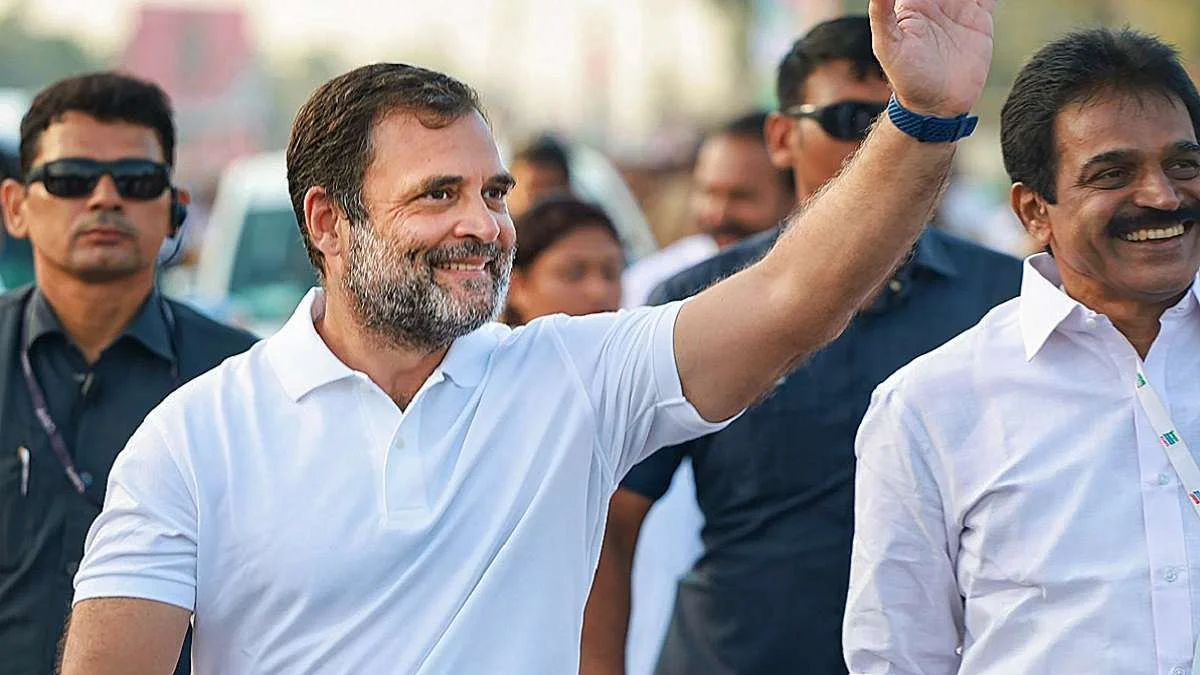
A humid afternoon in New Delhi on June 19 saw hundreds of Congress workers gather in high temperatures to celebrate Rahul Gandhi’s 56th birthday. Many attendees chanted slogans endorsing the prominent political figure as India’s future prime minister, signaling a shift in momentum.
Key Highlights
- Congress party members increasingly view Rahul Gandhi as the primary alternative to the current administration for the 2029 national elections.
- Regional alliance partners like the Samajwadi Party and Rashtriya Janata Dal have grown more receptive to his centralized leadership.
- Structural outreach campaigns and steady focus on public grievances have strengthened his stance against the ruling party.
- Navigating the nationwide popularity of Prime Minister Narendra Modi remains a core challenge for the unified opposition bloc.
While the Leader of the Opposition in the Lok Sabha cut his birthday cake at party headquarters, structural strategies for the 2029 Lok Sabha elections remained a central theme. Recent electoral shifts within regional factions have renewed questions regarding who will guide the overarching alliance.
Just 24 hours prior to the celebrations, Gandhi reiterated his ongoing prediction that Prime Minister Narendra Modi would fail to sustain his current term. The Congress leader has steadily claimed over several months that the incumbent administration will collapse before completion.
Nevertheless, Prime Minister Modi maintains deep-rooted popularity across the national electorate. This reality complicates the political strategy required to position Gandhi as the singular, undisputed head of the multi-party INDIA coalition.
An internal party strategist noted that several regional entities have faced severe political headwinds recently. Factions like the Trinamool Congress, Shiv Sena (UBT), and the Sharad Pawar wing of the Nationalist Congress Party have encountered distinct organizational obstacles.
Consequently, the former Congress president has filled the vacuum to become the most vocal critic of the government. The insider emphasized that the extensive Bharat Jodo Yatra effectively communicated Gandhi’s commitment to marginalized demographics, including tribal populations, minorities, and rural laborers.
The official source further observed that Gandhi has maintained a consistent focus on systemic youth grievances. His public platform regularly highlights issues such as NEET discrepancies, CBSE administrative flaws, and recurring structural paper leaks.
Furthermore, his advocacy spans agricultural challenges, land displacement, and environmental degradation. These efforts aim to build a direct pipeline of communication between the grand old party and ordinary citizens.
The strategist also pointed out Gandhi’s success in urging fellow opposition parties to confront electoral vulnerabilities. His focus on voter roll revisions and polling irregularities pushed allies to adopt issues they previously overlooked.
Many regional parties initially resisted acknowledging Gandhi as their central figure. However, internal consensus is shifting as allies recognize his absolute refusal to compromise ideologically with the ruling Bharatiya Janata Party.
Internal changes within the Trinamool Congress following regional setbacks have reinforced this perception among coalition members. Leaders within Shiv Sena (UBT) and the NCP-SP now view the Congress leadership as an indispensable and highly dependable partner.
The organizational source revealed that high-level meetings occurred following recent friction in West Bengal. Congress Parliamentary Party chairperson Sonia Gandhi held talks with Chief Minister Mamata Banerjee, followed by a direct meeting between Abhishek Banerjee and Rahul Gandhi.
Similarly, Rashtriya Janata Dal leader Tejashwi Yadav has publicly aligned with the view of Gandhi as a primary opposition figure. This sentiment is mirrored by multiple leaders across the broader political front.
Samajwadi Party chief Akhilesh Yadav has reportedly reached a similar conclusion regarding national strategy. Yadav views a robust, cooperative partnership with the Congress as the most viable method to counter the ruling party’s electoral machinery.
The internal analyst concluded that Gandhi’s cross-party acceptability is expanding efficiently. After navigating significant political hurdles over the past few years, he is positioned to head a comprehensive, unified coalition.
An alternative administrative source stated that external coordination is only part of the equation. The Congress party must simultaneously address deep institutional and organizational deficiencies to mount a viable challenge in the next general election.
According to that same source, the party machinery is already laying the groundwork for the 2029 general elections. Gandhi is strategically projected to remain the central public figure throughout that upcoming political cycle.
Future Outlook
The political trajectory leading up to 2029 will heavily depend on how effectively the Congress party transforms Gandhi’s growing internal consensus into widespread voter mobilization. While regional leaders are coalescing around his leadership due to shared political vulnerabilities, the alliance must still bridge the gap between regional influence and national appeal to challenge the incumbent government’s robust electoral base.
FAQs
What is Rahul Gandhi’s current official role in the Indian Parliament?
Rahul Gandhi serves as the official Leader of the Opposition in the Lok Sabha, a position that cements his role as the primary legislative voice countering the ruling government.
Why are regional opposition parties becoming more accepting of Rahul Gandhi’s leadership?
Regional parties have faced significant internal turbulence and electoral challenges over the last few years. Many now view Gandhi as a reliable ally who maintains a firm, uncompromised stance against the ruling party.
Which specific issues has Rahul Gandhi used to connect with the public?
He has consistently focused on youth and student welfare, highlighting structural issues like exam paper leaks, NEET controversies, and agricultural grievances affecting rural populations.