NSW Government Slashing Tolls Ahead of State Election
The New South Wales government has unveiled its final pre-election financial roadmap, prioritizing extensive cost-of-living relief and infrastructure injections. Treasurer Daniel Mookhey will deliver the comprehensive strategy on Tuesday, balancing critical public spending against a sharp contraction in state tax revenues.
Key Highlights
- Motorists will see the weekly Sydney toll cap reduced from $60 to $50 until July 2027.
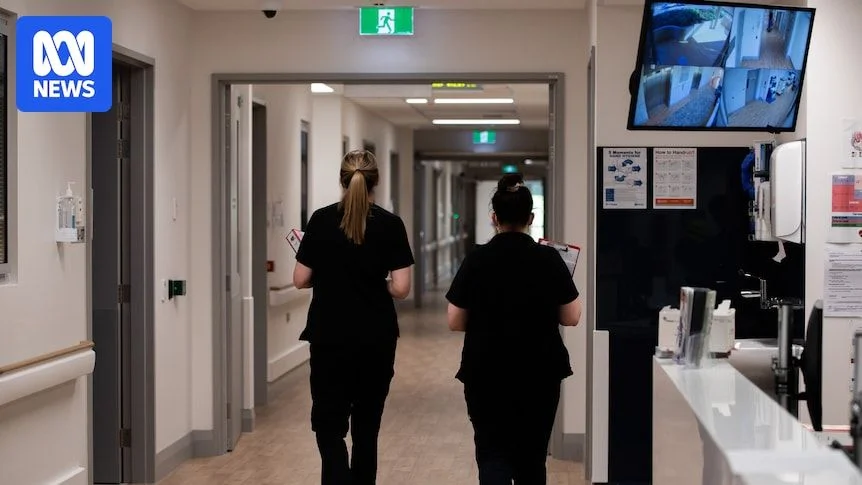
- A record $10.3 billion is allocated to recruit 9,000 new frontline healthcare workers over four years.
- Educational infrastructure receives $9.2 billion to build and upgrade primary and secondary schools.
- A dedicated factory will be established to produce modular housing from standardized state designs.
Health to get record funding injection
The state’s public medical infrastructure remains an accelerating fiscal demand on treasury reserves.
To combat these challenges, a massive $10.3 billion package covers recurrent workforce expenses over the next four years, integrating 9,000 additional clinical personnel into hospitals.
During the upcoming 2026-27 fiscal cycle, a historic $3.6 billion tranche will fund the construction or major redevelopment of metropolitan hospitals located in Rouse Hill, Bankstown, and Fairfield.
Furthermore, a targeted $400 million capital injection is designated for an immediate, statewide hospital maintenance blitz.
Cash for classrooms
The delivery of new academic facilities alongside existing campus refurbishments will require $9.2 billion over the forward estimates, rising from the $9 billion committed during the prior annual statement.
Specific capital allocations will fund new primary schools across expanding western Sydney suburbs, including Austral South, Bella Vista West, East Cobbitty, Marsden Park South, Menangle Park, Oran Park North, Orchard Hills, and Rhodes.
Secondary school completions are fully financed for Austral, Bella Vista, and Rydalmere.
Treasury lines also secure upgrades for existing primary operations at Cherrybrook and Spring Farm, alongside Nangamay Public School in Glenmore Park.
Factory for homes
The upcoming financial blueprint dedicates significant capital to build a specialized manufacturing plant for modular housing using standardized state pattern books.
The precise commercial valuation of this industrial initiative remains confidential while the project advances toward a competitive public tender process.
Over the coming four years, authorities will direct $32 million to overhaul and optimize the state’s traditional construction approval channels.
This regulatory modernization includes rolling out pilot artificial intelligence frameworks to sharply decrease application processing intervals.
Simultaneously, local manufacturers can access targeted grants valued up to $150,000 to convert operational lines toward offsite, multi-level residential assembly.
Roads and railways
Restoring performance consistency across the Sydney Trains passenger network is a primary policy target following extensive electrical grid malfunctions that gridlocked commuting routes last year.
The network’s core asset maintenance reserve receives a $200 million boost relative to the 2025-26 financial period.
The central Rail Operations Centre is allocated $150 million to improve rapid-response capabilities during critical network failures.
Additional transit drivers and guards will enter service across regional lines, stabilizing timetables linking Sydney with the Illawarra, Central Coast, Newcastle, and the Blue Mountains.
A $300 million funding package will accelerate crucial modifications to western Sydney’s heavily congested Elizabeth Drive and Fifteenth Avenue corridors.
According to state officials, matching federal co-investments from Canberra will pull the construction start date forward to late 2026, beating original schedules by a full twelve months.
Bucks for bushwalks and boardwalk
State conservation reserves and national parks will receive $130 million to upgrade walking tracks, campgrounds, picnic areas, public amenities, vantage lookouts, access roads, and visitor hubs.
A portion of this environmental funding is required to repair and reinforce public assets severely impacted by recent regional flooding, intense storms, and coastal landslips.
Government representatives noted the asset improvements are critical as intensifying economic pressures drive larger numbers of citizens toward national parks for affordable holiday options.
Broader ecological preservation receives $195 million to execute invasive animal eradication, native tree planting, weed containment, and habitat remediation for threatened species such as koalas.
The regional package additionally provides $41 million to erect a one-kilometre pedestrian boardwalk in Gosford. This 4.5-metre-wide thoroughfare will follow the main rail corridor over Brisbane Water, connecting Point Clare’s Goodaywang Reserve directly to Grahame Park.
‘Thriving Kids’ funding
The administration has proactively budgeted local resources to support vulnerable demographics facing imminent exclusion from the National Disability Insurance Scheme due to federal funding changes.
The newly established Thriving Kids initiative secures $631.9 million to assist young children diagnosed with developmental delays or autism spectrum conditions.
Distributed over a five-year horizon, the program funds early diagnostic intervention, community playgroups, peer networks, specialized parenting courses, and clinical therapy.
Premier Chris Minns previously confirmed the state cannot duplicate comprehensive federal care models, noting local systems are operating at peak capacity simply maintaining baseline hospital operations.
Future Outlook
The 2026 New South Wales budget marks a delicate fiscal balancing act executed under high political stakes. With a state election scheduled for March 2027, the Minns government is deliberately shifting its remaining leverage toward direct cost-of-living relief and visible infrastructure upgrades.
However, the macroeconomic background presents serious structural challenges. A sharp cooling of the domestic economy, combined with an estimated $8 billion collapse in combined stamp duty and land tax revenues, severely limits the state’s fiscal runway. Treasurer Daniel Mookhey’s updated projections indicate that previous timelines for returning the budget to a net surplus by 2027-28 face significant delays.
Over the next three to five years, the state’s financial health will depend heavily on whether these massive frontline capital investments successfully stimulate productivity or add to sticky inflationary pressures.
FAQs
What is the new weekly Sydney toll cap?
The weekly toll road cap for Sydney motorists is being reduced from $60 down to $50. This revised limit will remain active until July 2027, expanding eligibility to an estimated 200,000 additional drivers across the metropolitan network.
How many new health workers will the budget fund?
The budget allocates $10.3 billion over the forward estimates to cover health system staffing costs. This funding directly supports the recruitment and employment of 9,000 additional healthcare workers across the state.
What is the Thriving Kids program?
The Thriving Kids program is a $631.9 million, five-year state initiative designed to provide early intervention, therapy, playgroups, and parenting programs for young children experiencing developmental delays or autism. It addresses service gaps left by federal changes to the National Disability Insurance Scheme.
How much is being spent on NSW school infrastructure?
The NSW government is committing $9.2 billion over the forward estimates for educational infrastructure. This funding will build several new primary and secondary schools, primarily in rapidly growing areas of western Sydney, while upgrading existing campuses.