North Dakota Implementation of New Mail-In Ballot Deadlines Signals Seamless Voting Transition
North Dakota Implementation of New Mail-In Ballot Deadlines Signals Seamless Voting Transition
North Dakota election administrators reported a smooth rollout of the state’s newly restricted mail-in ballot deadlines during the June 2026 primary. Officials attributed the lack of operational disruption to a massive public information campaign designed to guide voters through the shortened submission window.
Key Highlights
- First Election Under New Law: Absentee ballots must now arrive by poll closure on Election Day rather than postmarked prior.
- Late Ballots Decline: Multi-county data confirms a sharp reduction in late-arriving mail-in submissions compared to past mid-term primaries.
- Turnout Confirmed: The State Canvassing Board officially certified 125,225 total votes, representing a 20.86% state participation rate.
- Write-In Success: Certified Republican write-in contender Doug Sharbono secured enough manually tallied votes to advance to November.
The State Canvassing Board convened on Wednesday to formally certify the final outcomes of the June 9 voting window. This marked the inaugural execution of a legislative statute mandating that all absentee voting forms reach local offices before voting stations close on Election Day.
Under the previous statutory framework, ballots marked by the post office on the eve of the election remained eligible for tabulation. Counties could legally accept and count these arriving envelopes for up to 13 days following the conclusion of voting.
Secretary of State Michael Howe clarified that individual counties are under no statutory mandate to document the precise volume of late-arriving documentation. He noted that comprehensive statistics regarding ballots disqualified solely due to the updated timeline will remain largely unavailable.
“I don’t know if we’ll have a definitive number,” Howe commented regarding the missing metrics. He emphasized that the bulk of data collected regarding rejected mailings would remain fundamentally anecdotal.
Local election administrators across four distinct county boards contacted by independent observers confirmed that post-election mail volume dropped significantly. The downward trend suggests that voters adjusted rapidly to the updated regulatory environment.
Stutsman County recorded zero absolute arrivals of voting envelopes after the designated Election Day cutoff. County Auditor Jessica Alonge credited this perfect compliance directly to aggressive local public relations campaigns.
Staff members launched direct telephone campaigns targeting residents who requested absentee materials late in the cycle. This ensured those individuals understood the urgency of the new return window.
“It’s very telling that not one ballot came in the mail after Election Day,” Alonge remarked. She indicated that proactive bureaucratic communication directly prevented voter disenfranchisement.
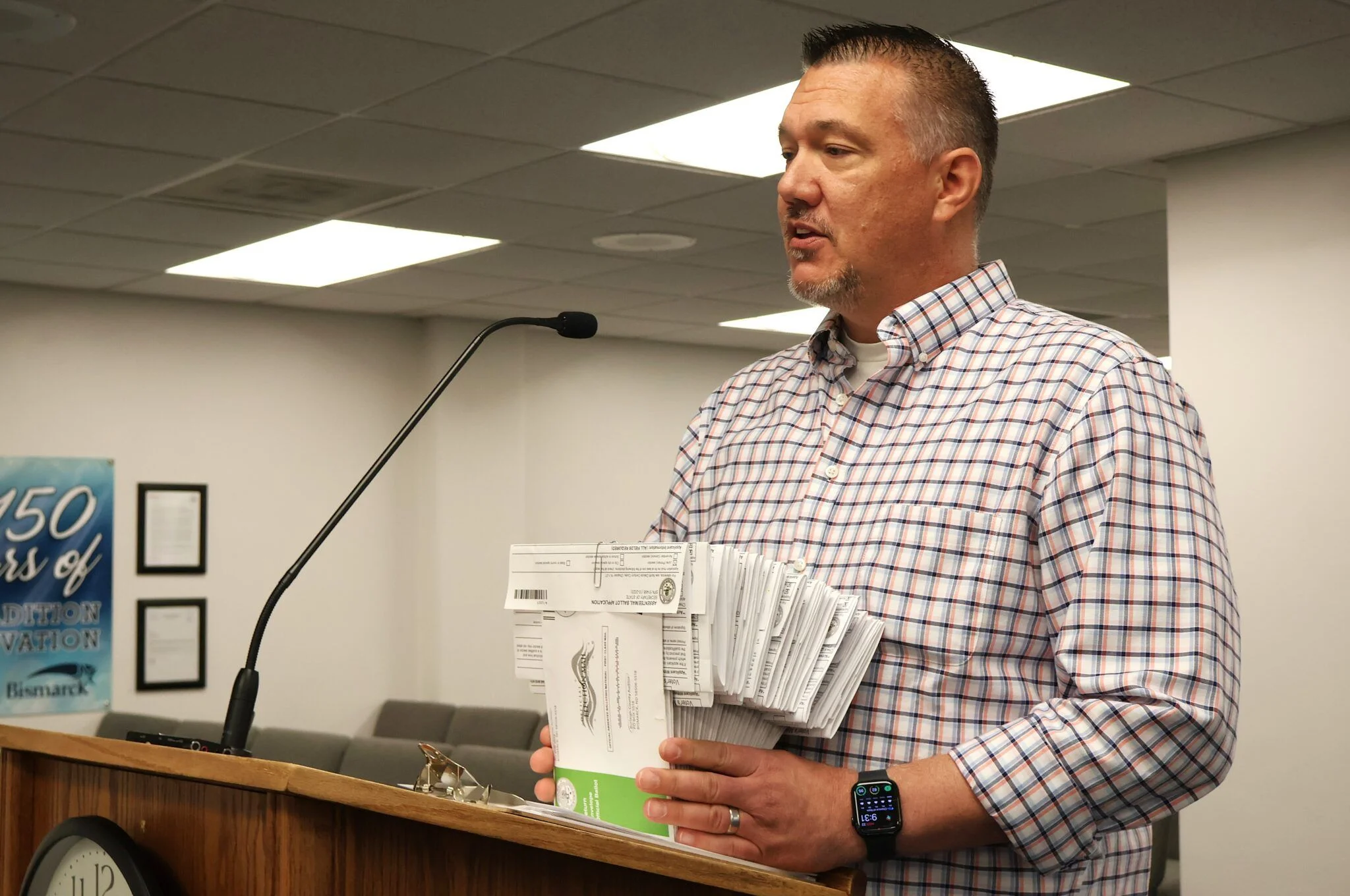
Burleigh County logged 37 late absentee submissions, a tally lower than historic baselines for mid-term primary cycles. Election Coordinator Thomas Larson described defensive measures taken by his office to capture every valid vote.
Personnel visited the primary regional postal distribution hub in Bismarck minutes before the 7 p.m. deadline. The sweep ensured no processed mail remained trapped within the facility.
Larson noted that 10 of those tardy documents bore postmarks from June 8 or earlier. Under the historical legal framework, those specific citizens would have successfully had their preferences recorded.
Stark County encountered seven delivery failures following the absolute evening deadline, according to Auditor and Treasurer Karen Richard. She confirmed that two of those submissions carried compliant postmarks under the defunct legislation.
Cass County logged fewer than 20 delayed submissions past the mandatory receipt window, noted Finance Director Sarah Heinle. She stated that administrative teams refrained from auditing the physical postmarks on those invalid packages.
State guidelines do not compel local processing boards to evaluate postage dates for materials arriving past the deadline. Consequently, the exact compliance of those late senders remains unverified.
Howe stated that his department maximized available communication channels to inform the electorate of the revised constraints. The public relations matrix deployed media appearances, recurring digital broadcasts, and prominent instructional warnings embedded directly inside official ballot packages.
The state department also highlighted an automated digital tracking mechanism on its official portal. This allowed citizens to observe the real-time shipping status of their document packages.
The League of Women Voters of North Dakota acknowledged the rigorous communication strategy managed by the state executive. Board President Kathy Tweeten expressed satisfaction with the scope of the government’s instructional deployment.
“I don’t know if the secretary of state could do any more,” Tweeten stated. She noted she personally observed multiple public instances where administrators highlighted the policy pivot.
However, the advocacy group maintained its foundational opposition to the legal revision, characterizing the shortened window as an artificial roadblock to civic participation. Tweeten argued that even a single rejected ballot represents an unacceptable systemic failure.
“Those 10 people would’ve had the opportunity to vote,” Tweeten argued, referencing the Burleigh County exclusions. She stated that the new architecture effectively stripped those citizens of their valid franchise.
Howe committed to executing an expanded informational campaign prior to the upcoming November general election. The next phase will focus on broadening baseline public awareness of the receipt cutoff.
“It is unfortunate that some were not accepted, and of course we want everyone who wants to vote to be able to do so,” Howe added.
State lawmakers originally codified the statutory adjustment to establish consistency with a prior federal executive mandate. That national directive blocked jurisdictions from validating mail-in documentation obtained after the formal conclusion of Election Day.
The central canvassing body integrated 124 supplemental votes into the verified statewide ledger on Wednesday. This adjustment brought the global volume of validated primary participation to 125,225 ballots.
The finalized figures elevated the official regional turnout metric to 20.86%. The baseline metrics highlight the typical lower participation rates characteristic of summer primary cycles.
Out of 39,644 absentee packages distributed to requesting citizens, 34,756 successfully returned to local administrators before the closure of polls. This represented a final return efficiency of 88%.
Additionally, more than 17,000 citizens utilized early in-person polling options established across eight participating counties. The centralized auditing board confirmed that no legislative or statewide contests triggered automatic or demand-driven recount protocols.
Fargo Republican advances
Write-in tabulations are systematically excluded from initial election night projections due to the intensive manual verification required. Local boards must physically read and record every unique name submitted on non-standard lines.
Certified Republican write-in competitor Doug Sharbono secured 199 valid manual votes within Fargo’s District 11. The total proved sufficient to secure his placement on the general election ballot.
Concurrently, Democratic-NPL contender Anastassiya Andrianova advanced to the general election sequence. Her running mate, Representative Liz Conmy, tragically perished in an April aviation accident after ballot printing locks prevented name removal.
Democratic-NPL leaders filed for an official attorney general evaluation regarding the legality of replacing Conmy on the upcoming ballot. The pending legal determination will shape the party’s general election strategy.
Party Chair Adam Goldwyn accepted an interim appointment to fill the vacant District 11 seat during the current legislative recess. However, he explicitly dismissed launching a formal campaign for the seat this fall.
Independent contenders retain the legal right to enter the race prior to the late summer cutoff. The formal filing deadline for unaffiliated campaigns is fixed for August 31.
Future Outlook
The transition during the primary serves as a testing ground for the high-stakes general election in November 2026. Election officials plan to utilize the data collected from the primary to optimize their communication channels. Because voter turnout historically triples during general election cycles, the true test of the absolute Election Day receipt deadline will depend on successfully educating occasional voters who did not participate in the June primary.
FAQs
Why did North Dakota change its mail-in ballot deadline?
State lawmakers enacted the statutory change to bring North Dakota’s election rules into alignment with a federal executive directive. The policy ensures that no mail-in ballots received after the official closing of polls on Election Day are counted in the certified totals.
What happens to a ballot postmarked before Election Day that arrives late?
Under the current law implemented for the 2026 elections, any absentee ballot that arrives after the polls close on Election Day is disqualified. This holds true even if the envelope features a valid postmark from an earlier date.
Did the new voting law cause widespread disruptions in the primary?
No. State and county election officials reported no major operational problems during the June primary. Administrators credited this smooth transition to aggressive public outreach and direct voter communication campaigns.
How can North Dakota voters track their absentee ballots?
The Secretary of State’s office provides an online ballot tracking tool on its official website. This digital system allows voters to monitor the transit status of their mail-in envelopes to ensure they arrive before the deadline.