BJP Confronts World Bank Over Punjab Farmer Stereotypes
Punjab BJP President Kewal Singh Dhillon has formally challenged World Bank Group President Ajay Banga over his recent commentary regarding the financial behavior of the state’s agrarian youth. The dispute underscores deepening concerns regarding structural economic transitions and the lack of alternative livelihood opportunities within India’s primary agricultural hub.
Key Highlights
- Punjab BJP Chief Kewal Singh Dhillon sent a strongly worded letter to World Bank President Ajay Banga contesting his remarks on young farmers.
- The dispute highlights structural challenges in the agrarian economy, where land sales reflect a lack of alternative employment and financial guidance.
- Dhillon defended the historic legacy of local farmers in securing national food safety and announced an upcoming anti-drug campaign.
- The World Bank chief had previously criticized young landowners for spending land sale proceeds on short-lived luxury items before falling into poverty.
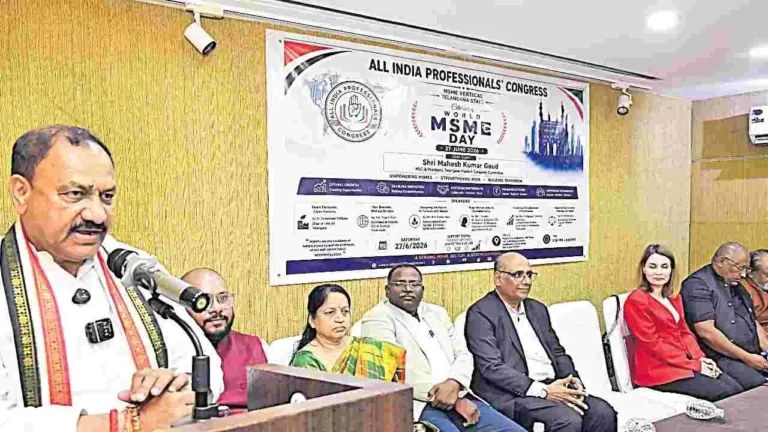
CHANDIGARH: Punjab BJP president Keval Singh Dhillon has written a strongly worded letter to World Bank Group President Ajay Banga, responding to his recent remarks on Punjab’s rural economy and the mindset of young farmers who sell their land.
In his letter, Dhillon acknowledged that wealth generated from land sales poses genuine economic challenges for rural families, but said that the issue should not be viewed as a result of individual choices or shortcomings of Punjab’s youth.
He said the trend shows bigger structural changes in Punjab’s agrarian economy, where young people often struggle to find alternative employment after moving away from agriculture due to a lack of skill development opportunities and financial guidance.
Dhillon praised Punjab’s farming community and said the farmers are the country’s most hardworking and resilient people.
Punjab BJP Chief Writes To World Bank President Ajay Banga Over Remarks On State’s Youth And Farmers (ETV Bharat)
He said that for three generations, Punjab’s farmers had ensured India’s food security by producing surplus grain, often at personal and environmental cost. Rather than being stereotyped, they deserve scientific solutions and policy support to address the challenges facing agriculture, he added.
Responding to Banga’s reference to drug abuse in Punjab, Dhillon said the BJP is committed to eliminating the drug menace from the state. He accused the ruling Aam Aadmi Party (AAP) government of failing to tackle the issue effectively and announced that the BJP would soon launch a Nasha Mukt Punjab (Drug-Free Punjab) campaign.
The initiative, he said, would focus on stricter law enforcement and strengthening de-addiction programmes at the grassroots level.
Appealing to Banga as a fellow Punjabi, Dhillon urged the World Bank to work with the Centre on a comprehensive rural development strategy for Punjab. He called for greater investment in crop diversification, rural entrepreneurship, skill development and financial literacy programmes for farmers. He also said the Narendra Modi-led government was undertaking significant rural development initiatives and that World Bank support would strengthen these efforts.
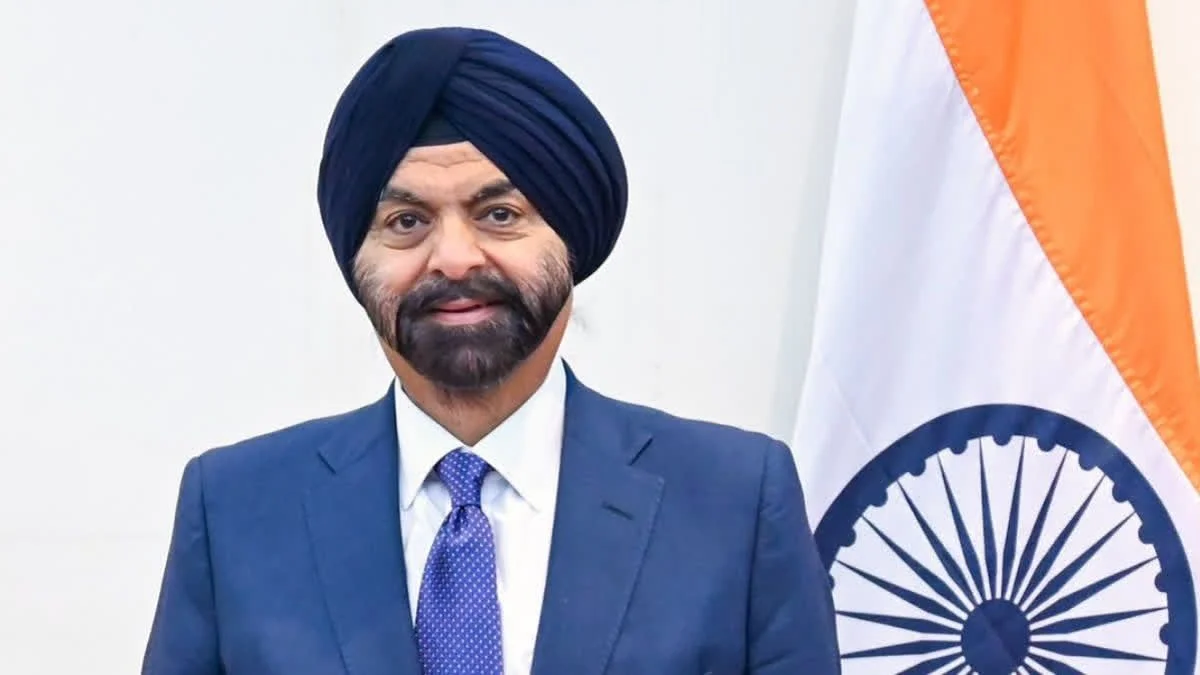
The letter comes after Ajay Banga, while speaking in a recent interview, expressed concern over changing socio-economic trends in Punjab. Recalling his roots in the state, Banga said many young people who sell their agricultural land become temporarily wealthy, spend lavishly on SUVs, consumer goods, alcohol and cigarettes, but run out of money within a few years. He said many eventually move to urban slums in search of low-paying jobs, including delivery work.
Banga clarified that there was nothing wrong with such jobs, but argued that with better opportunities, access to technology, improved seeds, fertilisers, and cooperative farming models, Punjab’s youth could achieve far greater success.
Economic Vulnerability of Punjab’s Youth Needs Urgent Attention: Dhillon
Sardar Kewal Singh Dhillon noted that Ajay Banga’s statements have initiated a necessary dialogue regarding localized economic realities. He emphasized that this discussion requires meaningful policy engagement rather than partisan political posturing.
The state party chief observed that the international institution’s leader correctly illuminated the financial instability facing young citizens. However, he maintained that short-term wealth from property liquidation cannot replace durable rural infrastructure.
Dhillon asserted that the socio-economic friction experienced by rural households must be evaluated through the lens of broad societal transitions rather than individual faults. Addressing these systemic shifts demands immediate administrative accountability and state-level governance.
The regional agricultural sector has sustained domestic food reserves for decades through immense ecological and physical sacrifices. This historical contribution warrants systemic support, modern technological intervention, and structural empathy from governing authorities.
The current agrarian crisis stems from families attempting to transition away from traditional farming models without a safety net. The absence of technical upskilling pipelines and institutional wealth management resources represents a clear policy deficit by the state administration.
Addressing substance abuse challenges, Dhillon affirmed his organization’s absolute focus on eradicating narcotics from the state framework. He noted that comprehensive enforcement and community rehab systems have languished under current local executive leadership.
The state party leader extended an open invitation to the World Bank chief for a direct briefing on localized economic indicators to ensure future institutional assessments reflect contemporary grassroots realities.
Expressing long-term optimism, Dhillon concluded that the domestic population possesses the necessary human capital and inherent resilience to spearhead its own economic revival.
Future Outlook
The escalating dialogue between regional leadership and the World Bank points to an impending shift in how rural development is funded in northern India. If the World Bank aligns with central government frameworks as requested, Punjab may see targeted financial infusions into agricultural technology, crop diversification, and grassroots cooperative farming networks. This intervention could accelerate the modernization of the state’s rural economy, shifting focus away from land sales toward sustainable agricultural entrepreneurship.
FAQs
Why did Punjab BJP chief Kewal Singh Dhillon write to World Bank President Ajay Banga?
Dhillon wrote the letter to address and counter recent public remarks made by Ajay Banga regarding the financial habits of young Punjabi farmers who liquidate their agricultural land.
What did World Bank President Ajay Banga say about Punjab’s youth?
Banga observed that many young rural landowners become temporarily wealthy by selling ancestral property, spending their gains on luxury vehicles and consumer goods before exhausting their funds and migrating to low-paying urban jobs.
What alternative solutions did the BJP propose for Punjab’s rural economy?
The BJP urged the World Bank to partner with the central government to invest in crop diversification, financial literacy, agricultural technology, and rural entrepreneurship programs to build stable livelihoods.
What is the Nasha Mukt Punjab initiative?
It is a forthcoming campaign announced by the BJP aimed at eliminating drug abuse in the state through rigorous law enforcement and expanded grassroots de-addiction programs.