Malta Election Concludes Rapidly as Labour Secures Win
A swift 33-day national election cycle in Malta concluded on Sunday, May 31, with the ruling Labour Party securing a fourth consecutive term, sparking immediate celebrations across the Mediterranean archipelago. The rapid campaign highlighted stark procedural contrasts between European parliamentary systems and the protracted, multi-billion-dollar election cycles seen in the United States.
Key Highlights
- Malta completed its entire democratic election cycle from announcement to final hand-count in exactly 33 days.
- The governing Labour Party won reelection, leveraging popular domestic economic policies like universal gas subsidies.
- Voter turnout surpassed 87.5%, sustained by tradition and subsidized flights for expatriates returning to vote in person.
- Both political parties presented extensive platforms containing over 1,000 distinct policy promises for the island nation.
Midday fireworks signaled the arrival of election results on Sunday, May 31, while citizens populated the beaches during a warm, 78-degree morning as election officials counted ballots by hand. The lack of digital tracking left the public reliant on public alerts to check official media channels for the finalized winner.
Daytime pyrotechnics remain a distinct local tradition, with over 35 fireworks factories operating across a national population comparable in size to Fresno, California. These loud detonations, traditionally reserved for religious feast days, marked the immediate confirmation of the incumbent government’s victory.
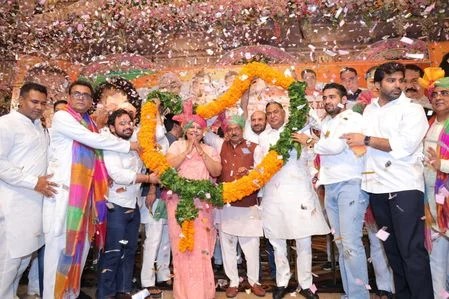
Automobile processions carrying red flags immediately crowded the streets of Mellieħa, representing the official color of the victorious Labour Party.
The demonstration provided a stark example of an election concluding decisively in a democracy that maintains an efficient voting architecture.
For foreign residents living on European Union passports, the localized political landscape represents a system shielded from international media scrutiny.
In comparison to the American political framework, where the 2028 presidential race effectively commenced before the 2024 inauguration, Malta operates without perpetual campaigning. The domestic process contrasts heavily with American campaigns that span several years, consume billions of dollars, and terminate with late-night concessions.
Malta dissolved its parliament on April 27 and finalized the election on May 30, executing the entire process across 33 days. This timeline included a holiday weekend and avoided primary contests, national conventions, or exploratory committees. Political advertisements appeared on preprinted billboards within 24 hours, while campaign literature reached households the following morning.
While complex geopolitical powers require extended scrutiny for leadership transitions, the streamlined Maltese system presents distinct structural lessons in containing political polarization. The process treats governance as a periodic civic duty rather than an ongoing cultural conflict.
The competing political organizations published extensive manifestos, with each party detailing more than 1,000 separate policy pledges. To navigate these massive legislative agendas, the opposition party implemented an artificial intelligence chatbot on its digital platform to assist voters in identifying relevant promises.
The Labour Party platform featured a 1,000-euro annual financial bonus for employed citizens alongside structural environmental goals. The government pledged that every resident would live within a 10-minute walk of a public green space, a complex engineering target for an island dominated by limestone infrastructure. Additionally, the party promised a 35% reduction in bureaucratic procedures using digital technology, alongside a strict national registry of permitted household pets.
The Nationalist opposition countered with plans to construct four regional hospitals within the small geographic territory. Their platform also proposed a complete five-year income tax exemption for workers under 30, expanded educational programming regarding cannabis, and an ambitious transit infrastructure project. The opposition promised an 11.5-kilometer subterranean metro network costing 1.5 billion euros to be completed through solid limestone in 5 years, resurrecting a proposal shelved in 2025 due to fiscal constraints.
Regarding renewable energy, Labour proposed a 15-million-euro allocation over five years to install solar infrastructure on 1,000 social housing units. This equates to 3 million euros annually, a modest sum compared to the massive metro proposal. The island continues to rely heavily on undersea electrical interconnectors to import power directly from Sicily.
Local political dialogue routinely features generalized allegations of systemic corruption regarding both major political institutions. These public perceptions remain widespread, yet they rarely alter established voting patterns or institutional continuity.
Six weeks prior to the vote, Italian media reported that a historic Sicilian Mafia figure had previously used a coastal villa in Gozo to evade law enforcement. The property has been leased since 2002 by Anton Refalo, the current minister for agriculture. When questioned by reporters regarding the villa’s history, the minister denied knowledge of the former occupant.
Despite the widespread publication of these ties in April, the Labour Party secured its fourth straight victory six weeks later. Voters prioritized economic stability and direct energy subsidies over the historical real estate controversy.
The political resilience of local officials mirrors historical precedents on the island, dating back to when the Knights of Malta protected high-profile fugitives in exchange for cultural masterworks. Institutional tolerance for administrative anomalies remains a recurring theme in the nation’s history.
For external observers, the relationship between administrative irregularities and civic functionality appears unique.
The proliferation of unfulfilled political promises does not disrupt daily public services or basic municipal infrastructure.
Patients can access medical care at local clinics without prior appointments, and retail fuel prices remained unchanged throughout a global energy crisis due to aggressive state intervention. Analysts attribute the Labour victory to the immense popularity of these energy subsidies. This dynamic reflects a direct transactional democracy where state promises are visibly fulfilled at the fuel pump. The subsidized energy costs have drawn widespread international attention on digital media platforms.
Compared to Western nations where tax revenues fund distant initiatives, local fiscal policies yield tangible, immediate benefits for the domestic populace.
In contrast, legislative bodies in larger Western democracies frequently struggle to pass popular institutional reforms, such as permanent daylight saving adjustments or simplified tax filing systems. Key public priorities including pharmaceutical price caps, family leave, and infrastructure development often stall indefinitely.
Malta demonstrates a model where administrative objectives are delivered despite localized political imperfections.
Voting commenced at 7:00 a.m. on Saturday under clear weather conditions, drawing thousands of expatriates back to the island due to the legal prohibition of mail-in or electronic ballots. The state-backed airline facilitated this participation by offering subsidized round-trip flights for 90 euros, despite an actual operational cost of 850 euros per passenger.
Ballot verification occurred by hand in a centralized hall, where party representatives monitored the process through protective plexiglass barriers. This manual verification system drew a voter turnout of over 87.5%, significantly higher than recent American presidential election turnouts.
Voting behavior remains deeply tied to multi-generational family alignments rather than fluid political ideology. Citizens frequently maintain lifelong allegiances to the political parties favored by their parents.
This predictable political alignment prevents the severe intergenerational friction and familial division observed in highly polarized Western nations.
During the polling window, daily life proceeded quietly across the island as residents detached from the immediate political tension.
By Monday morning, workers began removing campaign advertisements without civil unrest or legal challenges regarding the hand-counted ballots. Retained cabinet ministers resumed their official duties, energy subsidies remained intact, and major infrastructure proposals returned to a conceptual status.
Government offices closed temporarily following the election announcement, confirming a return to routine administrative operations.
History of Maltese Elections and Voting Infrastructure
Malta’s modern electoral framework is defined by intensely high civic participation and traditional, manual voting processes. Since gaining independence in 1964, the country has maintained one of the highest voter turnout rates globally, consistently exceeding 85% without mandatory voting laws. This deep political mobilization is driven by a strict two-party system dominated by the Labour Party and the Nationalist Party.
The insistence on hand-counting ballots behind plexiglass barriers was instituted to guarantee transparency and prevent fraud following political volatility in the late 20th century. While other European nations adopted electronic voting or mail-in systems, Malta continues to require physical presence at the polls, sustaining a unique system of state-subsidized flights to bring its global diaspora home to vote during national elections.
FAQs
How long does a national election campaign last in Malta?
A national election campaign in Malta is exceptionally brief, lasting approximately 33 days from the official dissolution of parliament to election day.
What was the voter turnout in the recent Malta election?
The recent national election recorded a voter turnout of over 87.5%, driven by deep-seated family political traditions and subsidized travel for citizens living abroad.
Does Malta allow remote or mail-in voting for citizens living overseas?
No, Malta does not permit mail-in, electronic, or proxy voting. All eligible citizens must cast their ballots in person at local polling stations on the island.
How are votes counted and verified in Malta?
Votes are counted entirely by hand in a centralized counting hall. Political party activists monitor the entire process behind large plexiglass walls to ensure transparency and accuracy.