New Zealand Labour Party Conference: Members Express Optimism Amid Rising Polls
New Zealand Labour Party Conference: Members Express Optimism Amid Rising Polls
Labour Party delegates are expressing high confidence regarding their upcoming election prospects, buoyed by favorable polling data and a steady rollout of new policy platforms. The party faithful gathered in Wellington to consolidate their strategy and energize the base for the impending political campaign.
Key Highlights
- Party members maintain high optimism despite a minor 5% drop in recent polling data.
- A steady policy rollout has commenced, targeting health, transport, and housing sectors.
- Core leadership emphasized running on unified values that prioritize public welfare over financial metrics.
- Executive officials guarantee that all proposed economic figures will balance effectively.
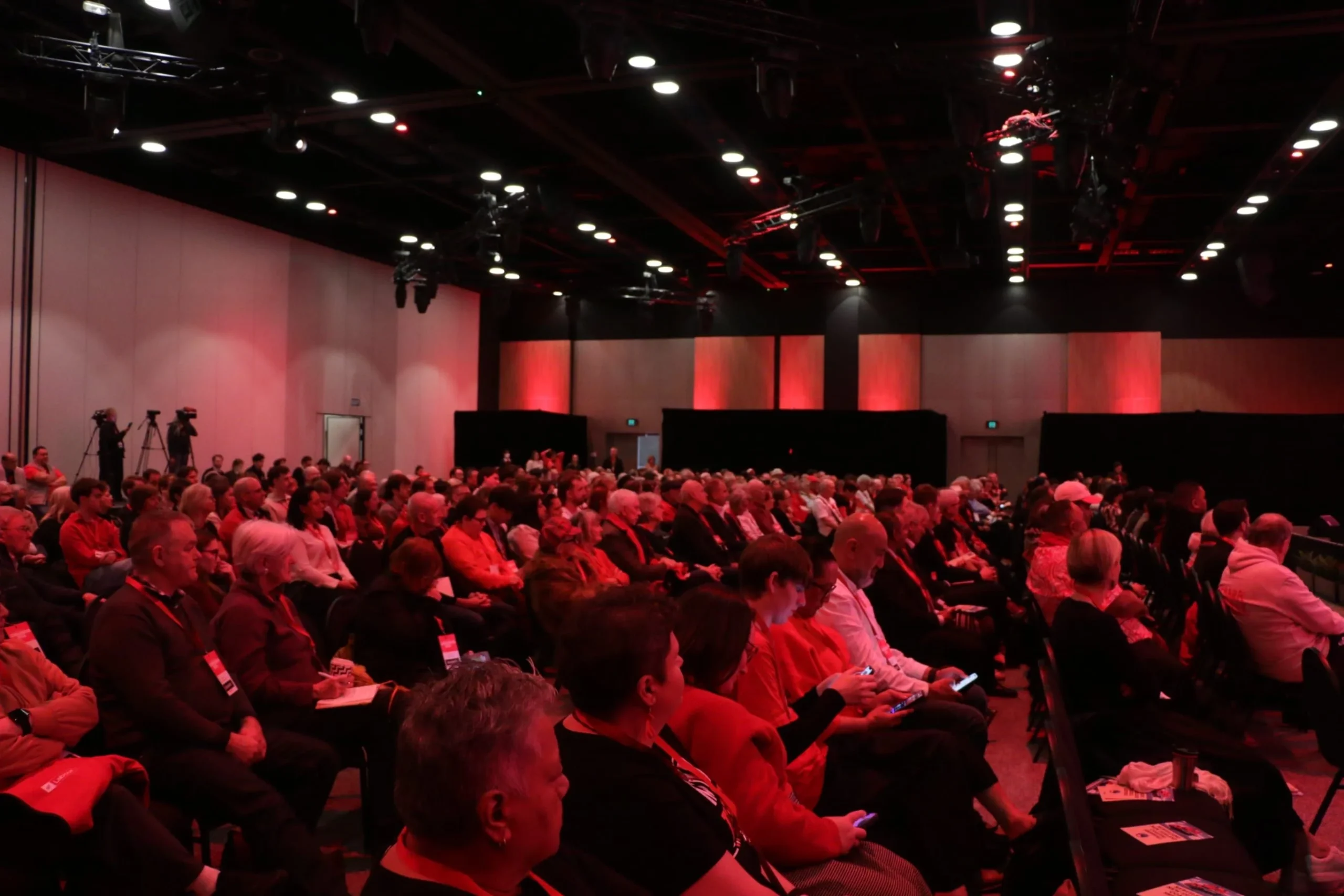
The political organization is hosting its two-day annual conference, designated as a congress during election periods, in Wellington this weekend. This gathering occurs exactly one week after the rival National Party held its own convention to gauge member sentiments.
In contrast to previous assessments, the current gathering of the party base reveals a collective mindset focused entirely on securing victory during the upcoming campaign. Recent data from the 1News Verian poll published on Tuesday confirms that the left-leaning faction retains the necessary support to establish a governing coalition.
Conference attendees, however, demonstrated a cautious approach when discussing specific polling metrics. Delegates emphasized that public surveys merely reflect immediate sentiment, while the primary objective remains focused entirely on the official voting date.
Other attendees described the internal atmosphere as highly optimistic and unified. Delegates expressed a desire to maintain this operational momentum as the country moves closer to the general election.
The general consensus among the membership emphasizes forward-looking strategies. Activists are urging the collective base to unite and focus on future initiatives rather than past electoral outcomes.
Anticipation of Political Change
A senior delegate, who experienced industrial redundancy during the 1980s, expressed deep solidarity with citizens affected by recent labor market down-turns. This member argued that competing political factions focus excessively on fiscal metrics rather than human welfare.
The individual noted that this core philosophy drew them to the convention, highlighting the emotional toll of regional job losses. The attendee described the prevailing mood within the venue as exceptionally cheerful and driven.
There is a strong belief among the attendees that an institutional shift is approaching. Members expect this transition to yield highly positive outcomes for the broader public.
Evaluation of Policy Frameworks
The political formation faced sustained public criticism throughout 2025 and early 2026 for withholding its platform specifics. Recently, however, the leadership has shifted strategy, publishing comprehensive policy documents at a frequency of approximately one per week.
The newly unveiled healthcare framework includes universal free consultations with general practitioners, cost-free cervical screenings, eliminated prescription fees, and fully subsidized maternity ultrasounds. The organization plans to fund these medical expansions entirely through a newly implemented capital gains tax.
Additional initiatives feature a universal cap on public transit fares alongside a state-backed guarantee framework for social bonds via the Community Housing Funding Agency. Concurrently, the National Party countered by introducing its own solar energy credit system and updated retirement savings strategies.
These rival announcements directly target traditional policy territory typically claimed by the left. Although the opposition managed to reveal these initiatives first, Labour loyalists remained unconcerned about the policy overlap.
One conference member suggested that political rivals are merely duplicating existing concepts due to a lack of innovative platforms. This delegate characterized the internal atmosphere as progressive, though he advocated for an accelerated release of remaining strategies.
The member stated that an immediate increase in policy disclosures would clarify public expectations and strengthen the current campaign push. Activist feedback indicated a clear demand for more strategic clarity in the coming weeks.
Simultaneously, other delegates called for expanded initiatives targeting the digital and technology sectors. Attendees noted that the organization has successfully stabilized its internal structures since its electoral defeat in 2023.
Alignment of Core Principles
During the Saturday session, party president Jill Day instructed attendees to identify their fundamental motivations for political involvement. She noted that while individual motivations varied, the collective membership remains bound by a shared commitment to mutual community support.
The delegation also received briefings from deputy leader Carmel Sepuloni and finance spokesperson Barbara Edmonds, who both characterized the 2026 vote as a definitive moment for the nation’s future trajectory. Both front-benchers detailed the philosophical foundation of the upcoming campaign.
Edmonds assured the audience that her projected fiscal calculations would remain structurally sound under a future administration. Meanwhile, Sepuloni pledged that a reformed government would immediately dismantle the incumbent administration’s pay equity adjustments, though specific funding mechanisms for this reversal remain unquantified.
A introductory segment featured a collection of newly selected parliamentary hopefuls explaining their candidacies and personal ethics. The speaking group included Sophie Handford contesting Kāpiti, Mananui Ramsden for Te Tai Tonga, Sam Collins in the North Shore electorate, Chris Flatt for Taupō, and Hannah Pia Baral representing Upper Harbour.
Internal rankings indicate that Handford and Flatt maintain sufficiently high list placements to secure legislative entry regardless of electorate outcomes, whereas Ramsden is pursuing a localized strategy. Ramsden focused heavily on crowd engagement within the Wellington region, utilizing cultural promotional items to generate digital media engagement.
Conversely, Baral and Collins occupy the 45th and 63rd positions on the party list respectively. Consequently, both candidates must secure direct electorate victories in regions historically dominated by the National Party to enter the legislature.
The internal congress remained largely closed to external media representatives. Strategic presentations delivered by campaign director Kieran McAnulty and Māori strategist Willie Jackson were conducted entirely behind closed doors, alongside all afternoon operational briefings.
Official internal documents reveal that the closed sessions prioritized grassroots mobilization, digital media strategies, and techniques for managing complex voter interactions. Party leader Chris Hipkins is scheduled to deliver a major keynote address on Sunday afternoon, where he is widely expected to unveil a significant new policy initiative.
Future Outlook
As the 2026 election cycle intensifies, the Labour Party’s rapid shift from organizational consolidation to active policy deployment marks a critical phase in its bid to reclaim treasury benches. The transition from a defensive posture following the 2023 defeat to an aggressive, weekly policy release strategy indicates an effort to control the narrative around public services and taxation.
The upcoming address by Chris Hipkins will serve as a key indicator of whether the party can successfully translate internal conference enthusiasm into broader electoral momentum. With the National Party actively contesting traditional center-left policy territory, the execution of Labour’s ground campaign and the economic defense of its capital gains tax proposal will dictate the movement of undecided voters over the next four months.
FAQs
What are the main healthcare policies announced at the 2026 conference?
The newly announced healthcare platform features universal free visits to doctors, fully subsidized cervical screening, the elimination of prescription charges, and free maternity scans. These expanded medical services are projected to be funded through a capital gains tax.
Who are some of the new candidates introduced at the event?
The organization showcased several new candidates, including Sophie Handford for Kāpiti, Mananui Ramsden for Te Tai Tonga, Sam Collins for North Shore, Chris Flatt for Taupō, and Hannah Pia Baral for Upper Harbour.
How does the current polling look for the Labour Party?
Despite experiencing a recent 5% decline, the latest 1News Verian tracking poll indicates that the party maintains its lead over the National Party, suggesting the left-leaning political bloc possesses sufficient numbers to establish a coalition government.