Karnataka Navali Dam Project Sparks Dispute With Andhra Pradesh
A high-level central committee will address the dispute between Karnataka and Andhra Pradesh over the proposed Navali Balancing Reservoir. The panel will evaluate the project alongside critical Tungabhadra river issues, directly impacting downstream irrigation security and regional water distribution.
Key Highlights
- The central panel will mediate the escalating row over Karnataka’s proposed 30.90-TMC Navali project.
- Siltation has cut the Tungabhadra reservoir’s capacity by 26.7 TMC, driving demands for compensatory storage.
- Andhra Pradesh seeks guaranteed protections for its downstream water rights before any construction begins.
- Desilting the Tungabhadra reservoir remains financially daunting, carrying an estimated cost of Rs 24,600 crore.
Karnataka’s planned Navali Balancing Reservoir is poised to become the most volatile issue before a high-level central committee appointed to settle long-standing Tungabhadra river conflicts. Andhra Pradesh strongly opposes the infrastructure development.
Beyond the Navali initiative, the panel will analyze the desilting of the Tungabhadra reservoir and the modernization of the Rajolibanda Diversion Scheme. Its final determinations will directly shape the agricultural future of Andhra Pradesh.
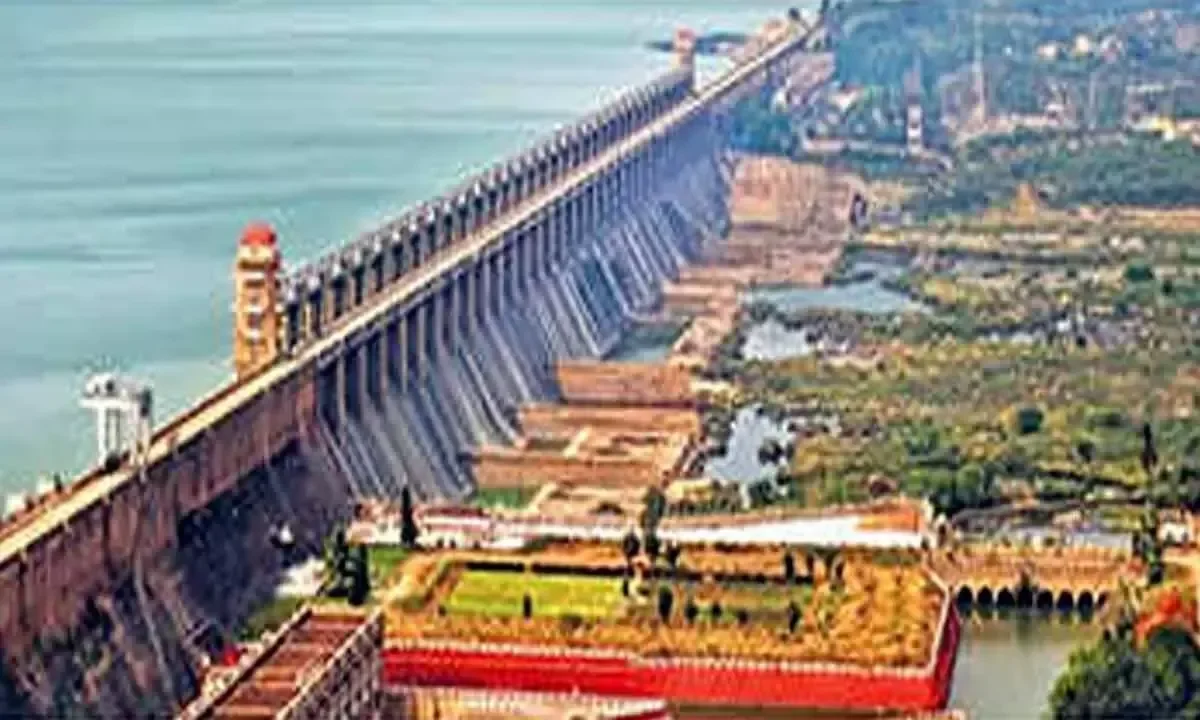
The committee’s mandate crystallized after leaders from Andhra Pradesh, Karnataka, and Telangana met with Union Jal Shakti Minister CR Patil. The meeting occurred in Hosapete following the activation of 36 new Tungabhadra dam gates on June 25, 2026.
Following the high-level meeting, a senior leader from the Union Jal Shakti Ministry instructed the Tungabhadra Board to compile comprehensive assessments of the three pending issues.
The Navali Reservoir proposal represents the most critical threat to Andhra Pradesh. Karnataka intends to construct the 30.90-TMC balancing reservoir near Navali village within the Koppal district.
Karnataka designed the project to counteract declining storage volumes in the main Tungabhadra reservoir caused by heavy siltation.
Andhra Pradesh has lodged formal complaints against the venture. State officials state that the territory does not receive its designated water quotas.
These shortages impact supplies delivered through the Right Bank High-Level Canal, Right Bank Low-Level Canal, and the KC Canal.
The state remains firm that it will block the Navali project unless binding alternative setups protect its downstream water allocations.
Concurrently, the committee will evaluate whether desilting can restore the lost capacity of the primary Tungabhadra reservoir.
Technical evaluations indicate that 755 million cubic metres of sediment have settled in the basin. This accumulation has erased roughly 26.7 TMC of storage capacity.
Engineers have debated desilting schemes since 1989, re-examining options in 2007, 2012, and 2023 without launching any physical operations.
Modern projections show that desilting would require a massive budget of Rs 24,600 crore.
The process translates to an expensive Rs 920 crore for each restored TMC. The operation also requires substantial land tracts for sediment disposal.
The appointed committee must now investigate alternative solutions that are both technically feasible and economically viable.
The final agenda item centers on the Rajolibanda Diversion Scheme. Telangana claims it receives just 5 to 6 TMC of its assigned 15.9 TMC.
Telangana blames its deficient shares on severe canal siltation and unfinished structural upgrades to the distribution network.
For Andhra Pradesh, the findings on the Navali Reservoir remain paramount. The panel’s ultimate verdicts will decide if existing irrigation rights are preserved while addressing Karnataka’s push for compensatory storage.
Future Outlook
The upcoming resolutions by the central committee will redefine water-sharing dynamics in southern India. As climate variability alters seasonal river inflows, the panel’s ability to balance Karnataka’s storage shortages against Andhra Pradesh’s downstream agricultural rights will serve as a precedent for interstate water governance. The high financial barrier of desilting suggests the committee will likely push for structural compromises and modernized canal networks rather than multi-billion-crore dredging operations.
FAQs
What is the primary cause of the Tungabhadra water dispute?
The conflict stems from reduced storage capacity in the Tungabhadra reservoir due to heavy siltation. Karnataka wants to build a new balancing reservoir at Navali to compensate for this loss, which Andhra Pradesh fears will jeopardize its downstream water allocations.
How much storage capacity has the Tungabhadra reservoir lost?
Siltation has compromised the reservoir significantly, accumulating an estimated 755 million cubic metres of sediment. This buildup has reduced the total storage capacity of the reservoir by approximately 26.7 TMC.
Why is desilting the Tungabhadra reservoir considered impractical?
Desilting faces extreme financial and logistical hurdles. The project is estimated to cost Rs 24,600 crore, which equates to roughly Rs 920 crore per restored TMC of water, and requires massive tracts of land to dump the excavated silt.
What is Telangana’s grievance regarding the Rajolibanda Diversion Scheme?
Telangana reports that it receives only 5 to 6 TMC of its officially allocated 15.9 TMC from the scheme. The state attributes this shortage to heavy silt accumulation and incomplete modernization of the local canal network.