Seoul Court Upholds Kang Ui-gu’s 18-Month Martial Law Sentence
## Seoul Court Upholds Kang Ui-gu’s 18-Month Sentence Over Martial Law Document
SEOUL: The Seoul High Court upheld an 18-month prison sentence for former presidential aide Kang Ui-gu on August 24, 2026, finding him guilty of creating and unlawfully destroying a backdated document linked to former President Yoon Suk Yeol’s December 2024 martial law declaration.
The court’s Criminal Division 12-3, presided over by senior judge Kim Min-ah, rejected appeals from both Kang and the special counsel. According to Seoul Economic Daily, the decision left the original prison sentence and Kang’s courtroom detention unchanged.
How the Backdated Martial Law Document Was Created
Kang, a former presidential office deputy chief who headed its personal secretariat, prepared the document’s cover page on December 6, 2024, three days after Yoon declared emergency martial law. The document was made to appear as though the required signatures had been obtained before the declaration.
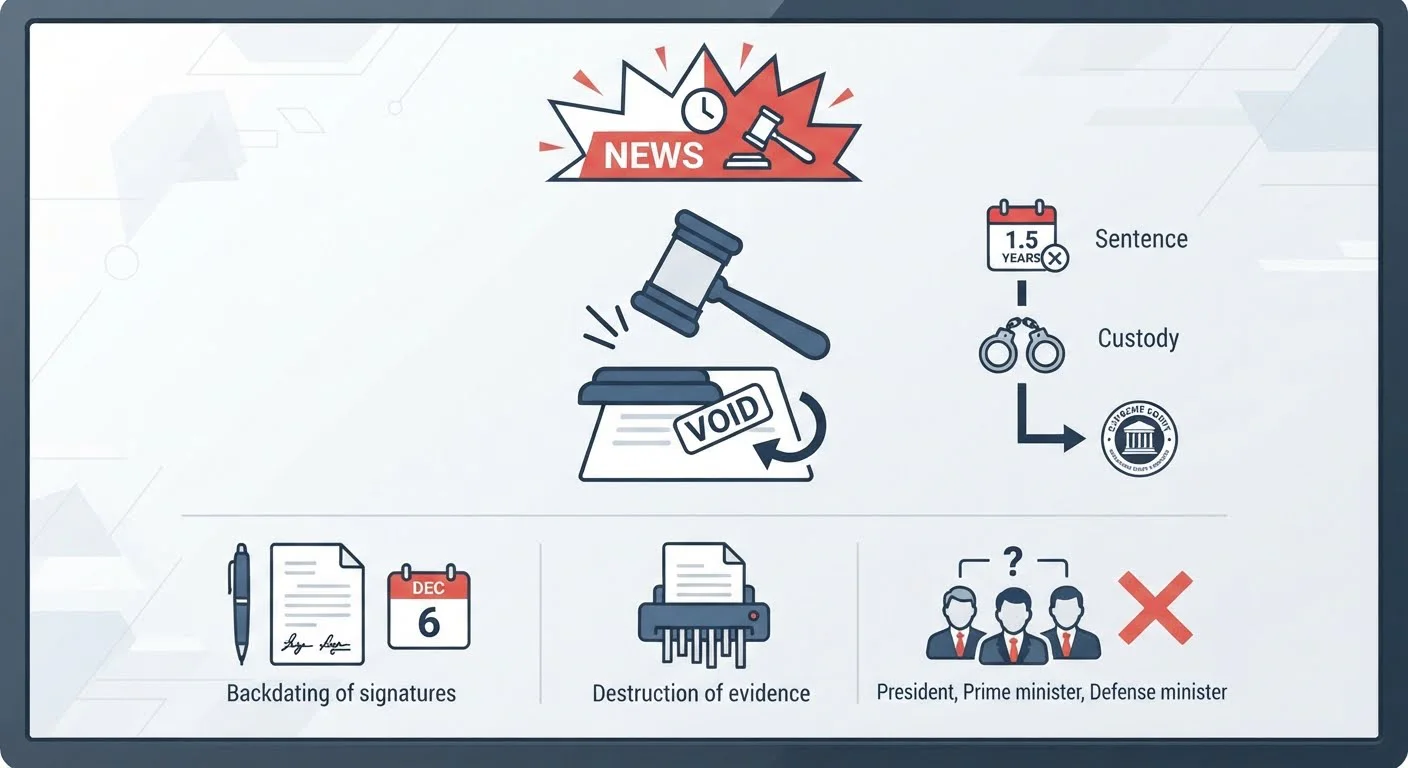
The document carried the signatures of former Prime Minister Han Duck-soo, former Defence Minister Kim Yong-hyun and Yoon. The court found that its presentation falsely suggested the relevant authorisation procedures had been completed on December 3, rather than after the emergency declaration had been lifted.
According to SBS News, the appellate judges concluded that Kang understood the discrepancy between the document’s stated date and its actual preparation. The court said: “The defendant was aware that the dates signed by Yoon Suk Yeol and others differed from the actual date the document was drafted.”
Why the Court Upheld the Convictions
The appellate court rejected Kang’s argument that the proclamation was not a false official document and that he had not recognised any falsification. Judges determined that his knowledge of the conflicting dates established the necessary intent behind preparing the document.
The court also upheld his conviction for unlawfully destroying an official document. Kang had received a request from Han Duck-soo to destroy the backdated proclamation, reported the request to Yoon and subsequently destroyed it without following the required procedures.
Judges ruled that the completed proclamation qualified as a presidential record because it documented whether the signatures required under Article 82 of South Korea’s Constitution had been obtained. Its destruction therefore violated the Presidential Records Management Act and constituted damage to an official document.
Court Rejects Separate Allegations and Sentence Appeals
The appellate court nevertheless upheld Kang’s acquittal on the separate charge of using a false official document. Judges determined that keeping the proclamation in an office drawer did not constitute its use or establish that it had been made accessible to others.
Prosecutors also argued that the document falsely indicated that normal Cabinet deliberations had occurred before the martial law declaration. However, the court rejected that interpretation, finding that the document itself did not establish whether those deliberations had taken place.
Kang’s request for a reduced sentence under the special counsel legislation was also rejected. The judges found that Han had disclosed the offence before Kang gave his statement, limiting the significance of Kang’s contribution to uncovering the crime.
The court additionally considered Kang’s refusal to testify in proceedings concerning Han’s alleged involvement in insurrection and his continued rejection of the document’s falsity. Both the defence and the special counsel had challenged the original sentence, but the appellate judges found no grounds to change it.
The August 24 appellate ruling consequently preserved both the convictions for document falsification and unlawful destruction and the separate acquittal concerning the alleged use of the document.