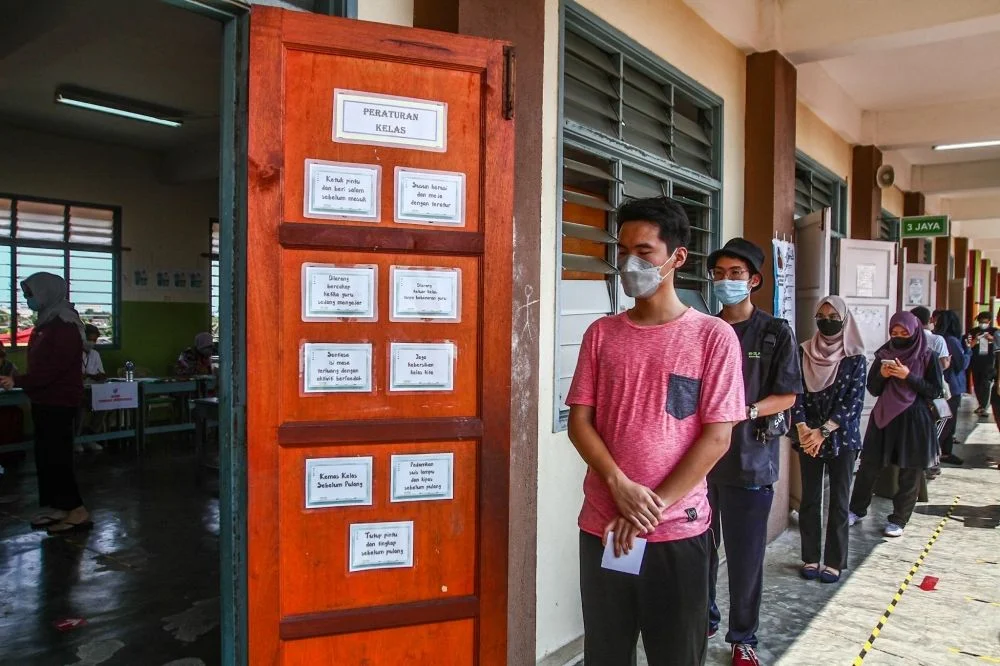
Johor Braces for Voter Apathy in Upcoming State Election
Johor political factions are currently confronting a severe drop in electorate participation as the state heads toward the July 11, 2026 polls. Mobilizing a massive voter base remains the primary hurdle for all coalitions attempting to secure a decisive mandate.
Key Highlights
- Historic Low Turnout: The state recorded an unprecedented low participation rate of 54.92% during the 2022 electoral cycle.
- Urban Center Silence: Opposition strongholds in urban and suburban corridors suffered the most significant drops in ballot numbers.
- Voter Base Expansion: Total registered voters climbed to 2,725,559 despite ongoing concerns regarding broad political exhaustion.
As Johor prepares to head to the polls on July 11, political parties are bracing for a challenge far greater than their opponents: the ghost of voter apathy.
With nomination day set for June 27 and early voting on July 7, the central question remains whether the state can persuade its massive electorate to actually show up.
When Johor last voted in March 2022, it witnessed a dismal turnout of just 54.92 per cent.
It was a historic low for modern Malaysian elections, occurring despite the state having more registered voters than ever before.
Out of nearly 2.6 million eligible voters, only 1,426,573 ballots were cast.
The contrast is jarring. In 2018, turnout stood at a robust 84.51 per cent with over 1.5 million votes.
By 2022, Johor had gained hundreds of thousands of new names on its rolls through Undi18 and automatic registration, yet it ended up with 109,000 fewer ballots in the boxes.
The anatomy of a turnout crisis
The 2022 slump was born from a perfect storm of unusual circumstances.
The election was held under the cloud of the Covid-19 pandemic, with the Omicron variant triggering a fresh wave of anxiety.
For Johoreans working or studying in other states or across the Causeway, the logistical hurdles and travel costs of returning home proved a significant deterrent.
However, the deeper issue was political fatigue.
The polls followed years of instability that saw Johor cycle through multiple administrations after Pakatan Harapan’s (PH) historic 2018 breakthrough.
That victory had famously ended Barisan Nasional’s (BN) uninterrupted grip on the state since 1955.
The PH government lasted less than two years, however.
The 2020 political crisis saw Bersatu exit the coalition to join forces with PAS and Gerakan under Perikatan Nasional, alongside BN.
This realignment collapsed the state government, leading to a new administration under Datuk Hasni Mohammad.
Following the death of former Menteri Besar Datuk Osman Sapian in late 2021, the ruling coalition’s majority thinned, prompting Hasni to seek a fresh mandate through a snap election.
Where the silence was loudest
The decline in participation hit hardest in Johor’s urban and suburban belts.
Notably, eight of the ten constituencies with the lowest turnout in 2022 were won by PH or its then-ally Muda, suggesting that the coalition’s base was the most affected by the stay-at-home trend.
Perling, won by PH’s Liew Chin Tong, saw turnout crater to just 42.2 per cent, nearly half of the 83 per cent recorded in 2018.
In Skudai, a safe seat for PH’s Marina Ibrahim, participation plunged from 85.2 per cent to 43.8 per cent.
Even in Puteri Wangsa, where Muda’s Amira Aisya secured a landmark win, turnout was a mere 46.9 per cent compared to the 86.9 per cent seen four years prior.
Similar patterns emerged in Stulang, Bentayan, Penggaram, and Senai, where turnout struggled to cross the 50 per cent mark.
Only three of the bottom ten seats, Bekok, Kempas, and Kota Iskandar, were won by BN, though they too suffered participation drops of over 30 percentage points.
Following the 2022 results, Johor PH chairman Aminolhuda Hassan pointed to this low turnout and opposition vote-splitting as the primary reasons for the coalition’s weakened performance.
A regional outlier
Johor’s 54.92 per cent figure remains an anomaly in recent Malaysian political history.
While other states have seen fluctuations, Johor remains at the bottom of the participation ladder.
Sarawak state election (2021): 60.67 per cent
Sabah state election (2025): 64.35 per cent
Melaka state election (2021): 65.85 per cent
Negeri Sembilan state election (2023): 68.35 per cent
Selangor state election (2023): 71.98 per cent
Penang state election (2023): 72.67 per cent
Kedah state election (2023): 73.86 per cent
Terengganu state election (2023): 74.79 per cent
15th General Election (2022): 74.70 per cent
Whether the numbers rebound this time will likely decide the fate of the next government.
With 2,725,559 registered voters now on the rolls, parties across the divide are desperate to ensure that this time, the people of Johor choose to be heard.
Historical context
The electoral landscape of Johor has undergone massive shifts since 2018. For over six decades, Barisan Nasional maintained an uninterrupted hold on the state. The historic 2018 general election disrupted this status quo, ushering in a period of intense political realignments.
The subsequent collapse of administration majorities and frequent leadership transitions fueled a sense of exhaustion among voters. When automatic registration and Undi18 expanded the voter rolls before 2022, analysts expected an influx of active participants. Instead, severe logistical challenges across the Singapore border and political fatigue resulted in a sharp contraction of actual ballots cast.
FAQs
When is the upcoming Johor state election scheduled to take place?
The state election is scheduled for July 11, 2026, with nomination day fixed for June 27, 2026, and early voting occurring on July 7, 2026.
What was the total voter turnout during the previous Johor state election?
In the March 2022 election, the total voter turnout dropped to a historic modern low of 54.92 per cent, down significantly from 84.51 per cent in 2018.
How many registered voters are eligible to participate in this election cycle?
There are currently 2,725,559 registered voters on the electoral rolls for the state of Johor.
Which political coalitions were most impacted by the low voter turnout in 2022?
Opposition factions suffered the greatest losses, as eight out of the ten constituencies with the lowest overall voter turnout were won by Pakatan Harapan or its ally Muda.


