Iran State Funeral Invitation to PM Modi Reflects Strategic Ties Tehran’s funeral invite to PM Modi underscores deep bil…
Iran State Funeral Invitation to PM Modi Reflects Strategic Ties Tehran‘s funeral invite to PM Modi underscores deep bilateral relations despite global shifts. Iran funeral invitation PM Modi iran-funeral-invite-modi Iran, PM Modi, India Iran relations, Masoud Pezeshkian, Chabahar Port, Middle East politics politics
Tehran has extended a formal invitation to Prime Minister Narendra Modi for the upcoming state funeral of former Supreme Leader Ayatollah Ali Khamenei. A former diplomat views this diplomatic outreach as a strong signal of Iran’s desire to sustain robust strategic and economic partnerships with New Delhi.
Key Highlights
- Iranian President Masoud Pezeshkian formally invited Prime Minister Narendra Modi to attend the state ceremonies scheduled from July 4 to July 9, 2026.
- The invitation follows the death of Ayatollah Ali Khamenei, who was killed in a joint United States-Israeli strike in February 2026.
- Indian diplomatic experts view the gesture as a sign of respect and validation of India’s balanced, non-aligned foreign policy during recent Middle East crises.
- New Delhi is currently reviewing its options and has yet to announce the official level of its delegation for the multi-city funeral services.
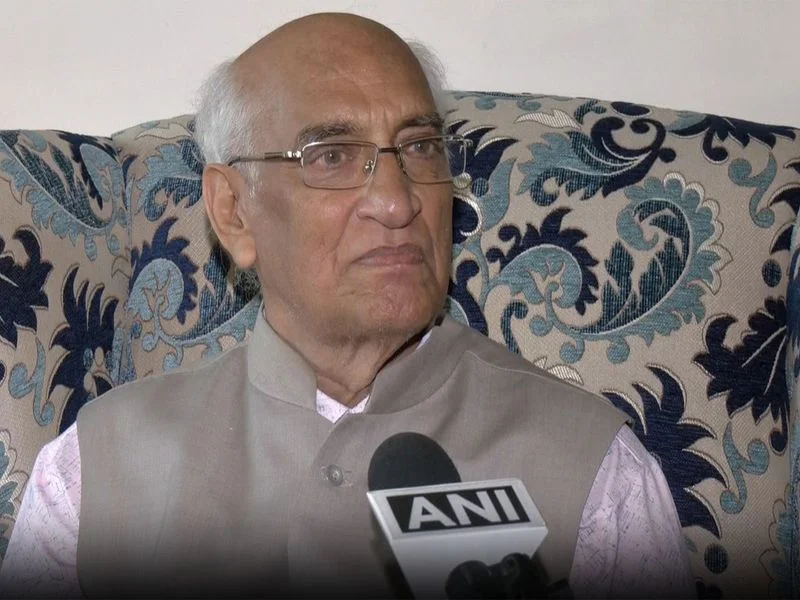
Former diplomat Vidya Bhushan Soni characterized Iran’s decision to invite Prime Minister Narendra Modi to the state funeral of former Supreme Leader Ayatollah Ali Khamenei as a highly positive diplomatic gesture. According to Soni, the move clearly demonstrates that Tehran continues to view New Delhi as a vital strategic ally.
Commenting on the official invitation delivered by Iranian President Masoud Pezeshkian to the Indian Prime Minister for the funeral services spanning July 4 to July 9, 2026, Soni emphasized its deeper meaning. He noted that the invitation underscores the immense value Iran places on its bilateral bond with India, even when navigating turbulent regional geopolitics.
The former diplomat observed that New Delhi maintained a balanced stance throughout the recent Middle East crisis, steering clear of an overtly pro-Israel position. Soni stated that despite occasional diplomatic disconnects, Iran evidently believes India commands a high level of institutional respect.
While acknowledging the significance of the gesture, Soni clarified that it is not mandatory for Prime Minister Modi to be physically present. Instead, he recommended that India ensure it is represented by an official delegation of an appropriate diplomatic rank.
Invoking historical precedent, Soni recalled that former Prime Minister Rajiv Gandhi opted out of attending Ayatollah Khomeini’s funeral in 1989. During that event, the Indian government chose to send a high-level official delegation to represent the nation instead.
Soni further stressed the compelling strategic necessity for India to remain actively engaged with Tehran. He pointed out that India’s long-term energy security interests and regional geopolitical influence are deeply tied to maintaining functional channels with Iran.
The former diplomat concluded by emphasizing the deep civilizational connections linking the two nations. He noted that joint infrastructure initiatives, particularly the development of the Chabahar Port, reinforce this bond, adding that India cannot afford to be sidelined from critical geopolitical shifts occurring around the strategic Strait of Hormuz.
The formal diplomatic invitation from Iranian President Masoud Pezeshkian arrives as Tehran coordinates a multi-city state funeral for Khamenei, who lost his life during a targeted US-Israeli military strike in February 2026. Inside sources confirm that the Indian government has not yet finalized the composition or rank of the delegation it will send to Iran.
Historical Context
The diplomatic protocol surrounding state funerals in Iran has historically served as a barometer for India-Iran relations. When the founder of the Islamic Republic, Ayatollah Ruhollah Khomeini, passed away in 1989, India navigated a delicate geopolitical landscape by dispatching a senior official delegation rather than sending Prime Minister Rajiv Gandhi.
This established a precedent of high-level engagement without necessitating head-of-state attendance during moments of transition. Decades later, the bilateral relationship has expanded beyond traditional ties to encompass critical infrastructure projects, most notably the Chabahar Port, which serves as India’s primary transit corridor to Central Asia and Afghanistan, bypassing Pakistan.
FAQs
When is the state funeral for Ayatollah Ali Khamenei scheduled?
The state funeral services and official ceremonies in Iran are scheduled to take place across multiple cities from July 4 to July 9, 2026.
Who extended the official invitation to Prime Minister Narendra Modi?
The formal invitation was extended to Prime Minister Modi by the Iranian President, Masoud Pezeshkian, on behalf of the government in Tehran.
Has India decided if Prime Minister Modi will attend the funeral?
No, official sources indicate that New Delhi has yet to make a final decision regarding the specific level of diplomatic representation it will send to the ceremonies.
What historical precedent exists for Indian representation at Iranian state funerals?
In 1989, former Prime Minister Rajiv Gandhi did not personally attend the funeral of Ayatollah Khomeini. Instead, India sent a high-level official delegation to represent the country, establishing a precedent for appropriate-level diplomatic responses.