Bihar Voter List Revision Concerns Electoral Inclusion Concerns
The Election Commission of India’s recent voter list revision in Bihar has eliminated millions of names, raising serious concerns regarding the targeted disenfranchisement of marginalized communities. Analysts warn that changing democratic norms are transforming citizenship from a guaranteed constitutional status into an ongoing bureaucratic hurdle.
Key Highlights
- The Special Intensive Revision eliminated nearly 4.7 million names from Bihar’s voter rolls, reducing the electorate to 74.2 million.
- Activists report disproportionately high numbers of voter deletions and official objections within the Muslim-majority Seemanchal region.
- Experts compare the administrative exercise to the 2019 National Register of Citizens in Assam, which left 1.9 million individuals excluded.
- Civil society groups are calling for independent judicial audits and robust appeals mechanisms to protect vulnerable voters.
A resilient democracy depends on equitable terms of integration for minority communities alongside individual freedoms.
Democratic decline rarely manifests as a sudden constitutional breakdown. Instead, democratic erosion regularly advances through technical administrative adjustments that appear legally sound while yielding highly unequal political outcomes.
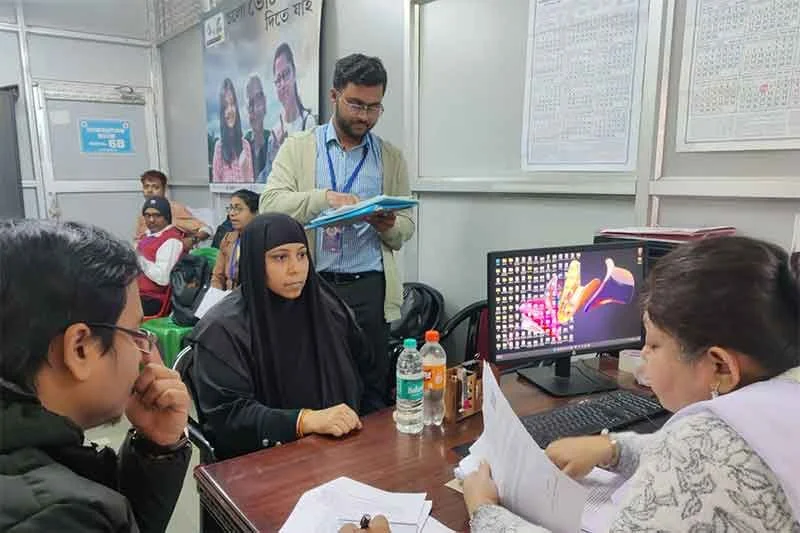
The Election Commission of India’s (ECI) recent Special Intensive Revision (SIR) of voter rolls in Bihar highlights how bureaucratic systems can drive political marginalization. Officially launched in 2025 to ensure electoral accuracy, the project sparked severe backlash over the sweeping removal of marginalized populations, including Muslims, low-income citizens, migrants, and women, as verified in ongoing 2025 Supreme Court proceedings.
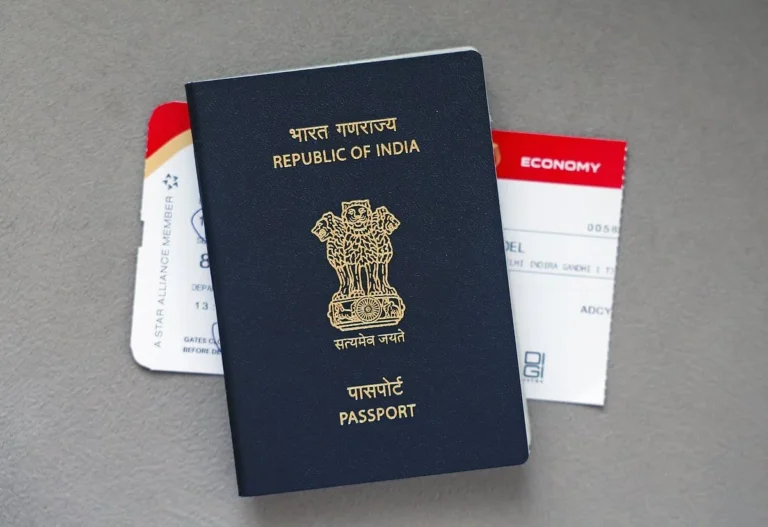
This administrative friction signals a fundamental shift in democratic belonging. The core issue has evolved beyond who holds constitutional liberties to who can continuously satisfy bureaucratic verification. Citizenship now operates less as an unassailable legal right and more as a shifting documentary demand managed by state officials.
The structural magnitude of the Bihar voter purge is unprecedented. Final official statistics indicate the state’s voting population contracted from 78.9 million to 74.2 million, confirming the removal of nearly 4.7 million individuals. Initial draft frameworks in early 2025 had restricted an estimated 6.5 million voters during preliminary evaluation periods. While authorities attribute the contraction to duplicate registrations, deaths, and relocations, independent observers challenge the metrics and social equity of the operation.
The impact of these cuts is deeply tied to local demographics. Independent monitoring networks reveal that Muslim-majority border districts within Bihar’s Seemanchal belt—such as Kishanganj, Araria, Katihar, and Purnea—endured an exceptionally high density of registration challenges and removals. Despite official assertions that the state maintains no religious metrics and executes no targeted purges, the concentration of deletions in impoverished minority strongholds has fueled widespread public anxiety over biased disenfranchisement.
These systemic tensions mirror historical patterns of citizenship documentation across India. The most prominent structural model remains the Assam National Register of Citizens (NRC). The final database published on August 31, 2019, locked out 1,906,657 residents out of roughly 33 million total applicants. While multiple demographic groups faced removal, the political rhetoric surrounding the operation focused heavily on targeting Bengali-speaking Muslims, forcing vulnerable residents to continually supply older documentation to justify their existence.
From a theoretical standpoint, these state operations display classic administrative governmentality. Modern governance functions through database management, identity tracking, and statistical sorting rather than direct physical coercion. These systems mask their political weight behind neutral technical procedures, yet they retain immense power by deciding which individuals achieve legal visibility and recognition by the state.
The current political reality demonstrates the institutionalization of documentary citizenship. Traditional political philosophy positions citizenship as the baseline from which human rights originate. Contemporary verification systems invert this premise by making rights conditional on bureaucratic paperwork. Residents are no longer presumed to belong; they must constantly validate their legal status, shifting the burden of proof entirely to the citizen.
This institutional pattern is visible across global history, where nationalist movements have routinely deployed bureaucratic systems to filter political communities.
In Sri Lanka, the enactment of the Ceylon Citizenship Act of 1948 stripped the legal status of the vast majority of Indian Tamil estate laborers. Despite making up nearly 11% of the island’s population, only 5,000 individuals successfully cleared the documentation barriers, leaving over 700,000 residents entirely stateless and legally marginalized.
Similarly, Nazi Germany’s implementation of the Nuremberg Laws in 1935 converted German Jewish residents into secondary subjects through state identification and documentation policies. This systematic exclusion began through civil administration long before the onset of state-sponsored physical violence.
Myanmar’s rigid 1982 Citizenship Law systematically codified the exclusion of Rohingya residents by tying legal belonging to state-approved ethnic classifications, creating one of the largest stateless populations in modern history.
In each historical instance, the process of marginalization was normalized through daily civil administration before evolving into broader institutional persecution.
While contemporary India operates under a different constitutional framework, comparative sociology offers a clear warning. When legal belonging is bound to majoritarian definitions of national identity, minority populations consistently carry the heaviest burden of validating their presence.
The ongoing friction over electoral maintenance reveals a deep ideological divide. Civic nationalism values citizenship as a shared political identity rooted in equal constitutional protections. Conversely, ethnic or majoritarian movements link national belonging directly to cultural or religious lineage. Severe systemic risks emerge when civil institutions operate inside an environment heavily influenced by majoritarian goals, transforming routine voter audits into tools for selective exclusion.
The current institutional crisis extends far beyond administrative databases to the core identity of the secular republic.
If the state hopes to honor its constitutional guarantees of pluralism, democratic integration must remain a primary goal. The pursuit of clean voting rolls cannot override basic political equity, and administrative speed must not replace constitutional fairness.
Several policy correctives are therefore necessary.
First, future intensive electoral updates must face independent legislative and judicial oversight to check arbitrary registration drops.
Second, existing voter credentials, Aadhaar profiles, and established registrations must retain baseline validity unless definitive contrary proof is produced.
Third, administrative voter purges must be paired with transparent demographic impact statements and independent human rights evaluations.
Fourth, formal appellate channels must be reinforced to ensure no resident loses political access without comprehensive due process and correction windows.
Fifth, electoral management bodies must publish detailed, anonymized regional data on voter removals and restorations to restore institutional transparency.
Securing the democratic process requires a return to constitutional patriotism that prizes equal rights over majoritarian identity. A healthy democracy is evaluated by its ability to safeguard its most vulnerable segments rather than filter them out. The trajectory of civil liberties depends entirely on whether public institutions choose to prioritize systemic inclusion over bureaucratic filtration.
Historical Context
The balance between state sovereignty and minority inclusion has shaped South Asian politics since partition. The deployment of administrative measures to define the boundaries of political belonging reflects a long-running tension between constitutional secularism and majoritarian nationalism.
Electoral roll management has frequently served as an ideological battleground, where technical parameters dictate the political weight of entire border communities. This ongoing shift toward documentary verification marks a departures from the post-independence framework, which originally emphasized universal franchise and a presumption of belonging for all residents within the territory.
FAQs
What triggered the controversial voter deletions in Bihar?
The Election Commission of India executed a Special Intensive Revision to eliminate duplicate entries and clean electoral rolls. However, the exercise drew intense scrutiny after erasing nearly 4.7 million names, with a heavy concentration of deletions occurring in minority-heavy border regions.
How does the Bihar voter revision connect to the Assam NRC?
Both procedures reflect a shift toward documentary citizenship, where individuals carry the legal burden to continuously prove their status. The 2019 Assam register left 1.9 million individuals stateless, creating a precedent for using civil registries as a tool for demographic filtering.
Which regions in Bihar recorded the most severe drop in voters?
Civil society monitors reported the highest rates of voter deletions and official registration challenges within the Seemanchal region, specifically across the districts of Kishanganj, Katihar, Araria, and Purnea.
What administrative reforms are experts recommending to fix this?
Policy specialists advise implementing independent judicial oversight, maintaining the presumptive validity of existing government identity cards, performing public demographic audits, and introducing transparent appeal systems before stripping voting privileges.