India Iran NSAs Meet Amid Rising West Asia Tensions
Indian National Security Advisor Ajit Doval held strategic talks with Iranian envoy Ghadir Nezamipour on Monday to address escalating regional volatility. The high-level meeting focused on regional trade routes, bilateral ties, and multilateral stability frameworks.
Key Highlights
- India and Iran reviewed deteriorating security conditions across West Asia during an official diplomatic meeting in New Delhi.
- The bilateral discussions occurred concurrently with the two-day BRICS National Security Advisers’ Meeting hosted under India’s presidency.
- Indian officials emphasized the necessity of maintaining open navigation channels through the critical Strait of Hormuz and Red Sea corridors.
- Stability in the Gulf remains vital for India due to 9 million expatriates and extensive crude energy imports.
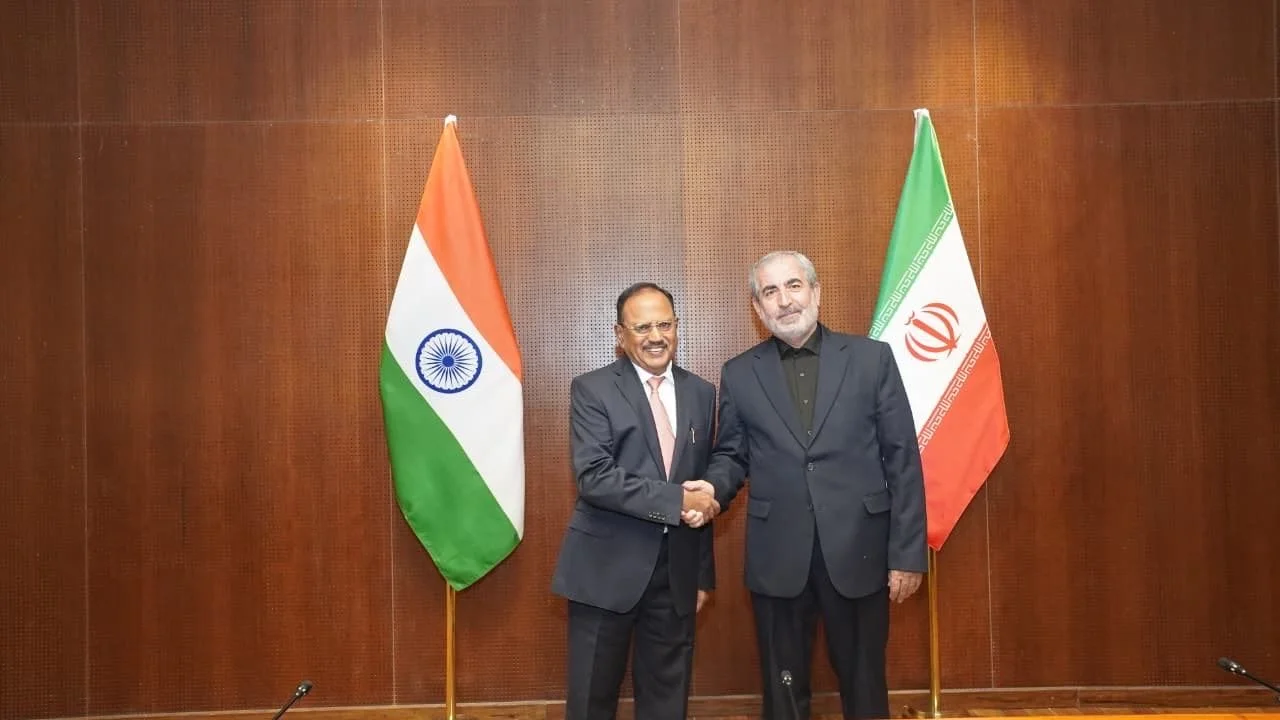
NSA Ajit Doval (L) with Iran’s top security envoy Ghadir Nezamipour in Delhi (Photo: MEA)
New Delhi: Indian National Security Advisor Ajit Doval conducted a bilateral meeting with Ghadir Nezamipour, the deputy secretary for defence affairs of Iran’s Supreme National Security Council, on Monday. The senior officials reviewed deteriorating regional security conditions, bilateral frameworks, and multilateral cooperation.
The diplomatic engagement occurred alongside the two-day BRICS National Security Advisers’ Meeting hosted in the capital. The Indian-chaired international summit focused primarily on contemporary non-traditional security challenges.
Diplomatic representatives did not release a comprehensive briefing of the Doval-Nezamipour negotiations. Officials confirmed discussions covered West Asian developments, economic relations, and collaborative efforts within BRICS and global institutions.
The timing of the meeting remains critical as West Asia faces heightened volatility after prolonged military friction involving Iran, Israel, and the United States. This ongoing disruption threatens global energy corridors, international maritime commerce, and regional containment efforts.
New Delhi maintains a public stance advocating for diplomatic restraint. The Ministry of External Affairs released a statement earlier this month expressing regret over renewed regional hostilities, urging immediate de-escalation and civilian protection.
Doval previously detailed the economic and strategic risks at an international security forum in Moscow this May. The security advisor emphasized the necessity of keeping the Strait of Hormuz and the Red Sea secure for international shipping.
India’s diplomatic ties with Tehran persist despite international sanctions due to long-term economic objectives. The nations cooperate on the International North-South Transport Corridor, energy diversification, Afghan security, and maritime safety in the Indian Ocean and Gulf of Oman.
For Tehran, sending a high-ranking security official to the Indian capital highlights Iran’s strategy to engage with non-Western diplomatic groupings. Since attaining full BRICS membership in January 2024, Iran has used the platform for economic integration.
The security landscape of West Asia is expected to dominate the broader BRICS security conclave. Member states are scheduled to deliberate on counterterrorism protocols, cybersecurity frameworks, and emerging technology regulations.
India’s strategy during the multinational summit emphasizes functional counterterrorism operations and transparent intelligence sharing regarding active global conflicts. New Delhi regularly advances these core positions during international security summits.
The domestic stakes regarding Gulf stability remain tied to structural economic realities. The West Asian region hosts approximately 9 million Indian citizens and supplies a critical portion of India’s oil and natural gas requirements.
Although no joint declaration concluded the bilateral discussions, administrative officials from both capitals emphasized the utility of direct communication channels while the geographic territory remains unstable.
Future Outlook
The diplomatic consultation between India and Iran underscores a mutual intent to insulate critical connectivity projects from spreading regional warfare. Moving forward, the operationalization of the International North-South Transport Corridor will serve as a key metric for whether bilateral trade can bypass traditional geopolitical bottlenecks. As India balances its strategic partnership with Washington against its domestic energy dependencies, New Delhi’s role as a mediator within the expanded BRICS framework will likely intensify throughout 2026.
FAQs
What was the primary focus of the Doval-Nezamipour meeting?
The primary focus of the discussions centered on reviewing the volatile security situation across West Asia, strengthening bilateral cooperation, and coordinating strategic initiatives within the multilateral BRICS framework.
Why is stability in West Asia critical for India’s economy?
West Asia is an essential economic corridor for India because it hosts approximately 9 million Indian nationals who send remittances home. Additionally, the region provides the bulk of India’s crude oil and natural gas imports and controls vital maritime trade lanes.
When did Iran officially join the BRICS grouping?
Iran formally became a member of the BRICS alliance in January 2024, using the platform to expand its economic partnerships and diplomatic engagements outside of Western-led global frameworks.