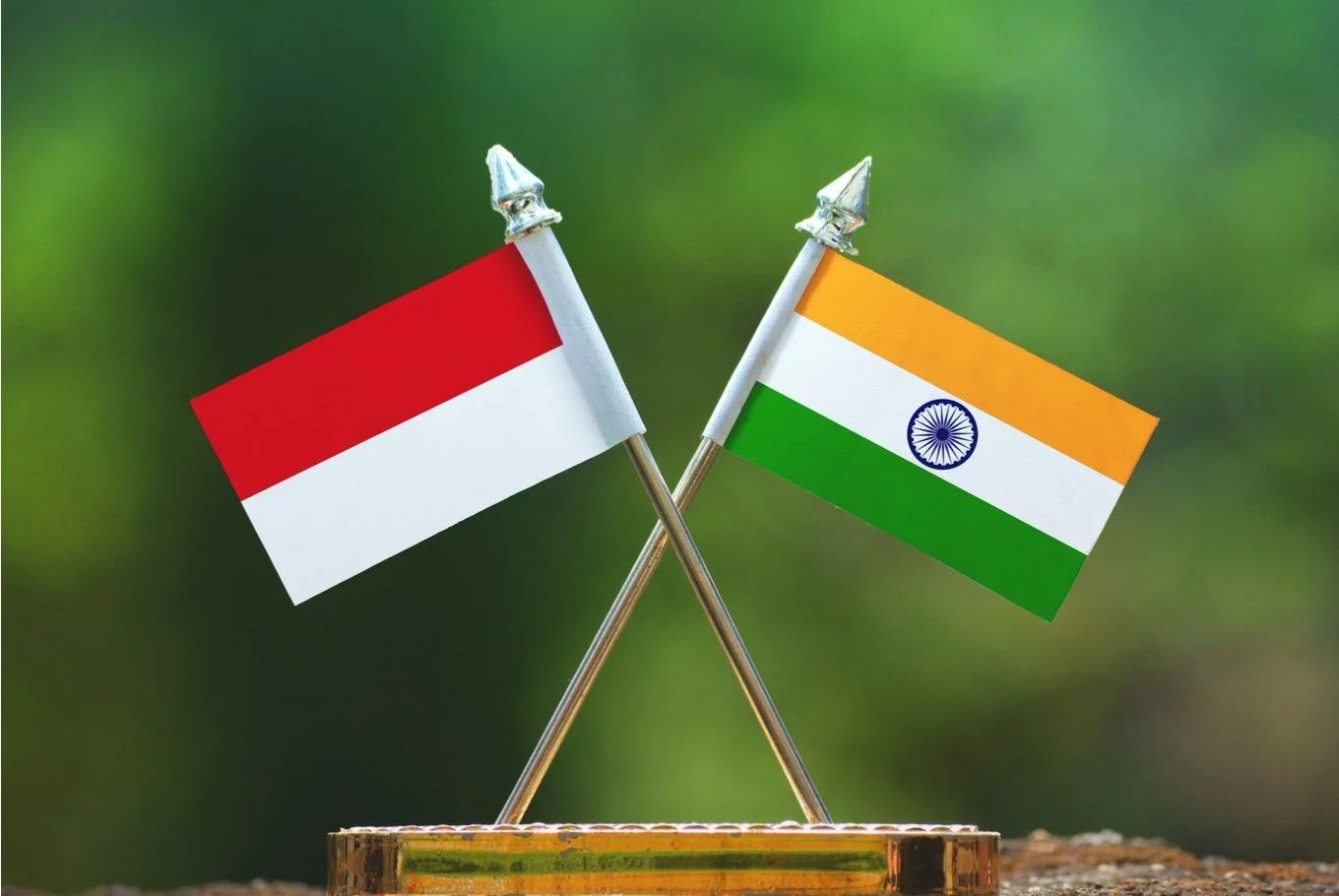
India and Indonesia Deepen Indo-Pacific Strategy Ahead of Modi July Visit
The gradual diplomatic rediscovery of one of Asia’s oldest historical relationships between New Delhi and Jakarta marks the formal beginning of an entirely fresh chapter through which both countries seek to actively shape the long-term future of the wider Indo-Pacific region.
Key Highlights
- Prime Minister Narendra Modi will embark on an official diplomatic visit to Indonesia in July 2026.
- Total bilateral trade between the two nations has reached nearly $30 billion with steady growth.
- Defense negotiations are finalizing Indonesia’s potential acquisition of the BrahMos missile system.
- Both democracies are aligning to assume greater collective responsibility for the Global South.
The high frequency of top-level leadership exchanges, ministerial visits, strategic dialogues, defense consultations, think-tank collaborations, and institutional partnerships over the past 3 years clearly indicates that both South Block in New Delhi and Indonesia’s Kementerian Luar Negeri are investing an unprecedented amount of political capital into building this bilateral relationship.
Earlier this month, Indonesian Foreign Minister Sugiono explicitly confirmed that comprehensive preparations are fully underway for Prime Minister Narendra Modi’s upcoming official state visit scheduled for July 2026. He described the trip as a direct reciprocal gesture to Indonesia’s President Prabowo Subianto’s high-profile visit to India as the official Chief Guest at India’s nationwide Republic Day celebrations last year, while simultaneously noting that bilateral discussions have expanded well beyond traditional diplomacy to encompass active cooperation across various modern sectors.
These sustained high-level engagements are naturally raising important questions regarding exactly why Indonesia is suddenly occupying such a highly prominent position in India’s diplomatic priorities today. Analysts are questioning why this specific relationship is receiving significantly more strategic attention and political focus than India’s various parallel engagements with other major countries located across Southeast Asia.
Final negotiations regarding the possible military acquisition of the advanced BrahMos missile system, rapidly expanding naval cooperation, a growing tactical emphasis on the security of the Malacca Strait, and the collaborative development of a spaceport in Biak, situated within the province of Papua, clearly demonstrate that both countries increasingly perceive each other as indispensable maritime security partners. Nevertheless, these major defense developments explain only a partial fraction of the entire strategic story.
The published report also highlighted that total bilateral trade between the two nations has now neared $30 billion and continues to exhibit steady, resilient growth, officially making Indonesia one of India’s most important economic partners within the entire Association of Southeast Asian Nations regional bloc.
Speaking at the Jakarta Futures Forum last year, Samir Saran, the current president of the Observer Research Foundation, remarkably pointed out that the India-Indonesia relationship is, in many key respects, significantly larger than India’s historical partnerships with the United Kingdom, Japan, or Germany. However, he noted that it currently receives a remarkably small amount of attention within India’s mainstream strategic discourse. More importantly, he argued that the Indo-Pacific region would truly come into its own only when both of these powerful countries, working together with other like-minded regional partners, assume far greater responsibility for shaping the region’s shared future.
According to India’s sitting ambassador to Indonesia, Sandeep Chakravorty, India and Southeast Asia today enjoy a highly stable relationship that remains completely free from any territorial disputes. This regional dynamic is strongly characterized by deep strategic convergence, expanding economic engagement, and a powerful shared membership inside the global coalition of the Global South.
The forthcoming official visit of Prime Minister Narendra Modi should therefore be viewed not merely as another standard diplomatic exchange on the calendar, but rather as a major opportunity to completely redefine the underlying intellectual foundations of international relations between the two countries.
Future Outlook
The expanding partnership between New Delhi and Jakarta is poised to anchor the maritime security architecture of the Indo-Pacific. As final defense contracts seal the transfer of advanced missile technology and naval patrols intensify around critical choke points, the economic corridor between these two nations will likely surpass current trading levels. This collaboration establishes an enduring framework for a more inclusive, balanced regional order that effectively elevates the voices of developing economies worldwide.
FAQs
Why is Prime Minister Narendra Modi visiting Indonesia in July 2026?
The upcoming visit serves as a reciprocal gesture following Indonesian President Prabowo Subianto’s high-profile visit to India, where he served as the Chief Guest for the Republic Day celebrations.
What is the current value of trade between India and Indonesia?
Bilateral trade between the two nations has steadily expanded and has now neared $30 billion, positioning Indonesia as a primary partner for New Delhi within the ASEAN bloc.
What defense initiatives are New Delhi and Jakarta currently negotiating?
The two countries are engaged in final negotiations for the Indonesian military’s acquisition of the BrahMos missile system, alongside expanding naval operations in the Malacca Strait and developing a spaceport in Biak, Papua.