ANC Suffers Historic Losses in South Africa Elections
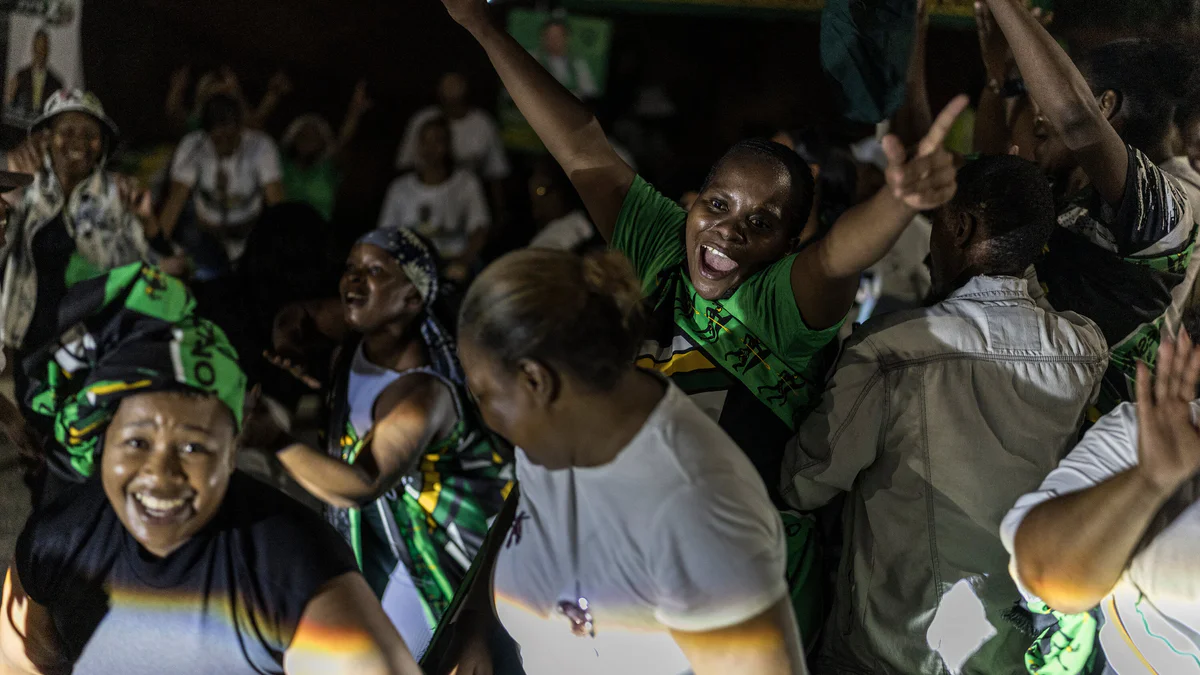
South Africa’s governing African National Congress (ANC) suffered a historic electoral setback in the November 4, 2026, municipal elections. With 76% of ballots processed by November 6, the party had secured nearly 31% of counted votes.
Projections from the Council for Scientific and Industrial Research (CSIR) placed the ANC’s eventual national share at approximately 31% to 32%, its weakest municipal performance since apartheid ended. The figures represented a sharp decline from the party’s 45.6% vote share in the 2021 local elections.
The results threatened the ANC’s remaining political dominance in Johannesburg, Tshwane and eThekwini. With several metropolitan councils unlikely to produce outright majorities, parties faced negotiations over mayoral leadership, municipal budgets and local governing agreements.
ANC Faces Historic Electoral Decline
The municipal losses follow the ANC’s defeat in the 2024 parliamentary election, when its national vote share fell to 40.2%, ending its ability to govern without coalition partners.
That result forced the party into a Government of National Unity alongside the Democratic Alliance (DA) and other political organizations. The municipal returns extended the ANC’s electoral difficulties from national politics into local government.
At the National Results Operations Centre on November 6, ANC spokesperson Mahlengi Bhengu acknowledged that the party was “losing significant voter support.”
The acknowledgment followed early tabulations showing substantial losses in urban centers where the ANC had previously exercised considerable influence. Its comparatively stronger performance in some rural areas did not offset those metropolitan setbacks.
Political analyst Professor Zamokuhle Mbandlwa warned before the election: “Without these grassroots structures aligned to it, the ANC will face difficulty mobilising voters on the ground”
Johannesburg Results Reshape Political Competition
Early tabulations and statistical projections indicated that the ANC could finish with approximately 20% of the Johannesburg vote, compared with 33% in 2021.
The Democratic Alliance (DA), under mayoral candidate Helen Zille, stood at approximately 35%, putting it ahead of the ANC in South Africa’s commercial capital.
However, a lead in vote share would not automatically give the DA enough council seats to govern independently. Final seat allocations would determine whether it needed support from smaller political parties to elect a mayor.
The ANC also faced setbacks in Tshwane and eThekwini. CSIR projections indicated that coalition negotiations could be required in six of South Africa’s eight metropolitan municipalities.
The interim IEC returns showed the ANC retaining comparatively stronger support in rural areas while losing ground in major metropolitan centers. Detailed demographic voting changes by age, income or other population groups had not been established in the interim figures.
Municipal Services Become Central Concern
The municipal elections covered 257 metropolitan, local and district councils, with voters choosing representatives responsible for public infrastructure and essential services.
These responsibilities include electricity distribution, water provision, refuse collection and municipal infrastructure maintenance.
The ANC entered the election facing criticism over persistent service-delivery problems, including rolling electricity outages and water distribution difficulties affecting communities.
The Auditor-General of South Africa had also identified serious weaknesses in municipal financial accountability, including adverse audit findings.
The ANC’s electoral difficulties therefore extended into municipalities where elected representatives would be responsible for decisions affecting public infrastructure and local spending.
Coalition Negotiations Face Statutory Deadline
Following the final declaration of results, municipal councils face a statutory 14-day period to convene and establish their governing arrangements.
Under the Local Government: Municipal Structures Act, parties without an absolute majority cannot independently elect executive leadership or control municipal budget decisions.
Coalition agreements will therefore determine mayoral leadership and the councils’ ability to approve municipal budgets.
The ANC and DA, partners in the national Government of National Unity, will compete for control of individual municipalities where neither party holds a majority.
Negotiations could produce different governing arrangements across metropolitan councils, depending on final seat distributions and agreements with smaller parties.
South Africa’s previous municipal term demonstrated the risks associated with unstable coalitions, including leadership turnover, delayed infrastructure expenditure and interruptions to municipal decision-making.
National Political Consequences Extend Beyond Cities
The outcome of coalition negotiations will determine whether the ANC retains mayoral leadership in individual metropolitan councils.
The municipal setback could complicate cooperation between the ANC, DA and other Government of National Unity partners as they approach the 2029 general election.
At the municipal level, final council allocations will determine which political formations can approve budgets, establish governing priorities and advance decisions affecting public infrastructure.
For the ANC, the immediate test will be whether it can negotiate sufficient support to retain influence over councils where its electoral strength no longer guarantees control.