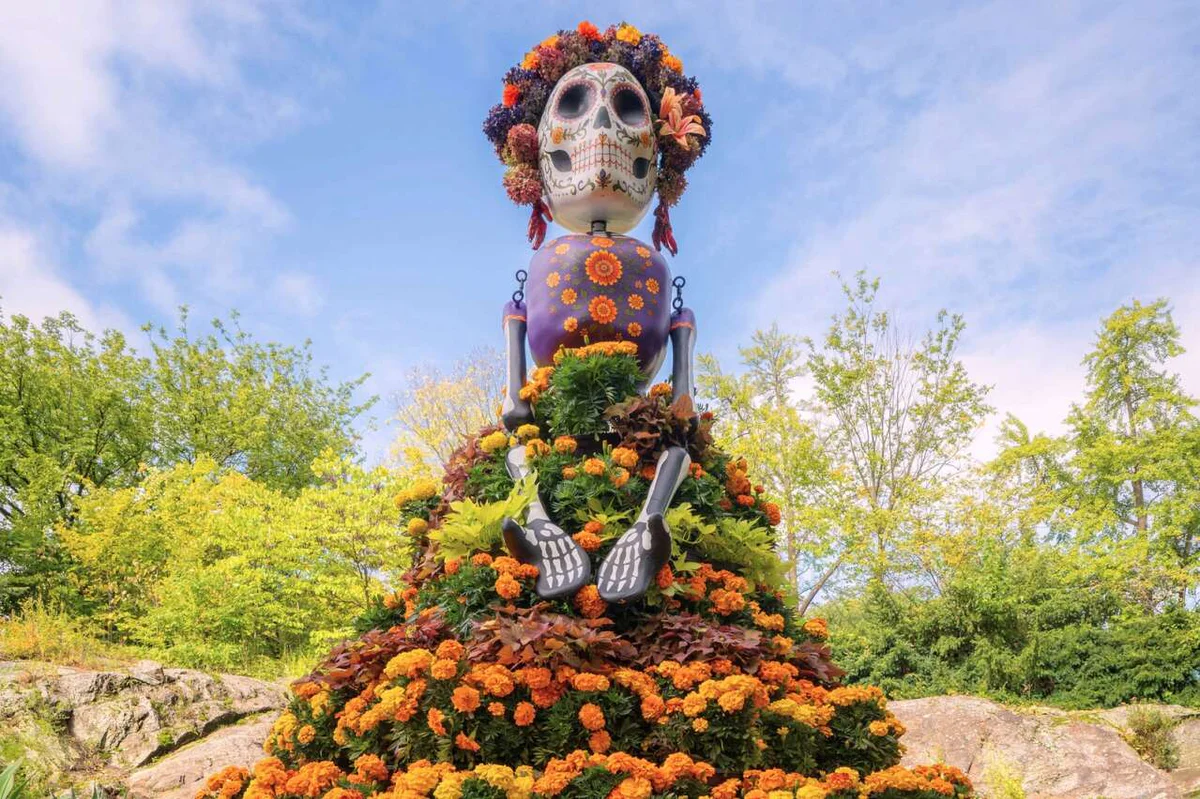
New York Botanical Garden Celebrates Día de los Muertos With Marigolds
The New York Botanical Garden is marking Día de los Muertos with its first public celebration, featuring marigold displays, a community altar and Mexican cultural performances in the Bronx. The exhibition opened October 3 and runs through November 2, 2026, according to the Garden’s official programme.
The celebration centres on the Everett Children’s Adventure Garden, where visitors encounter decorated skulls, traditional floral arrangements and a larger-than-life La Catrina sculpture. Families can also participate in remembrance activities honouring departed relatives and friends.
Why Marigolds Are Central to Día de los Muertos
Marigolds, known in Mexico as cempasúchil, play an important role in Día de los Muertos traditions observed on November 1 and 2. According to Associated Press gardening columnist Jessica Damiano, their bright orange and yellow colours and distinctive fragrance are traditionally believed to guide departed spirits home.

The flowers, botanically identified as Tagetes erecta, are native to Mexico despite sometimes being called African marigolds. Their Nahuatl name translates as “flower of 20 petals”, reflecting their longstanding cultural association with remembrance.
Families traditionally arrange the blooms around altars and shrines containing candles, photographs, favourite foods and personal belongings of deceased loved ones. The New York exhibition draws on these customs through its community ofrenda, which invites visitors to contribute photographs or written memories.
The Garden specifies that contributed items become part of the installation and cannot be returned. Food and candles are not permitted as visitor offerings, distinguishing the public display from some traditional household altars.
Mexican Artists Bring Traditions to the Bronx
Mexican-American artist Blanka Amezkua leads workshops introducing visitors to papel picado, the traditional art of decorative paper cutting, and silk-flower making. Her activities connect Mexican artistic practices with the Garden’s botanical setting.
The programme also features Lucrecia Novoa, whose giant handmade La Catrina, skeleton and monarch butterfly puppets appear throughout the grounds. Her Mascara Viva creations combine costumes, masks and movement to interpret cultural stories.
Mexican folk dance company MAZarte presents performances inspired by regional traditions, including dances from Veracruz, Guerrero, Jalisco and northern Mexico. Its programme incorporates rhythmic footwork, flowers and symbolic imagery associated with remembering departed relatives.
Musical performances by New York collective Son Pecadores introduce visitors to son jarocho, a traditional Mexican music and dance style associated with Veracruz. The Garden also schedules Spanish-English family performances by Bilingual Birdies, combining music, movement and puppetry.
Growing Marigolds for the Holiday
The Marvel Gold, Marvel Orange and Marvel Lemon varieties are among the popular seasonal marigolds identified by horticultural publication Flora Daily, as cited by the Associated Press. Other marigold species and hybrids may also be used when demand increases around the holiday.
According to the AP’s gardening guidance, marigolds grow successfully across horticultural zones 2 through 11 and generally produce flowers about eight weeks after sowing. Seeds can be started indoors six to eight weeks before outdoor planting.
The plants favour sunny positions and well-draining soil. They need regular watering while establishing, followed by watering when the soil dries, while removing faded flower heads helps encourage further blooming.
Cold temperatures affect how long the flowers remain outdoors. The first autumn frost generally kills marigolds in northern regions, while plants in warmer climates may continue flowering into winter.
The exhibition also includes a dedicated Cempazúchitl workshop on October 30, focusing on the flower’s cultural importance and traditional botanical uses.
What to Watch Next
The Garden’s November 1 parade at 2 p.m. will feature Son Pecadores musicians, dancers and oversized puppets, followed by a MAZarte performance and a cumbia dance class. The Día de los Muertos trail and Everett Children’s Adventure Garden will close at 5 p.m. on November 1 and 2, with the outdoor procession subject to cancellation in bad weather.