Four Indian Nationals Stranded in Bangladesh for a Year After BSF Push-In
Four Indian citizens, including two children, have remained marooned in Bangladesh for almost 12 months following their forced expulsion across the border by India’s Border Security Force. Indian officials have yet to facilitate their return, despite previously repatriating two other individuals from the exact same group.
Key Highlights
- Four Indian citizens, including minors aged 6 and 16, remain stuck in Bangladesh after nearly 1 year.
- The group was allegedly detained in Delhi in June 2025 before being pushed across the Kurigram border.
- The Calcutta High Court ordered their full repatriation within 4 weeks on September 27, 2025.
- Only two members, including a pregnant woman, were accepted back by Indian authorities in December 2025.
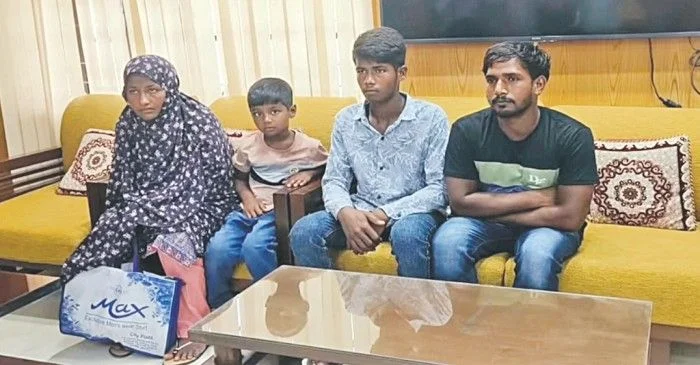
The group of four individuals—comprising Danish Sheikh, 28, Sweety Bibi, 33, alongside her two sons who are 16 and 6 years old—are currently residing in Chapainawabganj. They are being sheltered by a local citizen named Faruk Hossain after a local court granted them bail.
Faruk, who lives in Kalyanpur village within Chapainawabganj, stated on Sunday that he has provided continuous financial and logistical support to the stranded family since a Bangladeshi judicial authority granted them bail and officially assigned them to his guardianship.
He explained that he has repeatedly initiated contact with the Chapainawabganj deputy commissioner and the Indian High Commission located in Bangladesh. Officials informed him that the repatriation framework was active, but no one could provide a definitive timeline for their return. Faruk noted that he can no longer sustain their daily living costs.
According to statements from the stranded individuals, they originally resided in Delhi where they earned a living as waste collectors. The Delhi Police initially detained them in June 2025 under the suspicion that they did not possess valid identity documentation.
The individuals alleged that law enforcement subsequently transported them to Assam, where Border Security Force personnel forcibly pushed them into Bangladeshi territory through the Kurigram border section under the cover of night.
Following their unauthorized entry, the Bangladesh police apprehended the 6 Indian nationals in the Alinagar neighborhood of Chapainawabganj town on August 20, 2025.
Legal proceedings were subsequently initiated against the adults under the Bangladesh Passport (Entry into Bangladesh) Act, resulting in their judicial detention. However, the two minor children were excluded from the formal criminal charges.
According to documented Indian media accounts, the Calcutta High Court issued a definitive ruling on September 27, 2025, branding the forced cross-border push-in into Bangladesh as entirely illegal. The judiciary instructed India’s Union Home Ministry to guarantee their safe return to West Bengal within a strict 4-week window.
Following their successful bail acquisition on December 2, all 6 individuals were transferred to the custody of a local guarantor, carrying the legal mandate that they must present themselves to the court every 10 days.
Merely three days later, on December 5, the Border Security Force accepted the return of Sonali Bibi, who was nine months pregnant at the time, along with her 8-year-old son via the Sonamasjid land port located in Chapainawabganj’s Shibganj upazila.
In stark contrast, the remaining four individuals have been left behind without any clear path forward for their formal repatriation.
Danish Sheikh stated that following their initial arrest, the Delhi police tried to extort a sum of 300,000 taka from him.
He asserted that because he lacked the financial means to pay the bribe, authorities forcibly expelled him, his pregnant wife Sonali Khatun, and their young son into Bangladeshi territory.
Independent verification of these specific extortion allegations could not be established.
Sheikh expressed a deep desire to return to his native birthplace in India. He highlighted that he has not yet had the opportunity to see his newborn second son and wishes to hold him.
Sweety Bibi, hailing from Dhitor village under the jurisdiction of the Murarai police station in West Bengal’s Birbhum district, confirmed that her family worked as cleaners in Delhi prior to their police detention.
She alleged that law enforcement personnel classified them as Bangladeshi nationals before moving them to Assam. Subsequently, they were driven across the Kurigram border into Bangladesh during the night.
She further claimed that during a subsequent attempt to cross back into India, Border Security Force personnel physically assaulted them and forced them back onto Bangladeshi soil.
Bibi issued an urgent plea, asserting their verified Indian citizenship and requesting immediate diplomatic intervention to facilitate their return home.
Chapainawabganj Deputy Commissioner Abu Saleh Md Musa Zangi confirmed that the local district administration recently dispatched a formal briefing to the Home Ministry regarding the four Indian nationals, urging immediate diplomatic maneuvers to secure their repatriation.
He noted that the Indian High Commission in Bangladesh had similarly delivered a formal note verbale to the Foreign Ministry requesting the swift return of the four remaining Indian citizens.
Zangi stated that administrative efforts are actively underway to resolve the ongoing border deadlock through correct diplomatic channels.
When reached for comment via WhatsApp on Sunday, Manoj Kumar, the Assistant High Commissioner of India stationed in Rajshahi, declined to provide an official statement on the unfolding situation.
In May of this year, the Press Trust of India documented that the Indian government formally notified the Chief Justice that the remaining citizens would be repatriated once their identity verification protocols are concluded.
History of Border Push-Ins
The phenomenon of cross-border expulsions, colloquially known as “push-ins,” has long strained relations and legal frameworks along the 4,096-kilometer India-Bangladesh border. Historically, undocumented migration allegations frequently result in unilateral expulsions by border guards rather than standardized, bilateral deportation procedures. This latest deadlock highlights the systemic friction between local judicial orders—such as the Calcutta High Court’s directive—and the bureaucratic delays inherent in cross-border identity verification between New Delhi and Dhaka.
FAQs
Why are the four Indian nationals currently stranded in Bangladesh?
The four individuals were allegedly detained in Delhi, transported to Assam, and pushed across the border into Bangladesh by the Border Security Force in 2025. Despite a Calcutta High Court order directing their return, bureaucratic delays in identity verification have left them stuck for nearly a year.
What did the Calcutta High Court rule regarding this case?
On September 27, 2025, the Calcutta High Court declared the forced expulsion of these individuals into Bangladesh illegal. The court ordered India’s Union Home Ministry to ensure the repatriation of all 6 family members to West Bengal within 4 weeks.
Why were only two members of the group repatriated?
On December 5, 2025, the Border Security Force allowed only Sonali Bibi, who was nine months pregnant at the time, and her 8-year-old son to cross back through the Sonamasjid land port. The remaining four family members were denied entry and left behind in Bangladesh.
What steps are being taken by authorities to resolve the situation?
The Chapainawabganj district administration has formally requested intervention from the Bangladesh Home Ministry. Additionally, the Indian High Commission in Bangladesh has sent a note verbale to the Foreign Ministry to coordinate the return of the remaining citizens once identity verification is fully complete.