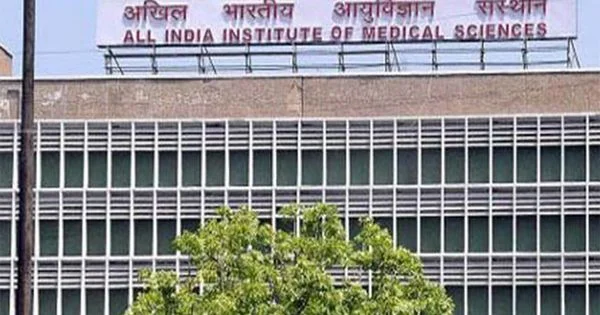
AIIMS New Delhi Bans Unauthorised Brand Logo Use
The All India Institute of Medical Sciences (AIIMS) in New Delhi has implemented a strict digital policy for its workforce and student body. This immediate directive prohibits any unsanctioned deployment of the premier medical institution’s name, logo, or official branding across all virtual and physical public arenas.
Key Highlights
- AIIMS New Delhi bans unauthorized usage of its name and logo on digital platforms.
- The policy mandates strict patient confidentiality under current data privacy laws.
- Administered digital handles must register and appoint dedicated media coordinators.
- Violations face rapid enforcement, including a mandatory 12-hour content takedown notice.
New Social Media Policy at AIIMS Delhi
The All India Institute of Medical Sciences (AIIMS), New Delhi, has rolled out an exhaustive digital protocol targeting its students, resident doctors, and workforce. The policy bans any unapproved application of the hospital’s name, visual emblem, and corporate branding across digital networks and print media.
According to an official institutional statement, these regulations received formal clearance from the competent leadership authority. The directive has entered force with immediate effect across the campus.
These restrictions apply universally to scholars in undergraduate, postgraduate, doctoral, and super-speciality tracks. It additionally covers approved student unions, faculty members, medical researchers, management staff, clinical departments, internal entities, and external third-party associates linked to the facility.
Restrictions on Brand and Content
Under the updated framework, no student, staff member, or associated group may use the specific title ‘AIIMS, New Delhi’ or its official graphics without explicit written consent from the relevant department. This rule impacts publicity posters, banners, online publications, video clips, blogs, and usernames implying official status.
The administration has instructed all connected individuals to preserve strict patient anonymity. It explicitly bans the publication or discussion of clinical data, patient photographs, or specific case files on public networks, citing statutory mandates under the Indian Medical Council Regulations, 2002, and the Digital Personal Data Protection Act, 2023.
The newly enforced code further outlaws the distribution of protected copyrighted assets without proper authorization. It strictly bars online expressions involving student ragging, digital bullying, hate speech, explicit material, or libelous content, alongside intellectual plagiarism and the leaking of confidential academic test papers or marking keys.
Governance and Enforcement
AIIMS has established clear administrative benchmarks for authorized digital accounts run by student clusters and employees. These profiles must register with their parent departments, reveal the identities and institutional emails of their managers, name a media coordinator for review processes, and label content as student-made or department-made.
The official memorandum instructs page administrators to stay clear of political, religious, or slanderous themes. Users must preserve a dignified communication tone reflecting institutional ideals and secure special administrative clearance prior to entering financial sponsorships or promotional deals with outside enterprises.
Threatening stern administrative and statutory penalties for breaches, AIIMS noted that compromising the establishment’s identity could trigger official warning letters, revocation of network privileges, formal derecognition of student associations, or suspension from campus programs.
The medical center has retained full authority to police digital platforms for behavioral alignment. If a breach is discovered, a formal digital takedown directive will be sent out, giving the account managers a maximum of 12 hours to delete the non-compliant material.
AIIMS management has ordered all Heads of Departments and Chiefs of Centres to distribute this regulatory document down to their faculty, residents, students, investigators, and clerical teams to secure immediate alignment with the policy.
Future Outlook
As digital tracking intensifies across public institutions, this regulatory framework establishes a definitive blueprint for how major Indian medical centers handle independent digital expressions. The mandate signals an era of heightened enforcement, where institutional reputation and statutory digital data safety override personal online autonomy. Moving forward, academic medical centers will likely mirror these rigid monitoring boundaries to insulate themselves from liability and brand dilution.
FAQs
Who is affected by the new AIIMS social media guidelines?
The policy governs all undergraduate, postgraduate, doctoral, and super-speciality students, recognized campus organizations, faculty members, scientific researchers, administrative personnel, clinical departments, and external third-party collaborators.
What are the penalties for violating the AIIMS branding policy?
Infractions can result in formal written reprimands, loss of digital network privileges, derecognition of student associations, or a total ban from participating in institutional programs and campus activities.
How quickly must non-compliant content be removed from social media?
Upon detection of an institutional policy violation, AIIMS administration will issue a formal takedown notice requiring the account managers to remove the offensive material within 12 hours.
Which specific laws govern patient confidentiality under these rules?
The digital policy enforces patient data protection by citing strict compliance obligations under the Indian Medical Council Regulations, 2002, alongside the recently enacted Digital Personal Data Protection Act, 2023.