AI Transforms Cancer Symptom Tracking via EHR Data Analysis
University of Michigan researcher Youran Lee, PhD, MSN, RN, unveiled groundbreaking insights at the 51st Annual Oncology Nursing Society Congress regarding the extraction of oncology symptom clusters from electronic health records. The scoping review highlights how clinical big data and artificial intelligence track real-time patient distress trajectories.
Key Highlights
- Research analyzes the co-occurrence of multiple concurrent physical and psychological symptoms in cancer patients.
- Investigators utilized advanced natural language processing and deep learning to mine unstructured electronic health record notes.
- Synthesized data from nine foundational studies since 2020 primarily focused on breast and colorectal cancers.
- Clinical integration face challenges regarding artificial intelligence transparency and patient data confidentiality models.
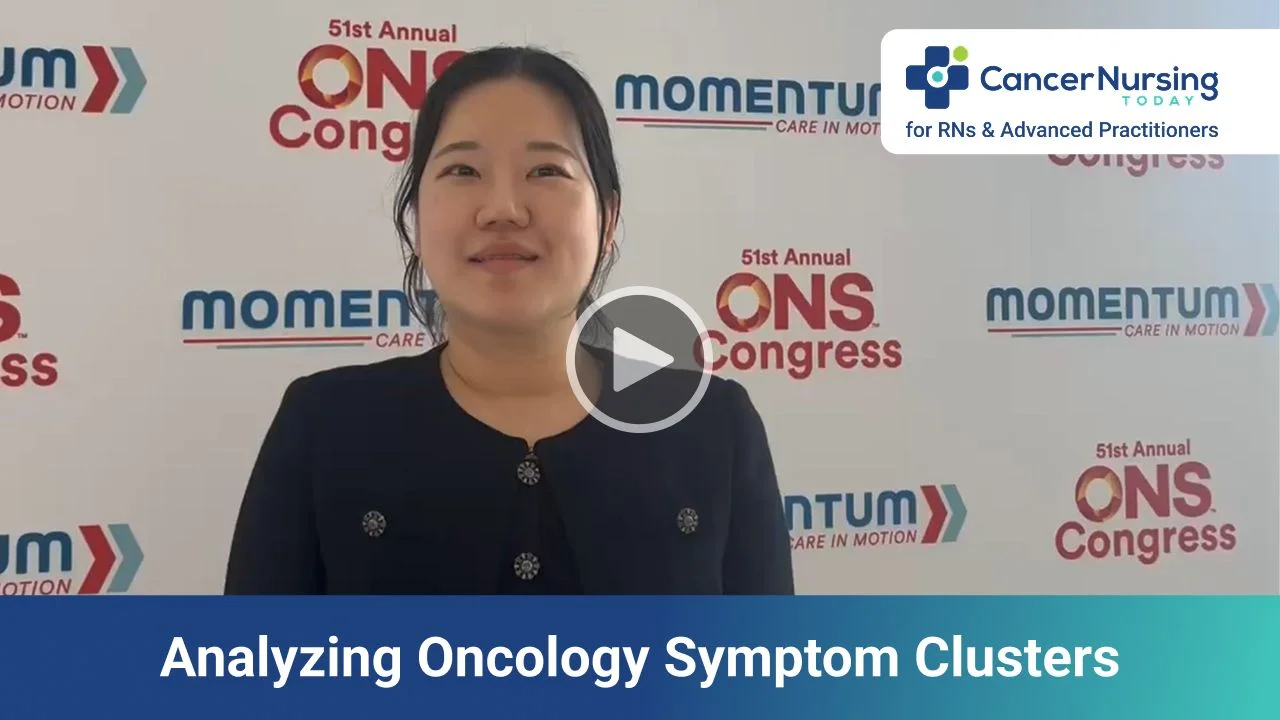
Youran Lee, PhD, MSN, RN, of the University of Michigan, joined Cancer Nursing Today at the 51st Annual Oncology Nursing Society (ONS) Congress to share insights from her scoping review of analyzing oncology symptom clusters using electronic health records (EHRs).
Watch the video above and read the transcript below to learn more.
This transcript has been edited for clarity.
My name is Youran Lee, I’m a postdoctoral fellow at University of Michigan School of Nursing, focusing on oncology symptom science and cancer data science.
In my doctorate degree at Duke, I focused on how social determinants of health and diet influence symptom experiences in patients with colorectal cancers. But I wanted to broaden my research and knowledge to focus on more about symptom clusters, which means the co-occurrence of symptoms and multiple dimensions of the symptoms, and I also want to explore big data sets. So, I become focused on the exploring the symptom clusters in EHR data.
Can you speak about the inspiration behind this work?
I am interested in the symptoms in oncology patients, starting from my clinical experiences as an oncology medical nurse. I usually take care of patients with gastric cancer and colorectal cancers, and I witness them suffer from various symptoms after their surgery and during chemotherapy treatment.
During the time, I was actually diagnosed with a thyroid cancer. And after the surgery I also suffered from various physical and psychological symptoms related to the hypothyroid syndromes. I really tried to overcome and go through these symptoms and it was quite a tough and hard journey. I become very empathetic and had a lot of compassion for oncology patients. I really want to provide tailored interventions and dealing with those symptoms during the cancer journey. That started my inspiration for this research.
Can you speak about the methods that you used to conduct this research and your findings?
I looked at lots of previous articles, and most of the articles on symptom experiences were using patient-reported surveys. But … electronic health records, actually have a bunch of very rich information about the symptoms, clinical factors, and the patient as they progress through their treatment.
So, [I thought], what if we can extract the symptom information from the electronic health record? It includes the dynamic symptom changes over time, serious symptom experiences, and we can see the longitudinal data set, so we can see the trajectory of the patient’s symptoms. I decided to start that research, and my presentation at ONS is a scoping review paper of previous research on that topic, analyzing the symptom cluster from the EHR data, and I synthesized nine articles, starting from 2020, and almost all of them are focusing on colon cancer and breast cancer.
The research method is, they extract the symptom using natural language processing, and also they use various methods to identify symptom clusters using exploratory factor analyses, and K-means clustering, network analysis, and latent class analysis.
The results on symptom clusters: Most of patients suffered from gastrointestinal symptoms and psychological/neurological symptoms and fatigue. So, I’m trying to keep doing that research, and [determine if it is] feasible to be using the data source from EHR data and using the big data set from the University of Michigan.
What are the next steps?
So, an emerging thing nowadays, is AI integration into the oncology symptom field. So, it’s amazing that we can extract the symptoms from the clinical notes, which means the unstructured notes. Before we have to do them manually to see that and extract the symptoms. But now we can do it using large language models. So, there’s no research using large language modeling to identify the symptom cluster. There’s lots of models to extract the symptom component to using larger language models, but most of them are not doing the analysis for symptom clusters.
So, that’s for my next step, and that’s a very interesting part. We can use this rich information, using AI and advanced techniques and the deep learning techniques. But we are thinking carefully about the confidentiality of the patient information. And also, there is some doubt for AI, such as the black box. We don’t know the exact process of the extraction of symptoms. So, I’m trying to improve that precise method. It’s interesting and we have to do future research for that.
Can you speak about why it’s important for oncology nurses to be involved in research and what this research means to you?
I feel like the nurses and the frontline clinicians, together, have the closest work with the patient and provide the care to the patient, and document all the stories of the patients in the electronic health record, and they’re always together and at the bedside. AI is a very useful tool, but I want to bring more empathy and compassion and provide a better person-centered approach for oncology patients dealing with their symptoms.
I want to share some dedications for all the families and patients on a cancer journey. Recently, my brother was diagnosed with colon cancer. So, my research is not only professional, but it’s more deeply personal. I want to just keep advocating for the patients with cancer and their families.
Future Outlook
The transition toward automated symptom monitoring represents a critical evolution in oncology informatics. Integrating large language models into hospital data networks will likely allow real-time clinical alerts, enabling healthcare providers to adjust supportive care protocols before toxicities escalate. Future research models aim to solve the neural network “black box” dilemma to ensure algorithmic clinical decisions remain fully transparent and clinically verifiable.
FAQs
The work was inspired by frontline clinical nursing experiences treating gastric and colorectal cancer patients, alongside a personal diagnosis of thyroid cancer. Experiencing the physical and psychological toll of post-surgical hypothyroid syndromes drove the determination to build tailored, empathetic symptom interventions using modern data science.
The investigator performed a comprehensive scoping review analyzing nine primary studies published since 2020 that leveraged natural language processing to extract patient data from electronic health records. The findings revealed that computational methods like K-means clustering and network analysis successfully identified prominent clusters spanning gastrointestinal distress, fatigue, and psychological changes.
The next phase centers on deploying large language models and advanced deep learning techniques to process unstructured clinical notes. Ongoing efforts focus on resolving data confidentiality safeguards and demystifying the algorithmic process of extracting symptom interactions from big datasets.
Frontline oncology nurses maintain the closest relationship with bedside patients and document their daily clinical narratives. Merging data tools with nursing insight ensures artificial intelligence serves a person-centered, compassionate approach, which became deeply personal following a recent familial colon cancer diagnosis.