SEBI Approves Mutual Fund Intraday Borrowing and Returns to Open Market Buybacks
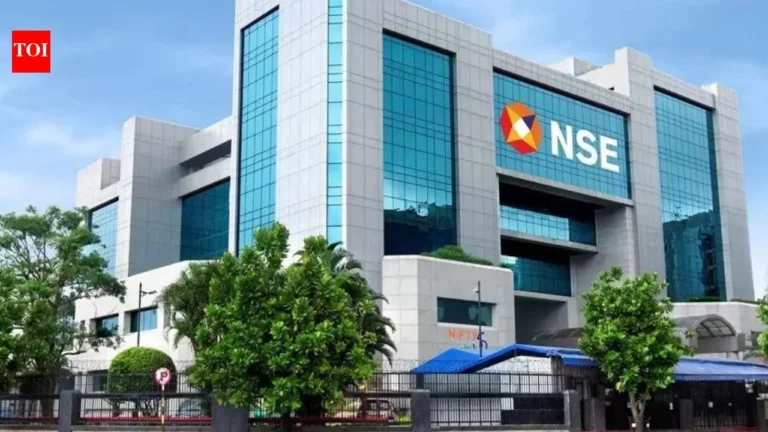
The Securities and Exchange Board of India authorized a comprehensive suite of financial sector overhauls designed to eliminate operational friction and reinforce safeguards for market participants, spearheaded by an amendment permitting mutual funds to access intraday credit facilities to manage short-term liquidity imbalances.
Key Takeaways
- Mutual funds can now utilize intraday credit facilities to neutralize daytime settlement mismatches without adding portfolio leverage.
- Open market share buybacks via stock exchanges will resume on August 1, 2026, under a compressed 66-working-day timeline.
- The newly approved GARUDA mechanism accelerates capital deployment for Alternative Investment Funds, slashing fund launch timelines to 10 working days.
SEBI allows intraday borrowings by mutual funds; approves open market buybacks
The market regulator finalized multiple operational frameworks during its Friday convention, introducing structural flexibility for asset management firms while simultaneously tightening execution mandates for corporate equity repurchases to protect public shareholders.
As a primary structural shift for asset management operations, the regulatory body ratified changes to the SEBI (Mutual Funds) Regulations, 2026. This statutory modification explicitly permits intraday borrowings availed by mutual funds for managing liquidity mismatches during the day.
The oversight body noted that these intra-day facilities will serve to bridge capital gaps stemming from difference arising out of pay-in/pay-out settlement timings within asset classes, forex settlements, payments for MTM of derivative positions etc, subject to certain safeguards.
Monetary authorities confirmed this mechanism operates entirely independent of the established 20 per cent cap reserved for handling client redemptions. The regulator emphasized that these temporary liquidity injections shall not be used as a source of leverage, making asset managers strictly accountable for full daily balance restoration.
The leadership panel concurrently modified the SEBI (Buy-back of Securities) Regulations, 2018, establishing an official return date of August 1, 2026, for exchange-based open market equity repurchases to achieve greater flexibility in undertaking buy-backs, reducing procedural complexity and strengthening investor protection.
Corporate entities will regain the authorization to execute capital distributions directly through stock exchanges, maintaining this channel alongside formal tender window strategies. The updated rules mandate that these market interventions conclude within 66 working days, requiring companies to deploy at least 40 per cent of total authorized capital during the initial 33 working days.
To optimize operational speed within private markets, the board ratified the Green-Channel: AIF Rollout Upon Document Acknowledgement (GARUDA) framework for specialized investment structures.
This administrative acceleration will enable faster and more efficient deployment of capital by AIFs. New fund registrations face a shortened processing window of 10 working days, whereas accredited vehicles and angel structures gain immediate launch permissions upon filing their initial distribution portfolios.
Brazil prosecutors serve warrants on lenders PicPay, BRB in payroll fraud probe
Public investigators in Brasilia executed judicial search mandates at the offices of digital financial firm PicPay and state-backed institution BRB, advancing an active inquiry into an organized payroll deduction scam manipulating public sector compensation networks.
Local enforcement units initially limited their public disclosures to actions taken against PicPay before updating case files to show that the state-controlled banking entity was also an active target of the evidence collection drive.
PicPay representatives issued a formal denial regarding the transactions under scrutiny, stating the company holds no knowledge of operational non-compliance and firmly contests all assertions regarding illegal client assessments.
Management at BRB did not issue an immediate statement regarding the judicial searches, which followed widespread reporting by domestic media outlets earlier in the day.
Innovation Key to South Africa’s Industrial Growth: dtic
Economic policymakers in Pretoria stated that expanding domestic technological adaptation is vital to accelerating industrial output, enhancing national workforce capabilities, and driving global trade volumes.
Addressing a manufacturing assembly in Johannesburg, industrial policy leads stated that manufacturing evolution remains the primary vehicle for broadening national economic output and generating sustainable career openings.
Analysts highlighted that technical modernization serves as a core mechanism for structural re-industrialization, allowing domestic factories to scale efficiency, diversify item output, and capture high-margin spaces inside international value chains.
Innovation linked directly to economic growth
The industrial development agency continues to back technological integration through specialized fiscal awards, public procurement channels, and targeted value-chain updates, highlighted by the roll-out of the National Technology Commercialisation Strategy.
This multi-agency framework bridges the gap between laboratory breakthroughs and commercial factories, ensuring South African research translates into viable market commodities while expanding localized manufacturing assets.
Building local manufacturing capability
State specialists noted that South Africa could sacrifice long-term industrial returns if the nation neglects to cultivate self-sufficient production ecosystems for transitioning energy fields, including green hydrogen infrastructure.
The domestic assembly of foundational equipment like electrolyzers remains critical, as relying solely on raw resource exportation risks forfeiting primary employment gains and domestic engineering developments.
Industrial strategists concluded that supply-chain localization, localized research, and factory expansion must operate as a unified initiative to anchor global economic relevance.
Government programmes support technology development
Economic administrators view advanced technology as an inseparable component of macroeconomic strategy, embedding these initiatives within Special Economic Zones and sector-specific industrial roadmaps.
State assistance networks like the Support Programme for Industrial Innovation (SPII) and the Technology and Human Resources for Industry Programme (THRIP) continue providing direct capital infusions for corporate research ventures.
Over the preceding five-year timeline, the SPII framework distributed R49 million to commercial developers, while the THRIP collaboration network secured R157 million in fiscal backing to enhance industrial research ecosystems.
Durban Drive-In Site to Return to Development Plans
Local authorities in eThekwini clarified that utilizing the Durban drive-in perimeter for short-term immigration administrative management will not alter the long-term commercial zoning of the property, which includes an entertainment attraction.
Municipal representatives stated the current immigration intake processing hub operates under a temporary federal directive scheduled for closure at the conclusion of June 2026, allowing the real estate asset to revert to its planned commercial trajectory.
Temporary facility supporting immigration processes
City administrators confirmed the location does not function as a residential camp, operating exclusively as an administrative processing base for the Department of Home Affairs and national police divisions.
The compound manages two distinct legal pathways: state-financed repatriation organized via foreign embassies, and judicial deportation actions, which necessitate formal magistrate clearance before execution.
Dedicated courts speed up processing
To prevent systemic backlogs, administrators deployed two remote digital court venues inside the Sherwood complex to complement five operational physical tribunals sitting in central Durban.
Official statistics confirm that by June 18, 2026, multi-agency operations successfully processed 1,396 individuals through these legal tracks, recording 62 deportations alongside ongoing judicial reviews.
Future Outlook
The landscape of financial operations and industrial manufacturing across emerging markets is shifting toward compressed timelines and tighter regulatory guardrails. In India, SEBI’s dual focus on instantaneous mutual fund liquidity and accelerated AIF rollouts under the GARUDA mechanism points to an operational environment where capital must move rapidly yet remain insulated from systemic leverage. Concurrently, South Africa’s structured fiscal support through initiatives like SPII and THRIP highlights a growing global trend where state entities are directly tying industrial survival to local technological commercialization, particularly within green energy supply chains.
FAQs
What are the new intraday borrowing rules established by SEBI for mutual funds?
SEBI has amended regulations to allow mutual funds to utilize intraday borrowing options specifically to resolve single-day settlement mismatches. These borrowings must be settled by the close of the business day and cannot be leveraged for portfolio speculation.
When will open market share buybacks through stock exchanges resume in India?
Open market share buybacks via stock exchanges are scheduled to restart on August 1, 2026. Under the revised SEBI framework, these corporate actions must be wrapped up within 66 working days, with at least 40 per cent of the designated capital deployed within the first half of the execution window.
What is the purpose of the newly approved GARUDA mechanism for AIFs?
The GARUDA framework acts as a green-channel processing path designed to quicken capital deployment for Alternative Investment Funds. It drops the regulatory timeline for launching standard schemes to 10 working days and permits immediate launches for angel funds and accredited-investor schemes upon formal document filing.
Why are Brazilian public prosecutors investigating the financial firms PicPay and BRB?
The Federal District public prosecutor’s office executed search and seizure warrants at both digital lender PicPay and state-controlled lender BRB as part of an active judicial investigation into an alleged payroll deduction fraud network involving government workers.