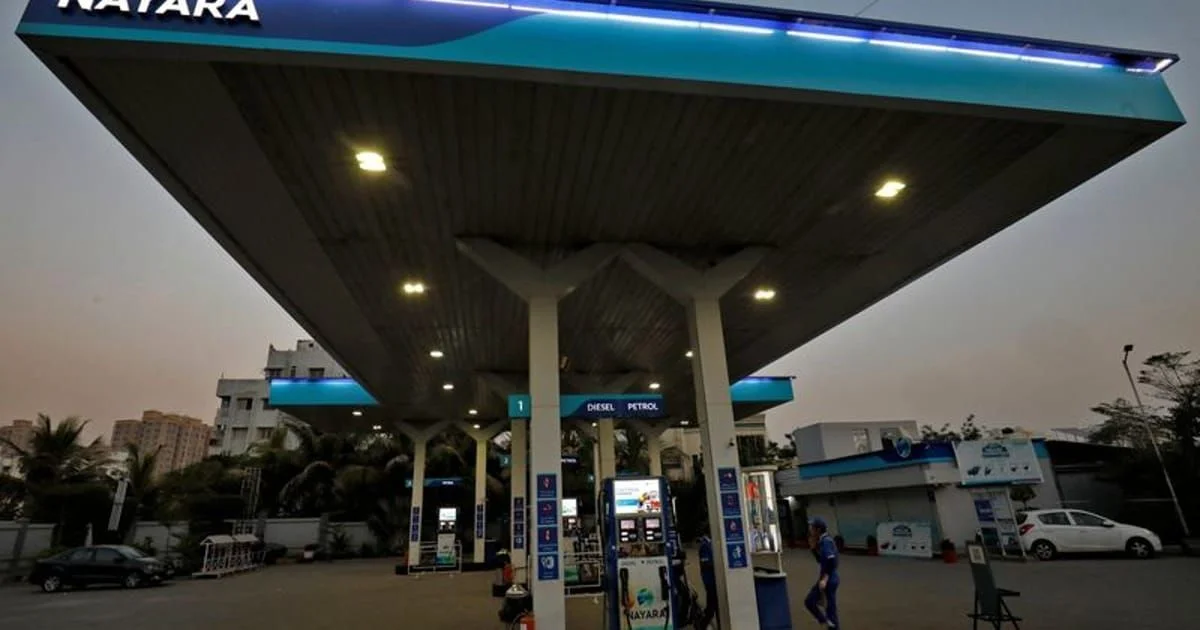
Indian Refiner Nayara Sells Gasoline to Russia via Traders
Traders have successfully supplied gasoline manufactured by Indian refiner Nayara Energy to Russia, as the country combats severe domestic fuel deficits. The supply strain follows intense Ukrainian drone strikes targeting Russian energy infrastructure, with independent intermediaries facilitating the maritime fuel shipments to bypass direct trade complications.
Key Highlights
- Independent commodity traders bypassed direct trade hurdles to deliver Indian-refined gasoline to fuel-starved Russia.
- Nayara Energy’s 400,000 barrels-per-day Vadinar refinery has processed Russian crude exclusively since European Union sanctions took effect.
- Shipping data tracks at least 60,000 metric tons of gasoline departing India, utilizing shadow networks and complex maritime routes.
- The Indian government maintains that domestic firms do not sell directly to Moscow, attributing the transactions entirely to third-party traders.
Overview of Nayara Energy’s Gasoline Exports to Russia
Independent commodity brokers have redirected motor fuel manufactured by Indian processor Nayara Energy into the Russian domestic market. This strategic supply influx arrives as Moscow handles widespread energy shortfalls after infrastructure damage.
A recent maritime intelligence report verified that seaborne gasoline arrivals from India had commenced. While that initial disclosure kept the manufacturing source confidential, subsequent industry findings directly linked the fuel volumes to Nayara Energy’s processing infrastructure.
Background: Russia’s Fuel Shortages and Indian Gasoline Exports
The Kremlin is scrambling to stabilize its domestic fuel security following disruptive Ukrainian aerial strikes on major oil processing hubs. These infrastructure liabilities forced Russia to seek external refined products despite its status as a top crude exporter.
In response to the crisis, intermediary networks rapidly mobilized logistical channels. This pivoting trade structure redirected high-grade Indian motor fuel toward Russian discharge ports to mitigate worsening localized deficits.
Stakeholders and Responses
Nayara Energy chose not to provide an official statement regarding the maritime transactions when contacted via email. The corporate structure of the private refiner is highly linked to Moscow, with Russian state oil giant Rosneft holding a 49% equity stake.
The remaining ownership is controlled by an investment consortium, which has faced increased international scrutiny. Both majority and minority stakeholders have steadily adapted their business operations to maintain refined product flows amid shifting regulatory environments.
Indian Government’s Position
During an official press briefing on Thursday, Indian Oil Minister Hardeep Singh Puri clarified the state’s commercial boundary. He asserted that domestic energy enterprises were not conducting direct fuel sales to the Russian Federation.
However, the energy minister conceded that international commodity brokers could easily purchase refined products from Indian facilities. He noted it was highly probable that Russian entities ultimately secured Indian-origin fuel through these third-party intermediaries.
Impact of Sanctions on Nayara’s Operations
The private Indian refiner has depended heavily on independent trading houses to manage its vital operations. This reliance intensified after European Union sanctions imposed on July 18, 2025, severely disrupted direct financial settlements with global buyers and legacy suppliers.
The punitive Western measures restricted Nayara’s access to international maritime insurance, conventional shipping fleets, and mainstream banking networks. Consequently, the company restructured its logistics to utilize shadow shipping fleets and alternative transaction mechanisms.
Furthermore, the flagship 400,000 barrels-per-day Vadinar refinery in western India altered its feedstock strategy. The plant has processed Russian crude oil exclusively since alternative global suppliers halted cooperation following the enforcement of the July 2025 sanctions.
Details of Gasoline Shipments
Market intelligence sources confirmed that a minimum of 60,000 metric tons of Indian gasoline had been dispatched to Russia. Industry tracking experts identified the underlying logistics, showing a coordinated effort to move large fuel volumes efficiently.
A secondary maritime source detailed the specific fleet deployment used for the operation. The trade involved two product tankers, with each vessel transporting a cargo capacity ranging between 30,000 and 40000 metric tons of refined fuel.
Shipping and Logistics
A commercial tanker invoice verified that the Cameroon-flagged vessel Agni received its gasoline cargo at the Vadinar port facility. The documentation indicated that the ship initially set sail toward the Middle Eastern transit hub of Fujairah on June 20, 2026.
However, specialized LSEG vessel-tracking data exposed a deviation from the stated destination. The tracking system showed the tanker bypassing Fujairah entirely, moving through the Suez Canal on a northern trajectory toward European Russian waters.
Operational and Sanctions History
The regulatory actions implemented in July 2025 marked a turning point for India’s private refining sector. Prior to the restrictions, the Vadinar facility maintained a diversified crude slate, blending Middle Eastern, African, and domestic grades to optimize its monthly yield.
Under the current sanctions regime, the refinery operates as a critical processing node for discounted Russian Urals crude. The complex typically exports roughly 4 million barrels of refined products every month, navigating Western banking blocks by routing all sales through non-aligned financial intermediaries.
FAQs
Who is Nayara Energy and what role does it play in gasoline exports?
Nayara Energy is a prominent private Indian oil refining company in which Russian state major Rosneft maintains a 49% ownership stake. The company manufactures motor fuels at its coastal Vadinar facility and relies on third-party traders to distribute its gasoline to global markets, including Russia.
Why is Russia importing gasoline from India?
Russia is importing gasoline to counteract domestic fuel deficits triggered by successful Ukrainian drone strikes on its domestic energy infrastructure. These attacks temporarily disabled multiple domestic refineries, forcing Moscow to source refined products from international suppliers.
How are EU sanctions affecting Nayara’s operations?
European Union sanctions enacted in July 2025 restricted Nayara’s access to standard maritime insurance, global banking channels, and mainstream shipping lines. To survive these barriers, the refiner processes Russian crude exclusively and uses shadow networks to execute trades.
How much gasoline has been exported from India to Russia?
At least 60,000 metric tons of gasoline have been tracked leaving India for Russian destinations. The supply operation utilized two specialized product tankers, which carried individual payloads of 30,000 to 40,000 tons through strategic maritime checkpoints.
What is the Indian government’s stance on these fuel shipments?
The Indian government states that its domestic energy corporations are not selling fuel directly to Russia. Oil Minister Hardeep Singh Puri noted that while state and private refiners do not engage in direct trade with Moscow, it is entirely possible for independent international traders to buy Indian fuel and resell it to Russian buyers.