Goldman Sachs Upgrades India GDP Growth Outlook To 6.8%
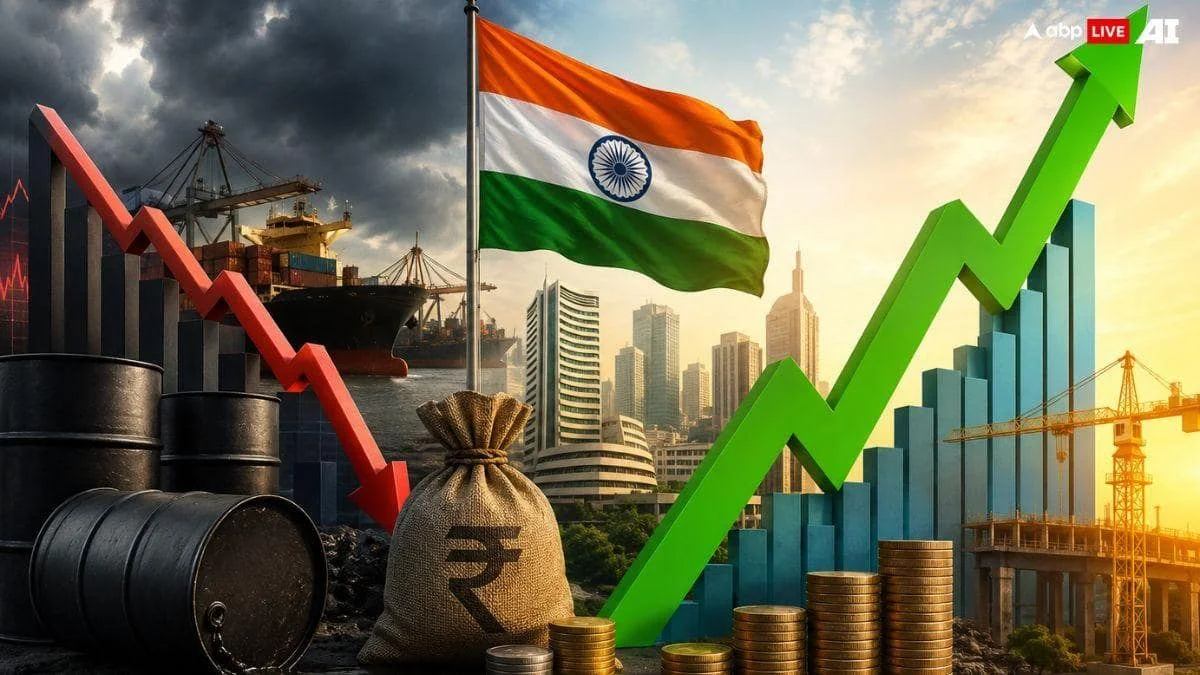
Goldman Sachs has upgraded India’s macroeconomic outlook for calendar year 2026, raising its real GDP growth projection to 6.8% following the recent US-Iran peace deal. Easing global crude oil prices and robust domestic economic conditions prompted the investment bank to lower inflation and current account deficit forecasts.
Key Highlights
- Real GDP growth forecast for CY26 raised by 0.3 percentage points to 6.8% year-on-year.
- Headline inflation projection lowered by 0.2 percentage points to 4.4% year-on-year.
- Current account deficit forecast reduced to 1.1% of GDP due to softer energy costs.
- Indian engineering exports hit a historic high of $12.31 billion in May 2026 despite earlier conflicts.
Lower Crude, Better Growth: Goldman Sachs Upgrades India Outlook
The global financial institution revised its economic projections for India after a substantial drop in crude oil prices diminished risks to the domestic economy.
Stronger-than-anticipated economic activity during the first quarter of CY26, coupled with declining crude benchmarks, drove the upward adjustment in the growth outlook.
Following the historic geopolitical breakthrough between Washington and Tehran, Goldman Sachs upgraded India’s macroeconomic trajectory for calendar year 2026. The brokerage increased real GDP expansion targets while cutting projected inflation and current account imbalances, pointing to softer energy markets and strengthening internal economic indicators.
In its newly released research note, titled India: Improved macro outlook after the US-Iran deal, the investment firm stated that its revised numbers reflect how the sharp retreat in oil prices has shielded the South Asian economy from external vulnerabilities.
“On balance, with the recent downward revision in the oil price forecast by our commodities team ($82/bbl average in Q3-Q4 CY26, vs. $92/bbl earlier and $75/bbl average in CY27, vs. $80/bbl earlier), we raise our real GDP growth forecast for CY26 by 0.3pp to 6.8% yoy, lower our headline inflation forecast by 0.2pp to 4.4% yoy and lower our current account deficit forecast by 0.2pp to 1.1% of GDP,” the report stated.
According to Goldman Sachs, the domestic marketplace demonstrated notable durability through recent international supply chain blockades. Government fiscal interventions and targeted policy measures successfully insulated domestic consumers from skyrocketing energy import tabs.
“The Indian economy remained resilient through the Middle-East shock, as fiscal and quasi-fiscal measures absorbed much of the increase in energy costs and limited pass-through to consumers,” the analysts observed.
While the brokerage anticipates a temporary moderation in private consumption during the second and third quarters because of previous fuel cost inflation, the subsequent oil crash has minimized the probability of further retail fuel hikes, easing pressure on domestic bank accounts beyond the third quarter.
The financial briefing further highlighted that cooling international commodity prices will provide significant fiscal relief to New Delhi. “The sharp correction in global urea prices should reduce upside risk to the fertilizer subsidy bill versus our earlier expectations… together with lower oil prices, should help ease near-term fiscal pressures,” the report confirmed.
Regarding consumer prices, Goldman Sachs noted that the oil market correction has minimized the threat of unexpected petrol and diesel price hikes. It has also alleviated input cost pressures on downstream petrochemical derivatives, resulting in lower projections for both underlying core and headline inflation metrics.
Additionally, the dual benefit of lower energy import requirements and robust inbound worker remittances has strengthened India’s external ledger.
“Overall, we lower our current account deficit forecast for CY26 further by 0.2pp to 1.1% of GDP,” Goldman Sachs declared, noting that it now forecasts a balance of payments surplus of 0.7% of GDP for the calendar year.
However, the investment bank warned that volatile weather patterns and the lingering effects of earlier retail fuel adjustments could act as brief consumption speedbumps before economic expansion recovers stronger velocity during the final months of the year.
Future Outlook: Supply Chain Reinvestment and Export Milestones
The broader macroeconomic recovery is already reflecting in high-density trade data, underscoring the resilience highlighted by global analysts. Indian engineering goods exports breached the $12 billion threshold for the first time in history during May 2026, defying lingering regional disruptions.
Total engineering shipments for the month climbed to $12.31 billion, up from $9.89 billion during the same period in the prior year, marking a stellar 24.48% year-on-year surge. According to rapid data estimates from the Ministry of Commerce and Industry, engineering sectors comprised 27.2% of the nation’s total outbound trade basket in May.
This unprecedented export performance was propelled by electrical machinery, shipping structures, automobiles, and primary iron and steel products, with 28 out of 34 industrial sub-panels logging positive growth. Industry leaders note that global corporations are aggressively restructuring their procurement networks to diversify away from China, opening multi-decade expansion windows for Indian factories.
While the international trading arena continues to face fragmented manufacturing demand and elevated borrowing costs, Indian exporters are successfully diversifying product lines and geographic destinations. This strategic pivot positions the engineering sector to pursue its long-term export target of $250 billion by 2030 under the guidance of state policy relief and expanded trade finance protections.
FAQs
Why did Goldman Sachs upgrade India’s macroeconomic outlook?
Goldman Sachs upgraded India’s outlook following the US-Iran peace deal, which triggered a significant drop in global crude oil prices. This price correction reduced external vulnerabilities and improved domestic fiscal conditions.
What are the new GDP and inflation forecasts for India in CY26?
For calendar year 2026, Goldman Sachs increased India’s real GDP growth forecast to 6.8% and lowered its headline inflation projection to 4.4%.
How did the Indian government protect consumers from the Middle East energy shock?
The Indian economy maintained its resilience because the government deployed fiscal and quasi-fiscal measures to absorb a massive portion of escalating energy costs, successfully restricting the direct financial impact on retail consumers.
What impact do lower oil prices have on India’s fiscal deficit?
Lower crude prices reduce the government’s fiscal strain by limiting retail fuel price hikes and lowering global urea costs, which subsequently slashes the state’s total fertilizer subsidy expenditure.
How are Indian engineering exports performing amid global changes?
Engineering exports reached a record high of $12.31 billion in May 2026, growing 24.48% year-on-year. This growth is driven by structural supply chain realignments as global companies diversify their sourcing strategies beyond China.