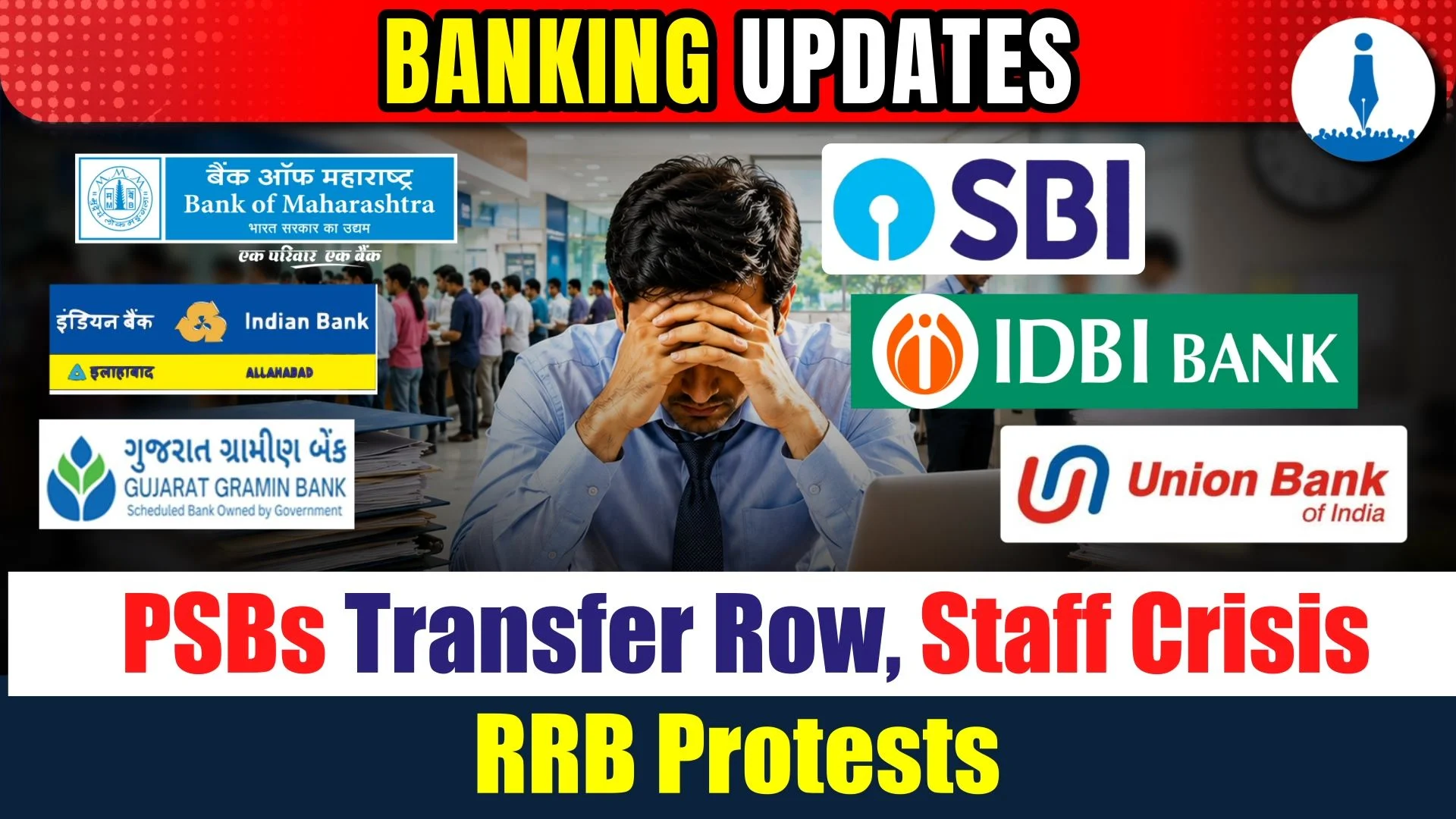
Indian Banking Sector Faces Overhaul Amid Employee Grievances
The Indian banking sector is grappling with intense systemic challenges as employee unions raise alarms over severe staff shortages, punishing workloads, and controversial transfer policies. These rising operational pressures have triggered a major human resources overhaul at State Bank of India and renewed intense national debates surrounding public sector bank privatization.
Key Highlights
- Bank employees across Gujarat Gramin Bank and Indian Overseas Bank are protesting stringent regional transfer processes and acute understaffing.
- State Bank of India launched a comprehensive human resources restructuring plan to combat widespread workforce burnout and toxic workplace cultures.
- The potential disinvestment of IDBI Bank has reignited fierce debates regarding the declining market share of India’s public sector financial institutions.
Employee unions and officer associations across multiple financial entities, including Gujarat Gramin Bank and Indian Overseas Bank, have formally raised serious grievances regarding recent employee transfer procedures. Workers argue that the current regional office transfer mechanisms fail to account for employee well-being, creating immense personal disruption and worsening existing regional staff deficits.
Concurrently, severe personnel shortages have exponentially increased daily workloads and target pressures for remaining branch staff. Frontline bank workers report dealing with an increasingly toxic work culture driven by relentless administrative demands, which has severely impacted mental health across multiple state-run institutions like the Bank of Maharashtra.
In response to these systemic operational strains, State Bank of India announced a sweeping structural overhaul of its human resources frameworks. This strategic initiative specifically aims to eliminate workforce burnout, optimize branch-level staffing ratios, and systematically dismantle high-pressure environments by reforming internal performance metrics and late-night reporting habits.
Meanwhile, the broader financial industry is witnessing renewed friction regarding the proposed IDBI Bank privatization strategy. Lawmakers and union representatives have openly challenged the state’s ongoing stake sale timeline, warning that accelerating disinvestment could further erode the aggregate market share of public sector banks nationwide.
Additionally, organizational bodies like the All India Indian Bank Officers’ Association and the All India Bank of Maharashtra Employees Federation have actively backed these labor disputes. Representatives emphasize that unreasonable transfer processes during 2026 have deeply destabilized regional operational efficiency, particularly affecting key clusters within the Tirunelveli Zone and Madurai regions.
Separately, parliamentary representatives like John Brittas have consistently scrutinized the Union government’s financial strategies regarding public asset management. Critics point out that prioritizing corporate metrics over employee welfare risks permanently degrading the operational integrity of foundational public sector banking units.
Future Outlook
The escalating tension between bank managements and employee unions suggests a critical turning point for India’s public sector banking architecture. As the government pushes forward with its aggressive disinvestment agenda for IDBI Bank, labor groups are expected to intensify nationwide mobilizations against privatization.
Observers indicate that the success of State Bank of India’s newly introduced human resources framework will likely serve as a foundational template for other state-run lenders attempting to modernize their workplace practices. If these institutions fail to alleviate operational stress, rising attrition rates could hamper public sector banks.
Ultimately, balancing structural performance targets with robust employee wellness programs remains the primary challenge for the industry. Resolving these deep-seated grievances around staffing and transfers will dictate whether state-run institutions can successfully defend their remaining market share against aggressive private sector competitors.
FAQs
What are the main grievances raised by Indian bank employees?
Bank employees are protesting against severe staff shortages, increasing daily workloads, high target pressures, toxic workplace cultures, and unaccommodating regional transfer policies.
How is State Bank of India addressing employee burnout?
State Bank of India has announced a comprehensive human resources restructuring plan designed to eliminate late-night reporting, reform performance metrics, and optimize branch staffing ratios.
Why is the privatization of IDBI Bank facing opposition?
Opponents and employee unions argue that the ongoing disinvestment and stake sale of IDBI Bank could further reduce the overall market share and influence of public sector banks.