India Renewable Energy Climate Risk Resilience Report 2026
A new financial analysis reveals that dedicating a minimal portion of infrastructure spending to climate defense can preserve billions in assets for India’s clean power market. Safeguarding domestic installations ensures long-term grid reliability as the nation rapidly expands its non-fossil fuel capacity to meet aggressive federal green energy milestones.
Key Highlights
- Spending just 2% of capital budgets on climate proofing yields a 6x return.
- Nearly 90% of India’s planned green energy projects face critical environmental threats.
- Installed national non-fossil capacity climbed to 283.5 GW in March 2026.
- Proactive asset fortification protects international investor confidence and improves insurance access.
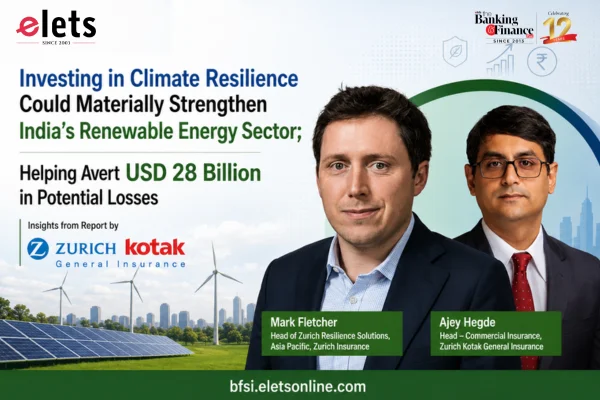
Mumbai: Allocating merely 2% of capital expenditure (CapEx) toward climate adaptation strategies for upcoming green energy infrastructure could slash anticipated environmental damages by nearly half. Total projected deficits would plunge from USD 55 billion to USD 27 billion, preserving USD 28 billion and yielding a 6x return on investment, a joint study by Zurich Kotak General Insurance and Zurich Resilience Solutions reveals.
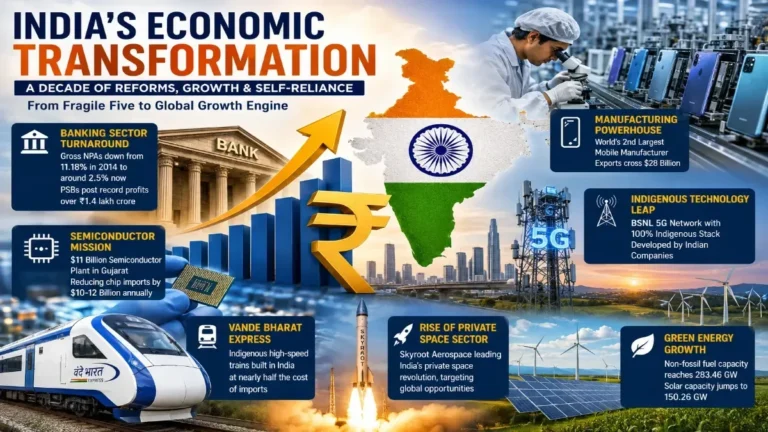
The report emphasizes that the domestic clean power landscape is multiplying rapidly, cementing India’s position as the world’s third-largest renewable capacity holder in 2026. Total non-fossil operations hit 283.5 GW by March 2026, keeping the country aligned with its 500 GW by 2030 target.
Drawing from an exhaustive evaluation of 871 planned renewable energy sites, representing roughly 90% of India’s renewable energy pipeline spanning ten distinct states and union territories, researchers discovered that nearly 90% of planned capacity will navigate high or extreme exposures to climate disruptions by 2030.
As stated in the publication, close to USD 55 billion in clean energy assets remain vulnerable to volatile weather patterns if structural fortresses are left out of early blueprinting and construction. The most severe hazards identified comprise tornadoes, floods, wildfires, and hailstorms, which threaten to wreck transmission networks and halt commercial power output.
The investigation advises baking climate vulnerability modeling directly into initial engineering, running rigorous simulation stress tests on vulnerable infrastructure, enforcing asset-specific building mandates during hardware procurement, upgrading adjacent grid networks, and showcasing climate metrics to secure cheaper institutional credit and insurance backing.
Ajey Hegde, Head – Commercial Insurance, Zurich Kotak General Insurance, stated that embedding protective measures at inception isolates capital from shocks, enhances asset insurability, and builds vital trust among project lenders and equity partners.
Mark Fletcher, Head of Zurich Resilience Solutions, Asia Pacific, observed that addressing weather vulnerabilities during early blueprint and construction phases minimizes downstream financial damage while bolstering the long-term bankability and operational reliability of green generation facilities.
The research concludes that as the national clean energy transition moves faster, making climate adaptation a core tenant of industrial planning remains mandatory to secure infrastructure, guarantee sovereign power security, and generate stable financial returns over multiple decades.
Future Outlook
As India drives toward its 2030 climate milestones, the broader Asian energy matrix is shifting toward direct-consumption models and hardened supply lines to absorb this massive capacity surge. For instance, China is finalizing policy frameworks to link clean energy directly to high-capacity industrial hubs and data centers, aimed at integrating 900 million kilowatts of new generation by 2030.
Simultaneously, ancillary power equipment manufacturing is adapting to support these high-density, climate-resilient networks. Indian manufacturers like Yash Highvoltage are raising capital, such as a recent ₹151 crore preferential issue, to upscale transformer bushing infrastructure from 245 kV to extra-high voltage 550 kV thresholds. This grid modernization is vital as global energy bodies, including OPEC, project that hydrocarbons and natural gas will dictate over 53% of international energy demand through 2050, requiring a balanced, highly fortified dual-track transition system.
FAQs
What are the main climate hazards threatening India’s renewable energy sector?
The primary threats include tornadoes, severe floods, wildfires, and destructive hailstorms. These events can permanently disable solar arrays, wind turbines, and secondary electrical distribution infrastructure if projects are not structurally reinforced.
How much capital is required to protect these clean energy projects?
The report indicates that investing just 2% of a project’s total capital expenditure (CapEx) into specialized climate resilience measures during the design and construction phases can mitigate up to half of all potential weather-related financial losses.
What is India’s current renewable energy capacity status in 2026?
As of March 2026, India operates 283.5 GW of installed non-fossil fuel capacity, maintaining its global ranking as the third-largest renewable energy marketplace and keeping the nation on track to hit its statutory goal of 500 GW by 2030.