India GDP Growth Revised Upward to 7.7 Percent in FY2026
India’s real gross domestic product achieved a revised 7.7% expansion for the 2026 financial year, outstripping initial predictions of 7.6%. This upward adjustment cements the nation’s position as the leading major economy in terms of growth speed globally, marking its most robust economic acceleration since FY2022.
Key Highlights
- Real GDP expanded by 7.7% in FY2026, outperforming the initial estimate of 7.6%.
- Private expenditure surged to 7.7%, up from 5.8% in FY2025, indicating a consumption-led rebound.
- A landmark trade pact with the United States reduced reciprocal tariffs from 25% to 18%.
- Headline inflation is projected to settle at 3.9%, aligning closely with central bank targets.
Independent assessments from Goldman Sachs and Trading Economics validated the country’s ranking as the fastest-advancing G20 nation. This sustained performance highlights strong domestic fundamentals amid shifting global dynamics.
Drivers of Economic Acceleration and Market Performance
An acceleration in private expenditure to 7.7% growth, compared to 5.8% in FY2025, reveals that household demand is anchoring this expansion alongside state spending. Meanwhile, gross fixed capital formation climbed 7.1%, demonstrating robust ongoing commitments toward national infrastructure, factory setups, and corporate capacity.
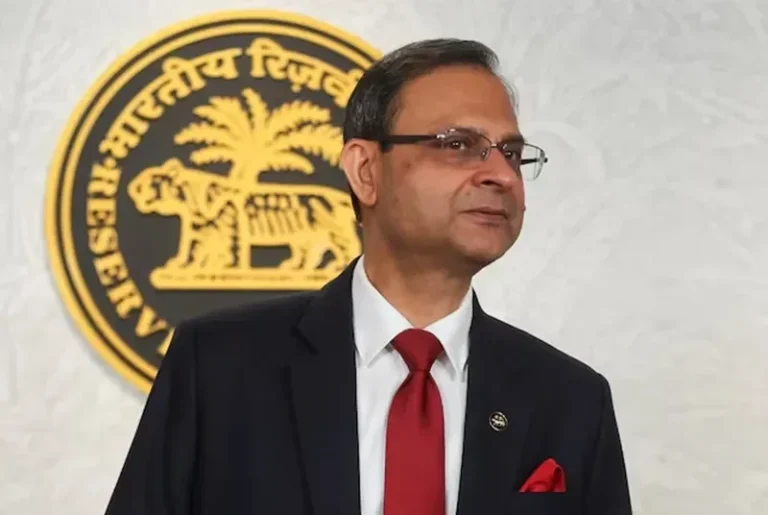
The Reserve Bank of India implemented a total reduction of 125 basis points in interest rates over the preceding 12 months, while deploying systemic liquidity injections. Anticipated headline inflation stands at 3.9% for 2026, matching the central bank’s medium-term objective of 4%.
Bilateral Commerce Enhances Strong Economic Momentum
A critical trade architecture finalized with the United States in early February lowered mutual import tariffs on domestic merchandise from 25% to 18%. Analytical projections from Goldman Sachs indicate this framework will contribute an extra 0.2 percentage points to total output over the next year.
The domestic industrial ecosystem has gained substantial ground within international supply networks as global corporations actively diversify away from single-country logistical hubs. Consequently, the nation currently ranks as the fourth largest global economy based on nominal valuation.
The domestic economy outpaced all alternative G20 nations during the 2026 fiscal year. This upgraded 7.7% performance showcases a consumer-driven, investment-supported macroeconomic expansion possessing long-term viability.
Future Outlook
The convergence of aggressive monetary easing, robust capital expenditures, and strategic trade configurations sets a strong foundation for the upcoming fiscal periods. Analysts anticipate that deeper integration into global electronics and automotive supply chains will sustain industrial momentum. If private consumption maintains its current trajectory above 7.5%, the economic engine remains well-positioned to buffer against potential external global trade shocks.
FAQs
What was India’s official GDP growth rate for FY2026?
The real gross domestic product expanded by 7.7% in FY2026. This represents an upward revision from the preliminary government estimate of 7.6%, confirming the nation’s status as the quickest-growing major economy.
What primary factors drove the economic expansion?
The acceleration was primarily propelled by private consumption expenditure, which rose to 7.7% from 5.8% in the prior year. Additionally, a 7.1% increase in gross fixed capital formation highlighted strong investments in manufacturing and infrastructure.
How did monetary policy support this growth?
The Reserve Bank of India reduced benchmark interest rates by 125 basis points over the course of the year. This loosening cycle, paired with targeted liquidity injections, helped stimulate commercial lending while keeping forecast inflation stable at 3.9%.
What impact did the US trade agreement have?
The bilateral trade pact signed in February 2026 lowered mutual tariffs from 25% to 18%. Financial institutions estimate this reduction will add an incremental 0.2 percentage points to total economic growth.