Remote Indigenous Art Centres Face Rising Travel Costs
Remote Indigenous art centres are facing severe financial strain due to escalating travel and fuel costs, threatening their participation in major national exhibitions. Surging diesel and aviation fuel prices have drastically inflated the capital required to transport artists and delicate artworks from isolated desert and coastal communities to metropolitan galleries.
Key Highlights
- Remote art centres face travel distances exceeding 2500km to reach major metropolitan exhibition hubs.
- Escalating regional diesel prices have climbed to approximately $4.40 per litre in isolated territories.
- Transit logistics require navigating unsealed corrugated roads, numerous river crossings, and wildlife hazards.
- Organisers have initiated financial appeals to subsidize soaring transport and freight operational fees.
Non-profit art centres serve as vital economic engines for isolated Indigenous communities, yet participating in premier metropolitan exhibitions now demands exorbitant transit expenditure.
Relocating operations to attend the Darwin Aboriginal Art Fair in August, for instance, requires navigating a grueling 2500km overland journey, with single refuelling stops for four-wheel-drive vehicles now commanding $350.
Surging fuel tariffs have dramatically driven up consumer prices alongside broader transit expenses, explained Simone, an arts centre professional representing Papulankutja Artists.
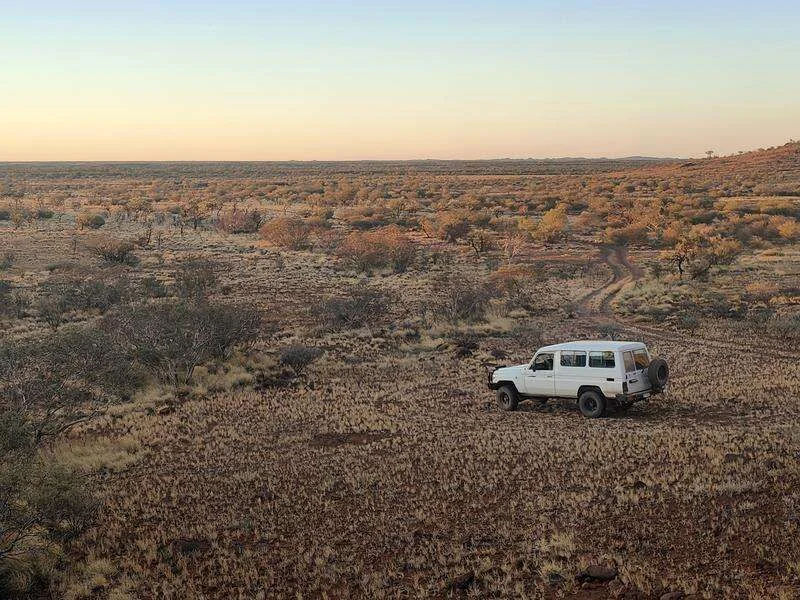
Papulankutja, alternatively recognized as Blackstone, sits 900km west of Alice Springs, requiring a five-hour trek just to reach sealed bitumen at Yulara, another five hours to Alice Springs, and an additional 15 hours to reach Darwin.
The transit corridor presents intense logistical hurdles typical of remote travel, ranging from severely corrugated surfaces and frequent tyre punctures to stray buffalo and kangaroos.
More than 100 creators representing 30 distinct Indigenous hubs will journey from remote regions like the Pilbara, the Tiwi Islands, and the APY Lands for the 20th annual Darwin exhibition.
Securing passage to the National Indigenous Art Fair in Sydney this July introduces separate logistical barriers, demanding multiple commercial flights inflated by rising aviation fuel costs.
The 2026 Sydney exposition will occupy the newly redeveloped Cutaway at Barangaroo, marking the venue’s inaugural premier cultural gathering following its structural modernization.
Roughly 2400km away from Papulankutja within the Arnhem Land community of Ramingining, the Bula’bula Art Centre battles identical remote economic pressures, with local diesel hovering near $4.40 a litre.
Though geographically closer to Darwin than Blackstone, travel duration from central Arnhem Land remains unpredictable due to more than 24 distinct river crossings intersecting the route.
The enterprise utilizes a modest travel stipend provided by the Darwin organizers, though total attendance costs for the organization typically hit $15,000.
Management is currently evaluating headcount limitations for the delegation because transporting physical inventory incurs substantial independent freight overheads, noted Bula’bula director Mel George.
Choosing between paying heavy freight fees or driving cargo directly at the expense of passenger seating remains a constant financial dilemma due to extreme transit pricing, George stated.
The central Arnhem Land territory holds a rich artistic legacy, famously producing figures like David Malangi, whose historic bark artistry was utilized on the Australian one-dollar note without prior authorization in 1966.
Departing from traditional canvas and bark paintings, Bula’bula plans to showcase intricate fiber weavings in 2026, spotlighting masterworks by Melinda Gedjen and Cecilie Mapurrumburr.
The sibling artisans utilize traditional pandanus and native bark varieties, deploying ancestral weaving methodologies to fashion both utilitarian tools and sacred ceremonial pieces.
Attending national Indigenous expositions is paramount because physical presence allows remote creators to evaluate contemporary styles and connect with nationwide peers, George emphasized.
Gathering collectively to witness the vast creative diversity flourishing across the continent represents an irreplaceable cornerstone of the annual artistic calendar, she added.
In response to the mounting economic pressures, Darwin Aboriginal Art Fair coordinators have initiated a public fundraising campaign to alleviate transit deficits for remote hubs.
The National Indigenous Art Fair in Sydney is scheduled from July 3-5, while the Darwin Aboriginal Art Fair operates from August 2-9.
Future Outlook
The escalating operational costs associated with remote travel are prompting a structural shift in how Indigenous art centres manage national exhibition logistics. As fuel prices remain volatile through 2026, many centres are transitioning toward lighter mediums like textile and fiber arts to reduce freight weight. Additionally, the growing reliance on targeted philanthropy and structural travel grants will likely dictate the scale of remote community representation at future metropolitan cultural events.
FAQs
What are the main dates for the Indigenous art fairs in 2026?
The National Indigenous Art Fair in Sydney is scheduled to run from July 3-5, 2026, followed by the Darwin Aboriginal Art Fair which takes place from August 2-9, 2026.
Why are travel costs rising significantly for remote Indigenous artists?
Travel costs have surged primarily due to rising regional fuel prices, with diesel reaching up to $4.40 per litre in remote areas, alongside higher aviation fuel costs that inflate commercial airfares.
How far do some remote art centres have to travel to attend these events?
Art centres such as Papulankutja Artists travel distances up to 2500km across unsealed roads and rugged terrain to reach major exhibition cities like Darwin and Sydney.
What alternative art forms are being highlighted to manage transport costs?
Some hubs, like the Bula’bula Art Centre, are prioritizing lightweight fiber weavings and pandanus bark works over heavier traditional paintings to optimize cargo space and minimize freight fees.