Apple Supplier Tata Faces India Health Probe Over Water Pollution
Indian health authorities have launched an investigation into a Tata Electronics iPhone component facility in Hosur following complaints from local farmers regarding toxic wastewater discharge and associated skin conditions, intensifying environmental scrutiny over Apple‘s manufacturing expansion in the region.
Key Highlights
- A 2026 probe targets a Tata Electronics factory in Tamil Nadu following farmer complaints of water contamination.
- Laboratory results revealed the presence of E. coli in agricultural water supply sources near the plant.
- The factory is central to Apple’s goal to manufacture 26% of global iPhones in India by 2026.
Health officials have investigated the facility since May following local agricultural grievances regarding factory activities.
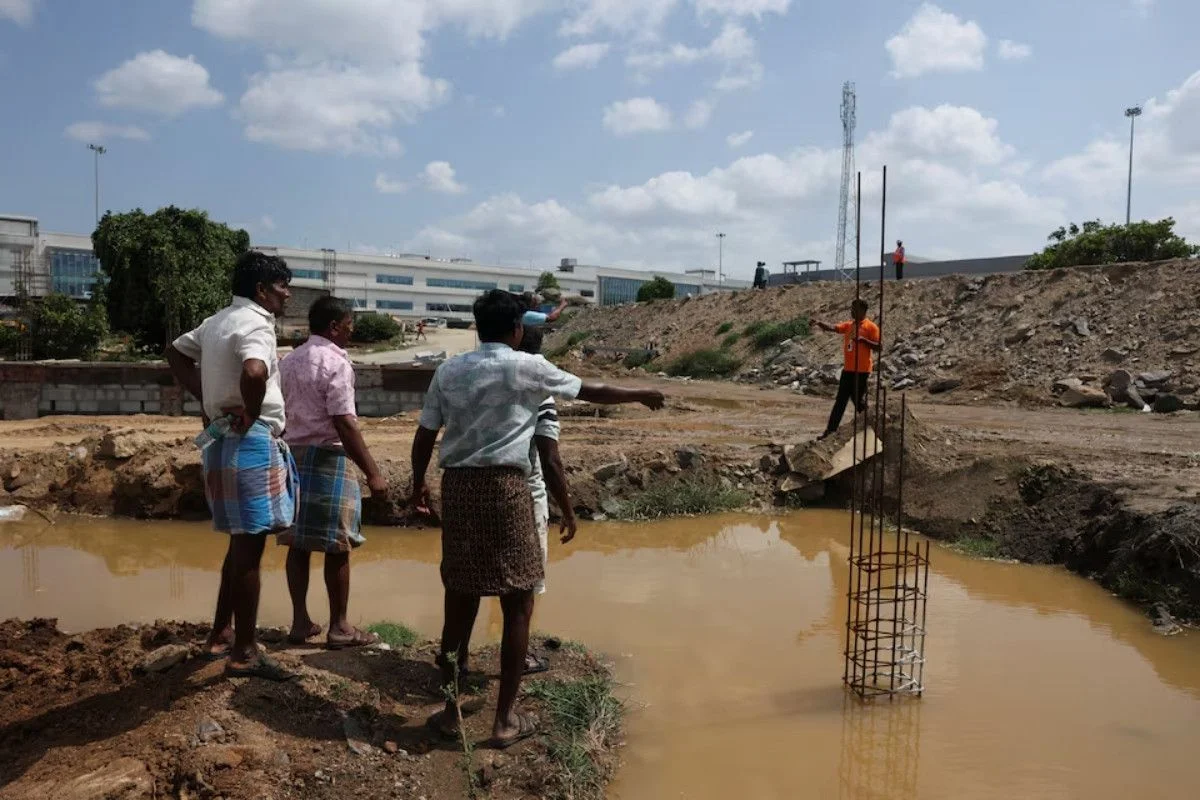
Local agricultural workers conversed with security personnel outside the perimeter of the Tata Electronics iPhone production facility located in Hosur on June 15, 2026.
A regional medical department in India is actively reviewing the impact of industrial effluents from the Tata-owned Apple supply plant on nearby cultivators who reported dermatological ailments caused by field pollution, according to internal records and three administrative sources.
This medical inquiry escalates an environmental conflict serving as an evaluation of the national initiative to establish domestic iPhone assembly networks. The Hosur site in Tamil Nadu received an official regulatory caution on May 25 regarding suspected subterranean water degradation.
Tata declared via an official brief that environmental regulators concluded their assessment after internal fluid evaluations demonstrated an absence of toxic substances.
Neither the state environmental regulator nor regional authorities offered public statements or answered press inquiries. Similarly, Apple maintained silence regarding the ongoing operational dispute.
The manufacturing firm declined to provide additional details despite multiple subsequent press queries.
Transport trucks navigated security checkpoints at the southern Indian assembly facility where components for Apple devices are manufactured, recorded on September 28, 2024.
Official correspondence reveals that regional medical officers initiated independent evaluations in late May following community grievances against the factory, which commenced operations in 2021 to produce device enclosures.
Related Coverage: Strategic partnerships emerge as global technology supply lines adjust to international manufacturing policies.
Sanitary evaluations confirmed that plant runoff generated an intense odor and rendered localized water supplies unsafe for livestock consumption, as detailed in a May 27 memorandum sent by village health officer Anish Parvin to the regional vector institute.
Effluents originating from the industrial site have pooled within proximate cultivation fields, compromising adjacent freshwater wells while sparking reports of dermatological complications among local residents, the confidential text stated.
The medical officer confirmed receiving numerous agricultural health grievances, though formal clinical validation of these conditions remains outstanding.
Administrative personnel dispatched two separate environmental fluid portions to a state diagnostic center for verification, according to an institutional contact.
The laboratory analysis dated May 30 verified that both collected segments contained E. coli bacteria, signaling significant sewage intrusion into the local water table.
This newly disclosed public health inquiry continues as authorities await secondary laboratory validations, according to regional healthcare director Rajesh Kumar C.
Key state for Apple, India
The confrontation positions local growers against the conglomerate, which serves as a cornerstone for geographic supply diversification away from traditional hubs. Projections indicate domestic assembly will comprise 26% of global smartphone output in 2026, rising from 6% previously.
The southern province operates as an industrial nucleus, hosting alternative electronics assembly facilities alongside massive manufacturing installations owned by automotive and technology multinationals.
Regulatory attention intensified after community demands prompted environmental watchdogs to demand formal corporate justifications under the threat of potential operational suspension.
Uncovered records indicate initial formal grievances were submitted on December 8, wherein a coalition of 15 cultivators detailed extensive contamination of surface reservoirs that halted agricultural activities.
Information confirming a corporate response to the initial agricultural petition remains unavailable.
An inside source noted a mechanical malfunction within the purification system during December, which caused partially managed effluent to breach containment structures and spill into external water bodies.
The corporation initiated rapid mitigation procedures to contain the spillage and successfully restored the processing machinery.
Corporate compliance guidelines mandate that manufacturing partners systematically regulate effluents, execute consistent system assessments, safeguard drainage systems against contamination, and adhere strictly to regional environmental authorizations.
Government tests reports
Environmental inspections conducted in April at two local wells indicated total dissolved solids levels reaching 1,084 and 1,286 milligrams per liter, significantly exceeding the national safety threshold of 500 milligrams per liter.
Unregulated industrial discharge spikes solid density, rendering water resources hazardous for community consumption, local aquaculture, and native ecosystems without extensive remediation, an environmental advocate noted.
An archived corporate ecological review from 2023 asserted that all surrounding baseline water configurations complied fully with national safety parameters.
Onsite observations and interviews with more than 12 agricultural workers revealed severely discolored water extracted from local wells alongside dense, stagnant liquid collections flanking the external walls.
Cultivators maintain that persistent chemical infiltration has decimated standing harvests and permanently degraded soil viability.
Local grower Gurumoorthy V, aged 40, stated that crops irrigated with the contaminated supply germinate briefly before rapidly decaying.
Independent confirmation of agricultural damage and definitive water quality metrics remain unverified at this time.
The dispute briefly turned tense on Monday when an activist entered corporate property to document suspected effluent reservoirs, leading a security officer to brandish a weapon before the confrontation dissipated without violence.
Future Outlook
India’s ambitions to expand its electronics manufacturing footprint hinge significantly on maintaining regulatory compliance and community stability. As Apple continues diversifying production, balancing industrial growth with environmental preservation will remain a key metric for global supply chain resilience.
FAQs
What triggered the health investigation at the Tata Electronics plant?
The probe was initiated following complaints from local farmers who reported skin issues and water contamination affecting their agricultural lands near the Hosur facility.
What did the laboratory water tests reveal?
Initial water samples tested positive for E. coli, and independent checks indicated total dissolved solids levels more than double the acceptable national drinking water standard.
How critical is the Hosur facility to Apple’s supply chain?
The facility manufactures essential iPhone components and is central to Apple’s strategy to produce 26% of its global iPhone supply within India by 2026.