WEL Energy Trust Candidates Clash Over Election Statistics
A fierce dispute has erupted between leading candidates in the WEL Energy Trust election over accusations of misleading statistical assertions. Contenders from rival factions are publicly locking horns regarding the accuracy of figures distributed to voters ahead of the upcoming polling deadline.
Key Highlights
- Opposing candidates are trading accusations of data manipulation and deceptive campaign advertising.
- The community trust oversees assets valued at more than $1.1 billion.
- Disputed figures center on the true percentage increases of community grants and consumer electricity discounts.
- Voting for the high-stakes community energy trust election concludes on June 26, 2026.
The political contest for control of the WEL Energy Trust has turned contentious as front-running candidates clash over campaign data. Michael West, representing the Your Discounts Team, launched a scathing critique against Alan Chew and the MORE Team, alleging blatant misrepresentation and strategic statistical manipulation designed to influence local voters.
These aggressive accusations were swiftly dismissed as frivolous insults by Chew, a prominent member of the MORE Team and the established founder of Houston Technology Group. The fierce debate underscores the high stakes of the election for a trust managing community assets exceeding $1.1 billion.
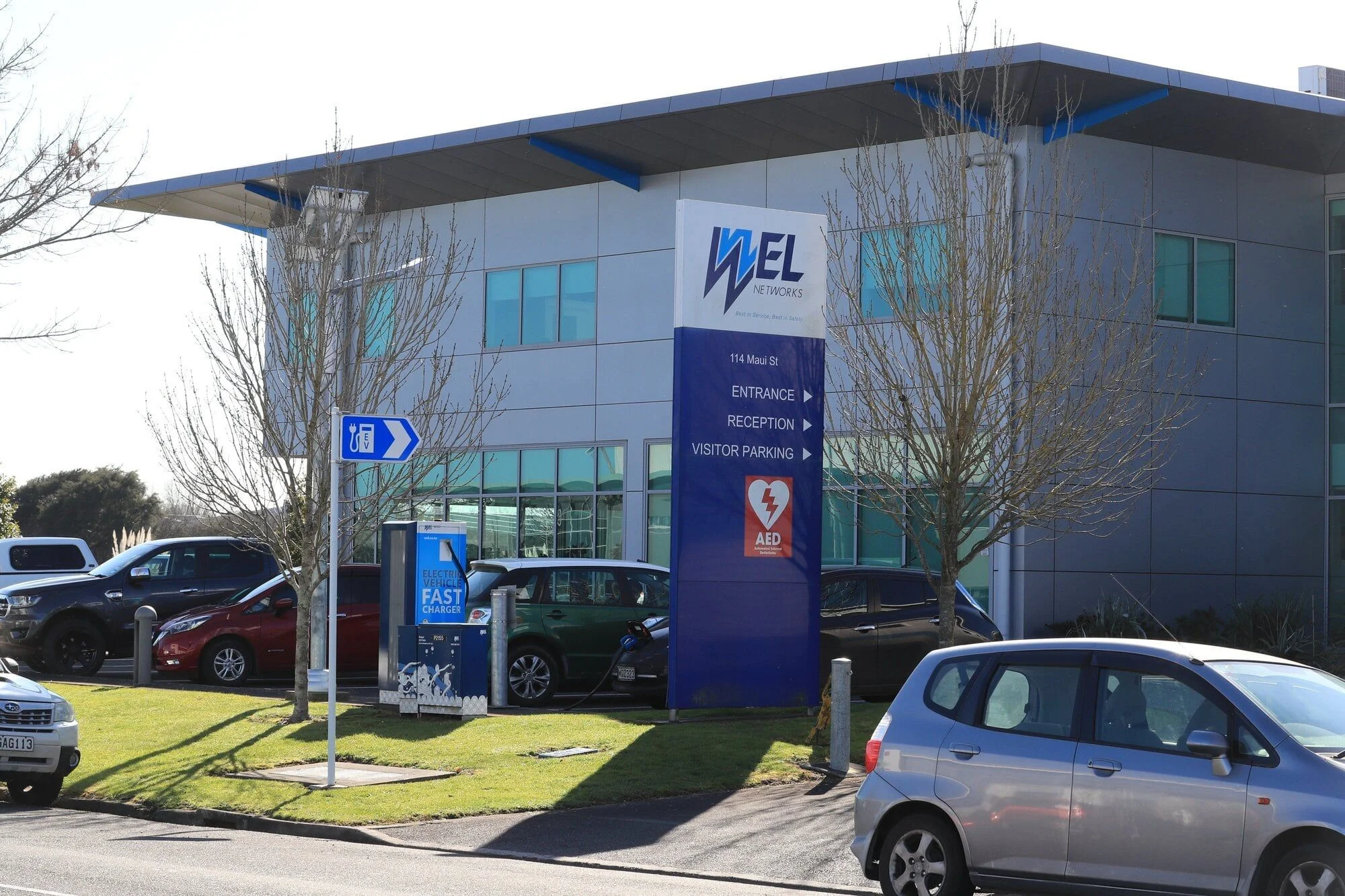
This critical utility network links upwards of 102,000 residential properties and commercial enterprises to regional power suppliers. Despite the massive economic footprint of the organization, historical voter turnout remains exceptionally low, rarely climbing past 12% of eligible residents according to Chew.
West specifically challenged the precise phrasing utilized in Chew’s official candidate profile statement. He argued that highlighting massive expansions of 61% in community funding, 41% in power discounts, and 35.8% for the upcoming 2026/2027 discount hike falsely implied these milestones occurred exclusively during Chew’s current three-year tenure.
According to counter-analysis by West, verified fiscal data spanning from FY23 to FY26 indicates an 85% surge in localized community grants alongside an electricity discount growth rate of just 2.8%. West maintainted the actual approved discount trajectory is lower than advertised.
West asserted that while an expansion in household power discounts has secured authorization for the 2026/2027 fiscal period, the finalized increment stands at 29% rather than the 35.8% advertised across the MORE Team candidate profiles. He identified further discrepancies regarding a purported $13 million discount expansion over three years.
West calculated that power discounts climbed from $14.2 million in the 2024 financial year to $18.7 million by the 2027 financial year. He noted that aggregating annual gains from a FY24 baseline reveals increases of $0.1 million in FY25, $0.3 million in FY26, and $4.5 million in FY27, totaling $4.9 million.
In his defense, Chew explained that his campaign evaluated statistics by summing up the full triennium term served by his current board, contrasted against the preceding term managed by the Your Discounts Team. He argued this approach prevented biased distortions favoring either faction.
Chew stated that isolating an individual year out of an entire triennium yields highly volatile outcomes based entirely on which specific period is highlighted. He insisted the underlying trajectory of their data remains accurate and defensible.
Chew claimed the scrutinized figures were only off by an inconsequential margin of 0.06% in total. He argued the audited reality proved the MORE Team outperformed their published profiles, with community grants actually rising by 73% instead of the cited 61%.
Responding to demands that campaign literature should strictly reflect chronological years rather than political terms, Chew claimed nearly all voters inherently understand the term-based context. He observed that central government agencies routinely apply the exact same terminology when reporting structural milestones.
Chew subsequently acknowledged minor mathematical oversights in the initial publications, issuing revised metrics. The corrected ledger indicates that community grants grew by 73.9%, power discounts expanded by 37.2%, and overall distributions rose by 49.8%.
The aggressive campaigning arrives at a critical juncture for regional voters. Local authorities confirm that official balloting for the community trust election will formally close on June 26, 2026, precisely at midday.
Future Outlook
The escalating statistical warfare highlights long-standing structural tensions within regional energy trust governance. As digital transparency demands increase, future trust elections will likely require standardized, independent auditing of candidate data profiles to mitigate public misinformation. Observers anticipate that whichever faction secures the majority will face immediate pressure to formalize the debated 2026/2027 power discounts and address the chronically low voter turnout, which threatens the democratic legitimacy of the $1.1 billion asset pool.
FAQs
What is the primary cause of the dispute in the WEL Energy Trust election?
The conflict stems from disagreements over statistical claims published in candidate campaign profiles. Candidate Michael West accuses the MORE Team of using manipulated and deceptive figures regarding past increases in community grants and electricity discounts, while Alan Chew defends the data as minor calculation errors that accurately reflect institutional terms.
How large is the asset portfolio managed by the WEL Energy Trust?
The community trust is responsible for managing a massive portfolio of local assets valued at over $1.1 billion. The underlying electrical network connects more than 102,000 homes and businesses to regional energy providers.
When does voting for the WEL Energy Trust election conclude?
Eligible voters must submit their ballots before the official close of the election, which is strictly scheduled for June 26, 2026, at midday.
What are the corrected figures released by Alan Chew?
Following the public scrutiny, Alan Chew acknowledged slight mathematical errors and updated the campaign statistics to show that community grants actually increased by 73.9%, power discounts rose by 37.2%, and total distribution figures grew by 49.8%.