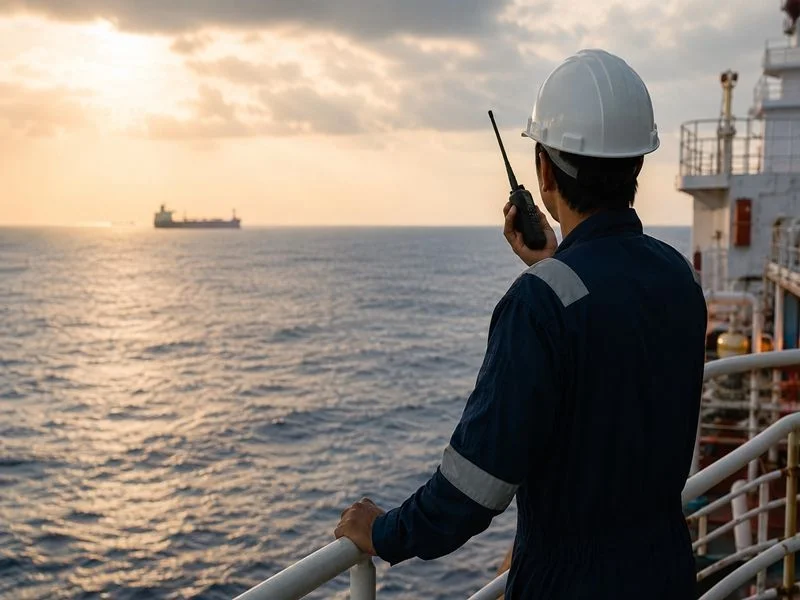
India Lifts Strait of Hormuz Shipping Restrictions With Strict Safety Rules
The Directorate General of Shipping has officially lifted transit bans on domestic vessels navigating the highly strategic Strait of Hormuz. While allowing normal deployment, the maritime regulator issued stringent instructions requiring ship captains and crew members to enforce heightened vigilance and adhere strictly to standard international security frameworks.
Key Highlights
- India officially removes navigation bans for domestic vessels transiting the strategic maritime corridor.
- Maritime authorities mandate rigorous compliance with regional coastal and international security agencies.
- Multilateral evacuation mechanisms are established alongside the International Maritime Organization.
- Stakeholders must verify all digital reports to mitigate the spread of misinformation.
The Directorate General of Shipping officially dismantled operational restrictions previously placed on domestic merchant vessels traversing the strategic Strait of Hormuz shipping lane. However, the federal maritime regulator explicitly commanded shipmasters and vessel crews to maintain unwavering vigilance while executing prescribed security protocols throughout the volatile maritime passage.
A regulatory directive issued on June 26, 2026, revealed the International Maritime Organization is orchestrating global seafarer evacuation mechanisms. This comprehensive multi-agency framework integrates the United Kingdom Maritime Trade Operations, the MICA Center, the Ministry of External Affairs, and the Indian Navy to guarantee total safety parameters.
The administration clarified that zero operational restrictions remain for domestic shipowners, corporate vessel managers, or registered recruitment agencies regarding regional shipping operations. Maritime firms can continuously deploy personnel throughout the broader Persian Gulf provided assets conform to security regulations mandated by sovereign coastal states.
Nonetheless, federal authorities strongly urged commercial stakeholders, ship managers, and maritime labor providers to preserve defensive caution across the Persian Gulf. The shipping directorate emphasized that shifting regional operational environments require constant risk assessments from all commercial enterprises handling vital international transit assets.
Vessel captains navigating active shipping corridors within the Gulf zone and adjacent waters must maintain elevated defense awareness. Command teams are strictly instructed to analyze real-time navigational bulletins while simultaneously implementing specialized shipboard security policies to counter potential regional maritime interference.
Maritime stakeholders must actively observe administrative updates published by domestic ministries and foreign diplomatic missions. Shipping corporations are required to transmit immediate notifications regarding security disruptions involving domestic crews directly to the centralized directorate communication center and the designated crew branch.
Regulatory officials issued strict warnings advising maritime firms to verify the complete validity of digital media reports concerning onboard security events. Corporate operators must cross-check unverified social media updates against official government channels to prevent the dangerous escalation of fabricated news stories or unverified videos.
The apex shipping authority reiterated that these comprehensive administrative guidelines were deployed specifically to insulate domestic seafarers from external hazards. The government remains thoroughly focused on stabilizing international trade routes while permanently preserving the physical welfare and economic security of all maritime personnel.
Historical Context and Future Outlook
The Strait of Hormuz remains the single most critical global maritime chokepoint, facilitating the daily transit of approximately 21 million barrels of oil. Geopolitical developments within the Persian Gulf frequently necessitate abrupt regulatory adjustments to protect commercial crews and valuable shipping assets from regional threats. Historically, India has maintained a highly cautious stance, deploying naval assets under Operation Sankalp to provide safe passage for domestic flagged vessels.
This policy evolution indicates a strategic shift toward collaborative global security frameworks rather than unilateral administrative restrictions. By aligning with international monitoring nodes like the United Kingdom Maritime Trade Operations and the MICA Center, India strengthens its maritime defense posture. Moving forward into 2026 and beyond, the Ministry of Ports, Shipping and Waterways plans to implement automated threat-sharing systems. These digital updates will ensure that commercial ship operators receive immediate navigational warnings, thereby balancing economic trade continuity with rigid safety mandates for thousands of working seafarers.
FAQs
Why did India lift shipping restrictions in the Strait of Hormuz?
The Directorate General of Shipping lifted the restrictions because coordinated international evacuation mechanisms and enhanced security protocols are now active to manage regional maritime risks effectively.
What should shipmasters do when transiting the Persian Gulf?
Vessel captains must maintain heightened security awareness, follow instructions from coastal states, monitor official navigational warnings, and implement all company security procedures.
How can maritime operators report security incidents?
Any security event involving domestic seafarers must be reported immediately to the DG Communication Centre and the designated Crew Branch.