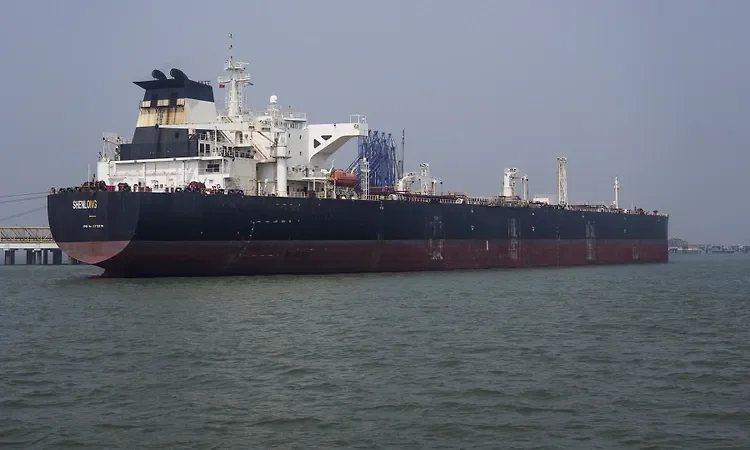
India Surges Russian Oil Imports To Record 2.66 Million BPD Amid Hormuz Crisis
New Delhi has aggressively boosted its crude oil imports from Russia and the United Arab Emirates to secure energy reserves ahead of a anticipated stabilization in Gulf supplies. Maritime bottlenecks caused by the closure of the strategic Strait of Hormuz forced Indian refiners to rapidly diversify their sourcing channels.
Key Highlights
- India imported a record-breaking 2.66 million barrels per day of Russian crude in June 2026.
- Inbound shipments from the United States plummeted by 60%, dropping to just 91,000 barrels per day.
- Over 860,000 tonnes of crude across 3 Indian-flagged tankers successfully crossed the vital waterway during a brief truce.
- Total June imports averaged 4.9 million barrels per day, demonstrating resilient supply chain adaptation.
New Delhi’s crude oil acquisitions from Moscow reached unprecedented heights during June 2026, while supply volumes from the United Arab Emirates neared historic thresholds. Domestic refining companies moved rapidly to guarantee incoming inventory prior to the full restoration of maritime traffic from Middle Eastern suppliers via the Strait of Hormuz.
Daily inbound shipments from Russia reached an average of 2.66 million barrels through June 19, 2026. This volume marks a substantial rise from the 1.91 million barrels recorded in May 2026, according to metrics released by energy tracking agency Kpler, reinforcing Moscow’s status as the top energy supplier to New Delhi.
Concurrently, crude flows from the United Arab Emirates hit 636,000 barrels per day through mid-June. This volume sits just below the historic high of 644,000 barrels registered in May 2026, while Venezuela secured the position of fourth-largest provider at 209,000 barrels, trailing Saudi Arabia’s 384,000 barrels.
Conversely, import volumes from the United States experienced a steep decline, plunging to 91,000 barrels per day from the 252,000 barrels logged during May 2026. The shift highlights the volatile trading dynamics resulting from ongoing geopolitical re-alignments in the global energy market.
These strategic spot purchases highlight the ongoing supply diversification framework managed by New Delhi. Heavy financial discounts render Russian grades highly attractive, while consistent volumes from the UAE effectively cushioned local markets against transit vulnerabilities plaguing the primary Middle Eastern shipping lane.
As the third-largest global energy consumer, New Delhi maintains heavy structural reliance on the Gulf for liquefied petroleum gas, liquefied natural gas, and crude. Shipments stalled after Tehran blockaded the Strait of Hormuz following military strikes by Washington and Tel Aviv, disrupting an artery carrying 20% of global consumption.
Traders initiated a cautious resumption of maritime traffic late last week following a bilateral ceasefire agreement brokered between Washington and Tehran. However, the diplomatic truce remains highly volatile, with Iranian leadership accusing Israeli forces of violating terms, threatening the operational longevity of the shipping lane.
According to Sumit Ritolia, Senior Manager of Modelling at Kpler, the reopening will provide immediate logistical relief to domestic LPG inventories. Conversely, natural gas and crude volumes will normalize gradually, as the domestic market successfully adapted to months of systemic shipping blocks through alternative supply routes.
The maritime crisis triggered highly asymmetric impacts across different fuel types. Domestic LPG networks suffered the most severe structural deficits, whereas crude oil and LNG supply lines demonstrated notable operational resilience due to immediate cargo diversions and utilization of alternative regional bypass infrastructure.
Initial recovery phases will center on clearing backlogged vessels and normalizing standard shipping traffic before regional exporters can escalate production. The operational revival represents a major inflection point for international energy infrastructure, though domestic impacts will remain highly commodity-specific.
While New Delhi ranks among the largest global buyers of Middle Eastern hydrocarbons, crude and LNG infrastructure successfully weathered the operational strains. Conversely, the domestic LPG sector bore the brunt of the geopolitical gridlock, necessitating a sequential, phased recovery across the energy landscape.
Consequently, supply normalisation will unfold in stages, with LPG flows recovering first, followed by sequential stabilization across LNG and crude sectors. Under baseline projections assuming a continuous reopening from early July 2026, initial maritime efforts will prioritize clearing trapped regional cargoes.
Domestic energy infrastructure depends on external trade to meet 88% of its crude oil requirements. Furthermore, the South Asian nation imports approximately 50% of its natural gas needs alongside roughly 65% of its aggregate national LPG consumption.
Prior to the regional conflict, the Gulf corridor accounted for nearly half of local crude imports. The vital waterway also facilitated approximately two-thirds of inbound national LNG volumes and nearly 90% of the total LPG supply reaching Indian ports.
Tangible signs of logistical normalization have materialized along the maritime corridor. Three Indian-flagged petroleum tankers hauling above 860,000 tonnes of crude, alongside a domestic LNG vessel, successfully crossed the blockaded channel following the peace agreement designed to pause active hostilities.
Discounted Russian barrels are projected to remain a core structural element of national energy procurement strategies. Total inbound volumes from Moscow are on track to surpass 2.35 million barrels per day for the entirety of June, potentially establishing an all-time statistical high.
Favorable purchasing economics and national security priorities ensure that Russian energy flows will remain a cornerstone of local refining operations. This procurement strategy will persist even after standard maritime navigation through the Strait of Hormuz achieves complete operational normalization.
Domestic refiners also expanded spot purchasing from Atlantic Basin producers and Venezuela since March 2026 to counter Middle Eastern deficits. Inbound Venezuelan volumes are projected between 300,000 and 400,000 barrels per day in June, aiding facilities calibrated for heavier crude grades.
The most pronounced supply chain realignment occurred within the domestic LPG sector. The United States grew into a primary supplier after regional disruptions choked Gulf volumes, a shift accelerated by a long-term bilateral supply contract finalized during the previous calendar year.
Middle Eastern suppliers are projected to recapture lost market share systematically as regional transit channels stabilize. However, the geographical footprint of New Delhi’s energy procurement matrix is poised to remain permanently broader and more diversified than pre-crisis baselines.
The maritime transit crisis effectively forced a structural acceleration of long-term supply diversification blueprints. While crude supplies were insulated via increased spot volumes from Brazil, Russia, and Venezuela, LNG procurement teams successfully secured replacement cargoes from Oman, Nigeria, and Washington.
The geopolitical reopening is anticipated to relieve international freight premiums, mitigate systemic supply chain vulnerabilities, and cool global energy benchmarks. However, a complete return to historical trading footprints will require multiple weeks as insurance syndicates and commercial operators rebuild route confidence.
Data reveals New Delhi processed an average daily import volume of 4.9 million barrels of crude during June, a figure sitting below historical averages tracking from April 2025 through February 2026. Refiners intentionally elevated Russian intakes throughout the month to optimize domestic stockpiles.
Washington had previously instituted strict economic sanctions targeting Russian energy exports but temporarily relaxed enforcement mechanisms following the outbreak of the Iran conflict and subsequent Hormuz blockades. This specialized regulatory waiver officially expired on June 17, 2026.
However, American authorities extended the sanctions waiver to prevent global supply shocks, offering substantial financial relief to global energy buyers. New Delhi capitalized on this regulatory window, positioning domestic refiners as the single largest global consumers of Russian seaborne crude oil.
Refining facilities scaled up inbound volumes to 2.66 million barrels per day through June 19, 2026, rising from 1.91 million barrels in May. Simultaneously, the UAE expanded independent export volumes after distancing its trade policies from OPEC+ frameworks, directly benefiting Indian buyers.
Consequently, the UAE solidified its position as the second-largest energy partner to New Delhi, delivering 636,000 barrels per day. This cargo realignment allowed local refiners to reduce reliance on single transit corridors and successfully insulate the domestic economy from external price shocks.
होर्मुझ बंद होण्याआधी 12 भारतीय जहाजे मार्गस्थ
Prior to a secondary suspension of transit routes following intensified military strikes in Southern Lebanon, a critical fleet of commercial vessels successfully navigated the maritime choke point. Approximately 10 to 12 stranded cargo carriers managed to exit the vulnerable strait.
These vessels were carrying vital agricultural input commodities, including urea, ammonia, and diammonium phosphate. The successful passage of these specific bulk carriers has effectively averted a projected domestic fertilizer shortfall, providing critical relief to the national agricultural sector.
8.6 टन तेल घेऊन होर्मुझमधून जहाजे भारताच्या दिशेने
Additionally, 3 domestic-flagged petroleum tankers successfully cleared the geographical boundaries of the Strait of Hormuz before subsequent closure notices were issued. These specific transport vessels are currently navigating directly toward commercial ports along the Indian coastline.
The combined cargo across these 3 localized transport vessels exceeds 860,000 tonnes of unrefined crude oil. This critical volume was successfully insulated from transit blockades, ensuring steady operational feedstock for domestic refining complexes.
Future Outlook
The strategic pivot executed by Indian refiners during the 2026 Hormuz crisis is expected to permanently alter South Asian energy architecture. Even as diplomatic resolutions slowly stabilize the Middle East, New Delhi’s reliance on a singular supply corridor has fundamentally dissolved. Moving forward, a balanced mix of heavy Venezuelan crude, discounted Russian barrels, and long-term US gas contracts will form a permanent defensive shield against future geopolitical disruptions.
FAQs
How much crude oil did India import from Russia in June 2026?
India imported an average of 2.66 million barrels per day of crude oil from Russia through June 19, 2026, marking a sharp increase from 1.91 million barrels per day recorded in May 2026.
Why did India reduce its energy imports from the United States?
Inbound shipments from the United States fell by 60% to 91,000 barrels per day in June as Indian refiners prioritized heavily discounted Russian barrels and alternative supplies from the UAE and Venezuela.
What is the current operational status of the Strait of Hormuz?
The Strait of Hormuz saw a brief resumption of traffic after a US-Iran ceasefire agreement, allowing several Indian oil and fertilizer tankers to pass safely, though the route remains highly fragile due to ongoing regional tensions.