Bharat Innovates 2026 Summit Concludes in Nice France
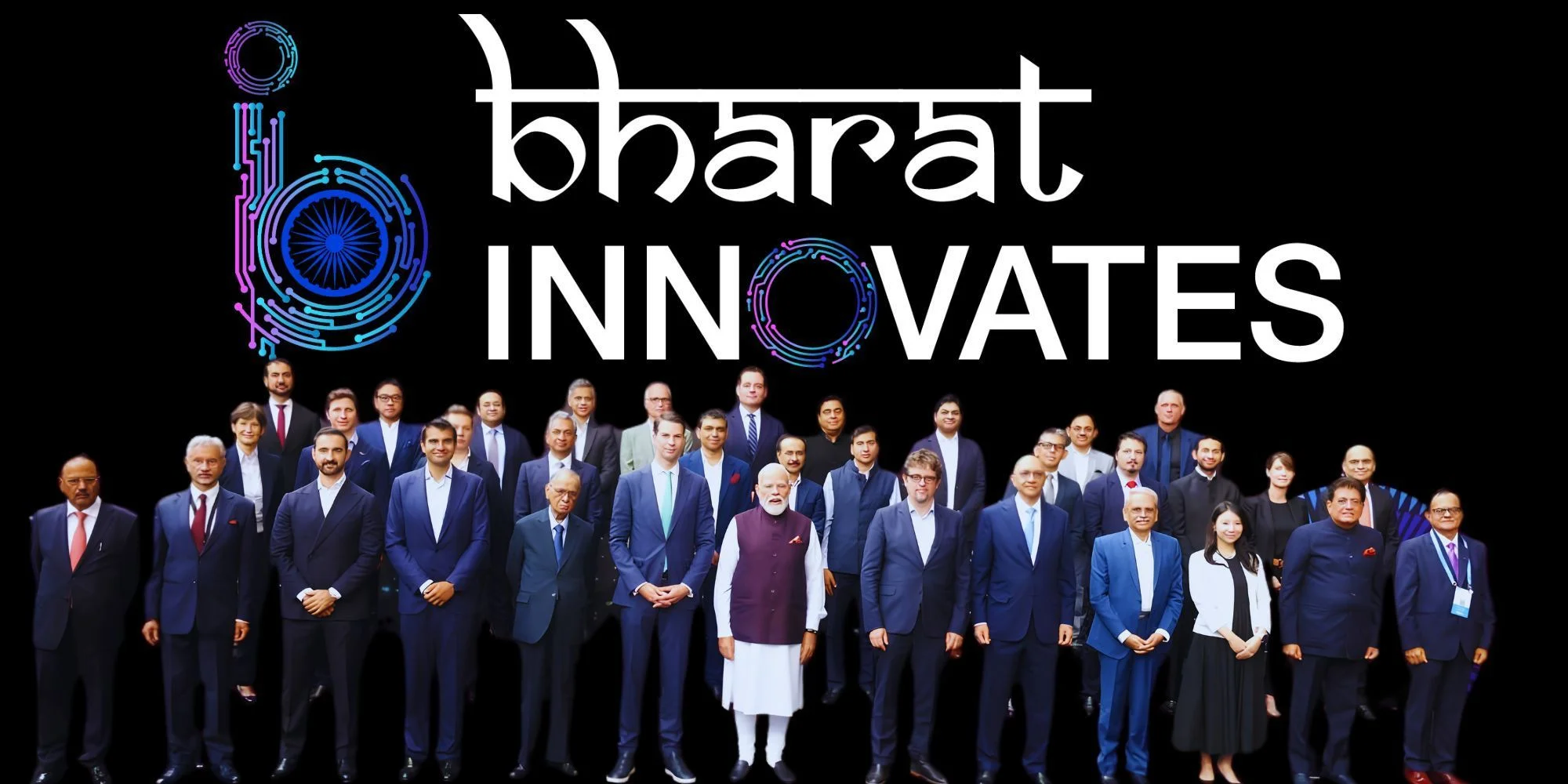
The inaugural Bharat Innovates 2026 deep-tech summit in Nice concluded on June 16, 2026, generating $254.5 million in funding commitments and over 50 cross-border collaboration agreements. The three-day government initiative attracted more than 2,000 global participants from 29 nations to establish deep-tech institutional bridges between India and France.
Key Highlights
- Financial Capital: Secured $254.5 million in aggregate investment pledges from global venture funds, including American and Japanese financiers.
- Strategic Alliances: Yielded over 50 bilateral partnership agreements, connecting 11 Indian Institutes of Technology (IITs) with 13 French academic institutions.
- Global Footprint: Showcased 120 curated Indian deep-tech startups and 45 elite academic research projects to international buyers.
- Institutional Launch: Initiated the India-France ATL Bridge to deploy India’s school-level tinkering lab models inside French public education.
The final economic tally proved substantial. According to the Ministry of Education, the platform drew $254.5 million in advanced-stage investments. International venture firms from the United States and Japan drove the deal flow. The initial day alone generated nearly $30 million in transactional velocity.
During the event, 80 deep-tech startups pitched to 50 institutional investors representing 10 countries. The presentation sessions targeted six specific structural domains. These tracks encompassed aerospace, artificial intelligence, medical devices, agricultural engineering, clean energy, and robotic manufacturing.
More than 40 enterprise founders secured structured follow-up terms from capital allocators. Multiple ventures accepted hard purchase orders from European corporate entities. Prior to the launch, Union Education Minister Dharmendra Pradhan noted that invited funds managed over $3 trillion in aggregate assets.
The agreements signed
Legal and structural frameworks mirrored the financial momentum. Participants executed more than 50 partnership agreements across the exhibition layout. Representatives signed 30 of these cross-border alliances during the opening operational phase.
The institutional frameworks included 12 foundational agreements between domestic business incubators and international accelerators. Corporate buyers signed 16 supply contracts. Crucially, 13 French universities established direct scientific exchange networks with 11 Indian Institutes of Technology and the Indian Institute of Science.
Key corporate transactions advanced rapidly. The deep-tech hub iCreate established a bilateral innovation corridor with the Hauts-de-France Regional Council. IIT Madras Global executed nine memorandum documents, dividing operations into seven commercial ventures and two structural alliances to generate $100 million in enterprise value.
These specific agreements connected aerospace firm Agnikul Cosmos with Finland’s ICEYE and France’s Safran. Sensor developer Detect Technologies allied with TotalEnergies. Transit pioneer TuTr Hyperloop partnered with Germany’s thyssenkrupp, while iElectron Technologies finalized engineering pipelines with ALTEN.
Concurrently, The ePlane Company advanced equity negotiations with the Indian Angel Network. Academic organizers also formed a strategic alliance. IITM Global joined forces with Agna Capital to capitalize the new Bharat Innovates Fund for early-stage engineering assets.
At the foundational level, NITI Aayog’s Atal Innovation Mission altered its international strategy. The agency exchanged formal documentation with La Fondation Dassault Systèmes to construct the India-France ATL Bridge, marking the first time France will import India’s structural tinkering lab model.
The sessions that framed the week
The administrative schedule delivered 11 strategic panel debates alongside technical masterclasses and industrial matches. Infosys co-founder N.R. Narayana Murthy initiated the opening plenary session by analyzing the historical expansion of his enterprise from an initial $250 budget.
Murthy argued that sustainable corporate institutions require balanced human capital, aligned principles, operational compliance, and public transparency. A subsequent executive session examined artificial intelligence pathways, urging global regulators to build open-source frameworks rather than private corporate monopolies.
The regional debates continued with dedicated panels examining continental collaboration and international financial networks. The second operational day concentrated on private pitching environments. The final morning shifted focus toward technology parks, factory decarbonization, and international commercial scale.
Nothing co-founder Akis Evangelidis delivered the final closing address. His presentation detailed global consumer hardware engineering, iterative product development pipelines, and cross-border corporate expansion strategy.
What the headliners said
Senior political leaders established the strategic objectives for the summit. Prime Minister Narendra Modi declared that India builds software and hardware solutions with unprecedented velocity, shifting the nation’s identity from a regional technology buyer to an international exporter of engineered platforms.
French President Emmanuel Macron noted that choosing Nice for the external launch demonstrates the geopolitical alignment between Paris and New Delhi. The executive analysis matched statements from senior cabinet officials monitoring the trade delegations.
Minister Dharmendra Pradhan described the European opening as an unprecedented turning point for the bilateral alliance. He stated that the platform proves India can solve structural problems for international markets rather than simply providing offshore software labor.
Closing the convention, Commerce Minister Piyush Goyal told the assembled entrepreneurs that international markets represent their primary growth theater. He emphasized that the Year of Innovation will serve as a foundational system for industrial expansion.
IIT Madras Director V. Kamakoti stated that the event altered the trajectory of domestic deep-tech development. He emphasized that the completed legal agreements represent binding commercial procurement pipelines rather than symbolic diplomatic statements.
Why take India’s deep-tech abroad
Deep-tech enterprises differ fundamentally from consumer mobile software platforms. These engineering ventures require long-term capital allocations for basic research in fields like quantum computing, microprocessors, aerospace engineering, and cellular biology.
These specialized requirements make patient international capital and corporate industrial scale essential. Such assets remain difficult to secure inside a solitary developing market. The showcase placed founders in front of global funds, factory pilots, and research universities.
Aligning the technology mission with France capitalized on Parisian strengths in artificial intelligence, civilian nuclear power, and aerospace engineering. The strategy provided immediate industrial validation and an entry point into the European Union market.
The ultimate measure of success depends on execution metrics. Observers will track how many follow-up agreements convert to capitalized bank accounts and active industrial deployments over the next year.
The Year of Innovation will proceed through upcoming trade forums like VivaTech. Principal Scientific Adviser Ajay Kumar Sood stated that the Nice assembly marks the beginning of an ongoing international commercial expansion.
Future Outlook
The financial commitments secured at Nice are poised to reshape the India-France technology corridor heading into 2027. Government monitors plan to review contract conversions quarterly to ensure the $254.5 million in pledges transitions into active corporate research capital.
Furthermore, the operational success of the India-France ATL Bridge will likely trigger additional educational exports across the European Union. With the Ministry of Education mapping out future iterations of the showcase, diplomatic officials are already scout-locating potential venues in East Asia and North America for 2027 expositions.
FAQs
What was the total funding secured at Bharat Innovates 2026?
The summit generated approximately $254.5 million in funding commitments and advanced-stage venture capital investments. The opening day of the three-day exhibition alone accounted for nearly $30 million in announced transactional activity.
How many corporate and academic agreements were finalized during the summit?
Participants executed over 50 cross-border collaboration agreements. This total included 12 partnerships between incubators, 16 deals with global corporations, and strategic agreements linking 13 French universities with 11 IITs and the IISc.
Which prominent startups from India signed international deals in Nice?
Key startups signing major international agreements included space tech pioneer Agnikul Cosmos, industrial analytics firm Detect Technologies, transit developer TuTr Hyperloop, iElectron Technologies, and aviation startup The ePlane Company.
What is the India-France ATL Bridge?
The India-France ATL Bridge is an educational initiative launched by NITI Aayog’s Atal Innovation Mission and La Fondation Dassault Systèmes. Under this agreement, France will establish its first school-level innovation lab modeled after India’s Atal Tinkering Labs.