India First Hydrogen Train High Speed Trial Set for June 26
Indian Railways will conduct the first high-speed trial of the nation’s inaugural hydrogen-powered train at 120 kmph on June 26, 2026. The landmark test will take place along the Jind-Sonipat route, signaling a major shift toward zero-emission passenger transport.
Key Highlights
- The high-speed trial is rescheduled for Friday, June 26, 2026, following successful low-speed technical evaluations.
- A specialized engineering team from the Research Designs and Standards Organisation (RDSO) is on-site managing final preparations.
- The hydrogen fuel cell train emits only water and steam while operating silently across the 90 km northern railway corridor.
- Specialized fuel infrastructure has been deployed, including a dedicated hydrogen gas tanker sourced directly from Pune.
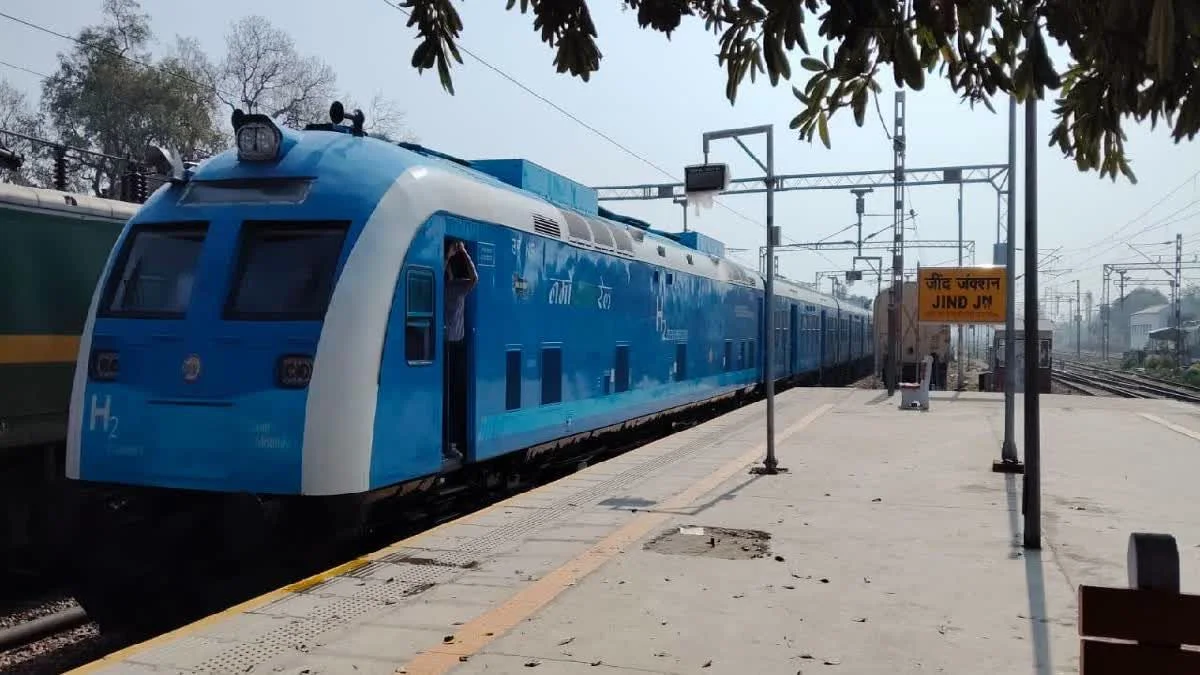
Jind: Final arrangements are complete for the pioneering test run of India’s inaugural hydrogen passenger train at a velocity of 120 kmph on June 26 across the Jind-Sonipat rail network. A specialized contingent from the Lucknow-based Research Designs and Standards Organisation (RDSO) arrived at Jind Junction on Wednesday to oversee operations.
Though officials originally slated the high-speed evaluation for June 24, they deferred the run to Friday. Technical teams have already concluded low-speed assessments successfully. This high-speed window permits specialists to analyze critical onboard mechanisms, such as braking arrays, motor output, safety protocols, structural vibration, and rail conditions.
Railway personnel are rigorously monitoring the power car state, control systems, safety indicators, and velocity sensors. This scrutiny guarantees the vehicle satisfies all regulatory safety benchmarks prior to initiating commercial passenger service.
Architectural blueprints reveal this sustainable hybrid vehicle utilizes hydrogen fuel cells instead of conventional diesel engines to power the eight-to-ten coach configurations. The internal electric motor utilizes an oxygen-hydrogen combustion process to generate heat, converting it into electricity to charge an onboard lithium-ion battery system.
This hybrid variant represents a clean energy technology that generates only steam and water vapor. Engineers also built the machinery for silent operation, ensuring a quiet transit environment for passengers.
The vehicle will traverse the 90 km Jind-Sonipat section, maintaining average operating velocities between 110 and 140 kmph. Exhibiting high fuel efficiency, the rolling stock requires just 360 kg of hydrogen to complete a 180 km transit, functioning as an optimal alternative to the three traditional diesel trains currently servicing this route.
Jind: The high-speed technical trial for the hydrogen train will occur on June 26. This specific test route will extend from Delhi to Jind by way of Sonipat. The supervising RDSO delegation from Lucknow established their base at the station on Wednesday.
Procured directly from Pune, a dedicated commercial tanker delivered the required hydrogen gas to fuel the system. Ground crews are currently pumping the gas into the storage units. The RDSO tracking team remains on-site to direct the trial, performing intricate wiring and protective plating adjustments on the train chassis.
The RDSO experts will closely evaluate the operational parameters of the train braking apparatus during the high-speed run. Engineers will measure the precise stopping distances required at elevated speeds and document how the emergency braking framework responds under sudden stress conditions.
Future Outlook
The deployment of hydrogen-powered rolling stock marks the beginning of a broader environmental transition for the Indian rail network. By replacing carbon-heavy diesel engines with fuel-cell alternatives on feeder routes like Jind-Sonipat, the state-run network aims to drastically curb transport sector emissions. Success on this 90 km corridor is expected to serve as a blueprint for rolling out silent, zero-emission hybrid fleets across other regional lines, supporting India’s long-term clean energy mandates.
FAQs
When is the high-speed trial for India’s first hydrogen train scheduled?
The high-speed trial is scheduled to take place on June 26, 2026, along the Jind-Sonipat railway line, after being rescheduled from its original June 24 date.
What route will the hydrogen train take during its test run?
The trial will run along a 90 km track extending from Delhi to Jind via Sonipat, testing the train’s capabilities across this specific northern rail corridor.
What is the maximum speed expected during this rail trial?
The technical team will test the hydrogen-powered train at a peak trial speed of 120 kmph, though the train is engineered to operate at average speeds between 110 and 140 kmph.
How does the fuel system of this hybrid train operate?
The train uses hydrogen fuel cells instead of diesel engines. The chemical process combines hydrogen and oxygen to generate heat, which is converted into electricity to charge an onboard lithium-ion battery that powers the motor.
Where is the hydrogen fuel for the trial being sourced from?
The hydrogen gas required for the test run was transported to the Jind site via a specialized fuel tanker sourced from Pune.