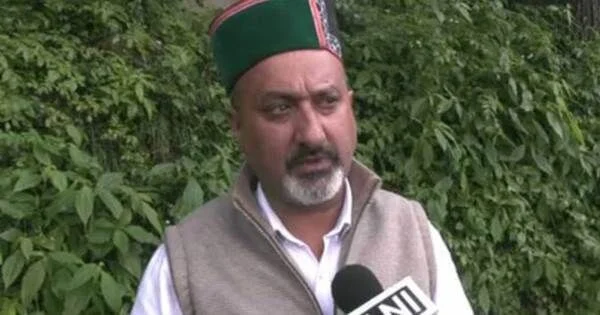
Manipur CM Launches MASOCA to Drive Organic Farming Shift
Manipur Chief Minister Yumnam Khemchand Singh has called for an accelerated transition toward organic fertilisers to align with national sustainable agricultural objectives. Speaking at a state agricultural event, Singh highlighted the ecological and health hazards linked to chemical fertilisers while emphasizing gradual reduction strategies.
Key Highlights
- Manipur launched the Manipur Seed and Organic Certification Agency (MASOCA) to supervise seed quality and organic certification.
- The Agriculture Department is dedicating 400 hectares of land exclusively for organic crop production across the state.
- Agricultural machinery worth Rs 432.13 lakh was distributed to 189 local beneficiaries.
- A formal pact was signed with Central Agricultural University (CAU) to strengthen natural farming certification.
Manipur Chief Minister Yumnam Khemchand Singh on Saturday stressed the need for greater adoption of organic fertilisers, saying their use should be promoted in line with Prime Minister Narendra Modi’s vision for sustainable and environmentally friendly agriculture.
The Chief Minister said excessive dependence on chemical fertilisers poses risks to human health and the environment, and emphasised the importance of encouraging farmers to increasingly adopt organic alternatives.
Addressing the ‘State Krishi Mela 2026’, Singh noted that Sikkim, recognised as the country’s first total organic farming state, achieved this milestone through close cooperation between the government and its people.
The State Krishi Mela 2026 was organised under the theme “Balanced Use of Fertilizer” with the objective of promoting balanced fertilisation for healthy crops and healthy soils. Singh said the theme underscores the need to reduce the use of chemical fertilisers in farming, adding that while usage cannot be discontinued immediately, efforts are required to gradually minimise dependence.
The Chief Minister informed that the Agriculture Department has been making efforts to provide around 400 hectares of agricultural land exclusively for the production of organic products. He also appealed to farmers to adopt double and triple-cropping practices to enhance agricultural productivity in the state.
Such measures, he said, would not only increase overall production but also contribute to higher revenue generation, as agriculture remains one of the key sectors of the state’s economy.
The Chief Minister also informed that the distribution of urea fertiliser would be checked to ensure availability to the public. He further stated that lapses in distribution would be personally intervened in if required.
Central Agricultural University (CAU), Imphal, Vice-Chancellor Anupam Mishra lauded the Agriculture Department, Manipur, for selecting the theme “Balanced Use of Fertilizer”.
He said balanced fertilisation is essential for maintaining soil fertility, reducing cultivation costs, and ensuring mass crop production. “Healthy soil is the foundation of farmers’ prosperity,” he added.
During the programme, the Chief Minister launched a magazine titled Farmers’ Success Stories, featuring the achievements and experiences of 53 farmers from across the state. He also distributed Natural Farming (NF) Scope Certificates and formally launched a range of natural farming products.
On the occasion, the Chief Minister officially launched the Manipur Seed and Organic Certification Agency (MASOCA), marking a significant milestone for the Department of Agriculture, Manipur. The agency is expected to play a crucial role in the large-scale production and certification of quality seeds in the state.
A Memorandum of Agreement (MoA) was also signed between the Department of Agriculture and the Central Agricultural University for natural farming certification, aimed at strengthening certification mechanisms and promoting natural farming practices.
As part of the programme, agricultural machinery, including 57 tractors under the first phase of the Sub-Mission on Agricultural Mechanisation (SMAM), was distributed to 189 beneficiaries, with a total financial outlay of Rs 432.13 lakh.
The Chief Minister felicitated the recipients of the state-level best farmers’ awards in recognition of their outstanding contributions to the agricultural sector.
Future Outlook
The launch of MASOCA and the allocation of dedicated agricultural lands mark the beginning of a long-term transition for Manipur’s agrarian economy. By incentivizing double and triple-cropping alongside organic certification, the state administration aims to position Manipur as a hub for eco-friendly agricultural exports. Tightening control over urea distribution will simultaneously manage chemical usage while farmers scale up biological alternatives.
FAQs
What is MASOCA and what is its primary function?
MASOCA stands for the Manipur Seed and Organic Certification Agency. Launched by the Department of Agriculture, its primary role is to oversee the large-scale production, quality control, and certification of agricultural seeds and organic products within the state.
How much land has Manipur designated for organic farming?
The Manipur Agriculture Department has allocated approximately 400 hectares of specialized agricultural land dedicated solely to the cultivation and production of organic commodities.
What financial aid was distributed during the State Krishi Mela 2026?
The state distributed agricultural machinery, including 57 tractors, to 189 selected beneficiaries under the Sub-Mission on Agricultural Mechanisation. This initial phase of distribution incurred a total financial outlay of Rs 432.13 lakh.
Why is the Manipur government promoting double and triple-cropping?
Chief Minister Yumnam Khemchand Singh urged farmers to utilize double and triple-cropping practices to boost total agricultural productivity. This method is expected to elevate overall crop volumes and generate higher revenue for the state’s agrarian economy.