Automated Ice Reservoirs Combat Himalayan Climate Crisis
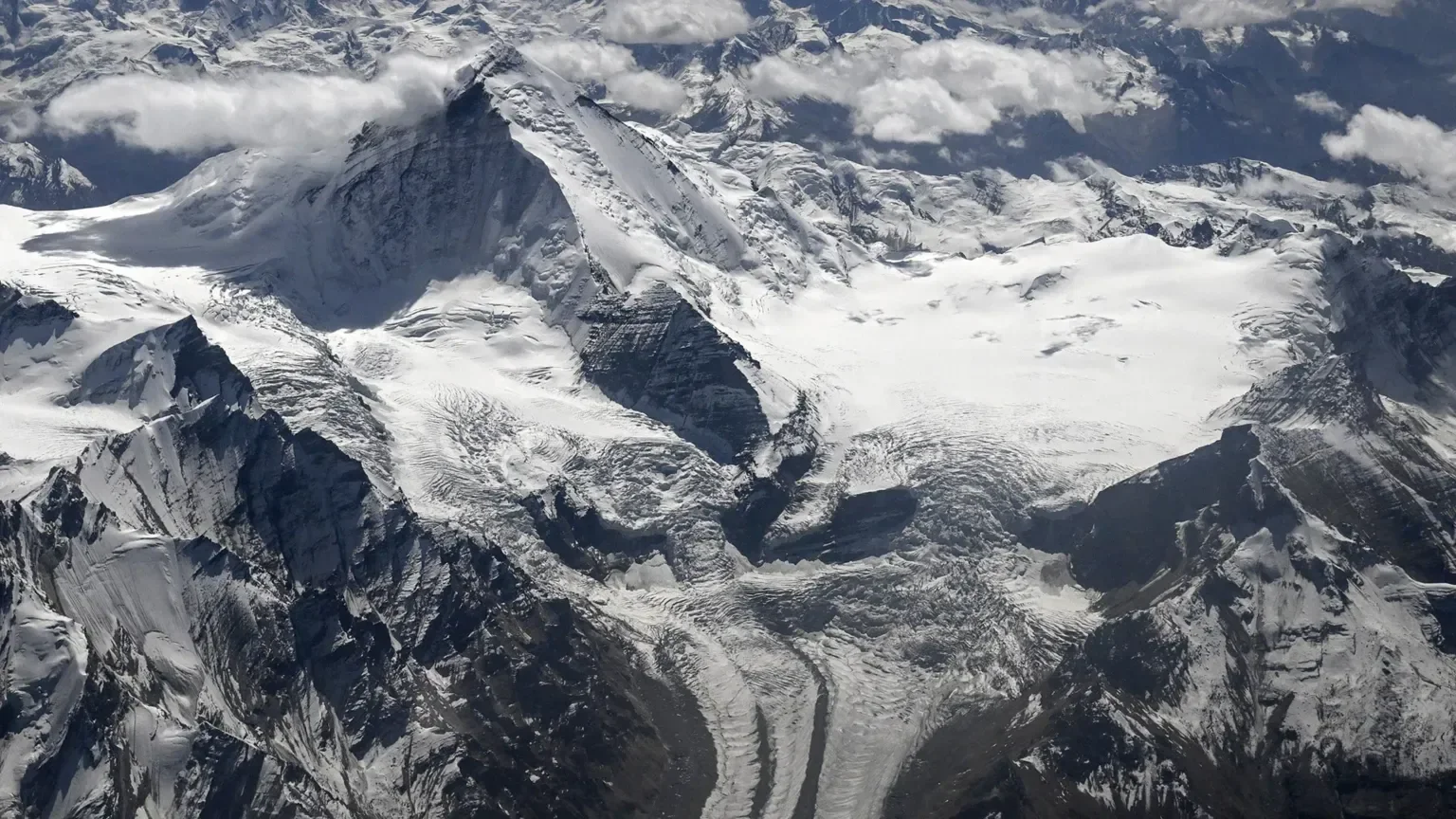
Rising global temperatures have accelerated the retreat of crucial Himalayan glaciers, endangering the survival of agricultural communities that depend entirely on seasonal meltwater.
Key Highlights
- Vanishing low-altitude glaciers have left high-altitude desert villages without vital early spring water.
- Early manual ice stupa reservoirs proved highly vulnerable to freezing and pipe damage during extreme winters.
- Automated Ice Reservoir (AIR) technology uses weather stations and automated valves to optimize ice creation safely.
- The local government deployed 10 automated systems across Ladakh during the winter of 2025.
At an altitude reaching nearly 4,000 meters, where rainfall is virtually nonexistent, the Himalayan settlement of Sakti presents an incredibly unforgiving environment for agricultural survival.
Local cultivator Gelak Gutme, who has cultivated wheat, peas, and potatoes across the terrain for most of his 65 years, describes Ladakh as a brutal, single-cultivation zone.
He characterizes the high-altitude territory as a desert defined by an extreme climate.
Environmental conditions have deteriorated significantly during his lifetime, as climbing temperatures have completely erased the smaller, low-altitude glaciers that historically irrigated local fields.
Gutme states that water scarcity is now absolute, noting that lack of moisture caused his entire agricultural yield to dry up and perish last season.
For generations, diminutive glaciers positioned directly above the mountain valleys functioned as frozen water towers, storing moisture through the winter and releasing it precisely as spring planting commenced.
Lobzang Fardod, a representative from a local water management committee in Ladakh, notes that these lower formations have dissolved into barren rock, leaving no high-altitude reserves to melt.
Because the mountain summer remains highly compressed, agriculturalists must sow their crops by May to ensure harvests mature before winter returns.
Securing a dependable water supply during the early spring remains a matter of absolute survival for these communities.
Seeking to guarantee this critical supply, several villages throughout Ladakh initiated projects in the early 2010s to construct artificial ice reservoirs.
This method utilized gravity-fed pipelines to channel water from higher elevations during winter, spraying it into the freezing air to accumulate into massive ice towers resembling religious structures.
While these structures successfully delivered meltwater during spring, Fardod reveals that managing them amid brutal winter conditions became a logistical nightmare.
When ambient temperatures rapidly plunged below minus 20 degrees Celsius, or occasionally minus 30 degrees Celsius, standing water inside the conduits froze, fracturing the pipelines and disabling the infrastructure.
To counteract this vulnerability, teams of four or five local farmers camped near the elevated water sources all winter, rushing to clear blockages with boiling water during freezing nights.
However, the necessity of enduring these freezing, high-altitude night watches may soon be entirely eliminated.
Murtaza Ali, executive engineer for the Irrigation and Flood Control Division at the Ladakh Autonomous Hill Development Council, states that failing traditional water systems have transformed Leh-Ladakh into a center for grassroots hydraulic engineering.
Leh serves as the administrative capital of Ladakh, a geopolitically sensitive territory in Indian-administered Kashmir bordered by China to the east and Pakistan to the west.
Beyond the persistent threat of fractured pipelines, Ali notes that the original ice stupa configuration suffered from severe operational inefficiencies.
Because the water discharge operated continuously, unseasonably warm days caused the fresh thermal flow to melt the existing ice formations.
Over the past two years, however, this localized mitigation methodology has received a significant technological upgrade.
In a joint venture with private enterprise Acres of Ice, engineers pioneered a redesigned infrastructure system that exercises absolute control over artificial ice crystallization.
Known as the Automated Ice Reservoir (AIR), this updated system similarly routes alpine water supplies down toward the valley floors.
Dr. Suryanarayanan Balasubramanian, founder of Acres of Ice, explains that the water reaches the valley floor under intense pressure, erupting from a vertical nozzle like a massive fountain.
This hydraulic discharge is regulated electronically via a weatherproof control housing powered by dedicated solar panels and an integrated battery system.
The digital control array links directly to an automated weather station that continuously tracks ambient variables, including the internal temperature of the water pipe.
If sensors register an excessively rapid decline in air temperature or indicate that internal fluid temperatures have reached a critical freezing threshold, the system initiates counter-measures.
It immediately seals the upper supply valve while simultaneously triggering a lower drainage valve to evacuate all standing water from the pipeline.
This automated mechanism eliminates the costly threat of structural pipe fractures while dramatically boosting the net efficiency of ice accumulation.
Instead of projecting a continuous stream, the AIR system emits a brief burst of fine mist to coat the existing structure before pausing.
Balasubramanian explains that the system calculates the exact duration required for the moisture droplets to freeze solid based on wind and humidity before releasing the next spray.
He reports that this automated operational cycle successfully transforms nearly 100% of the diverted water volume into solid ice.
The infrastructure functions completely autonomously utilizing a localized wireless network to coordinate the central control box with distant valves, though residents retain a manual override option.
This technological intervention is already generating measurable improvements across the participating mountain communities.
Ali reports that village feedback indicates local groundwater reserves are actively recharging and historic spring sources are experiencing a distinct revival.
Cultivators are receiving critical irrigation supplies precisely on schedule, prompting the council to organize a formal scientific study to quantify the exact hydrological impacts.
Throughout the winter of 2025, Acres of Ice collaborated with regional authorities to operate 10 distinct AIR installations across the Ladakh territory.
Balasubramanian notes that the primary engineering challenge moving forward centers on expanding the technological parameters to scale up the total volume of individual reservoirs.
Engineers are working to determine if a single localized system that previously generated only one ice structure can be modified to construct a dozen simultaneously.
Returning to the fields of Sakti, Gutme expresses renewed optimism regarding the agricultural outlook of his community.
The installation of a single AIR unit has established a far more dependable water supply, inspiring hopes that the village can secure funding for at least two additional artificial glaciers.
Gutme states that as a farmer, his land represents his sole means of survival, noting that while he does not comprehend the underlying digital technology, he is grateful to possess sufficient water for his crops.
He reflects that their harsh climate makes daily life immensely difficult, adding that water scarcity previously threatened to drive local youths toward urban centers, which would have signaled a systemic disaster for the village.
Future Outlook
The successful deployment of 10 Automated Ice Reservoir units through 2025 establishes a scalable template for climate adaptation across high-altitude arid regions globally. As Acres of Ice refines its wireless valve networks and predictive freezing algorithms, the technology is positioned to expand beyond the borders of Indian-administered Kashmir. Regional agricultural planners are currently exploring collaborations to introduce these automated networks across vulnerable farming valleys in the wider Hindu Kush and Andean mountain ranges by 2027.
FAQs
What is an Automated Ice Reservoir?
An Automated Ice Reservoir is an advanced, computer-controlled hydraulic system that pipes alpine water down to valley floors, spraying it via automated nozzles to create massive ice towers that store water for agricultural use.
How does the AIR system prevent pipes from bursting in sub-zero temperatures?
The system integrates with a localized weather station that monitors air and water temperatures; if conditions cross a dangerous freezing threshold, automated valves shut off the incoming flow and completely drain the pipelines.
Why are artificial ice reservoirs necessary in Ladakh?
Rising global temperatures have caused the low-altitude glaciers that historically supplied early spring irrigation water to vanish, creating severe seasonal droughts for mountain farmers.
Who developed the automated upgrades for the ice stupas?
The automated system was engineered through a public-private partnership connecting the Ladakh Autonomous Hill Development Council with a private tech firm called Acres of Ice.