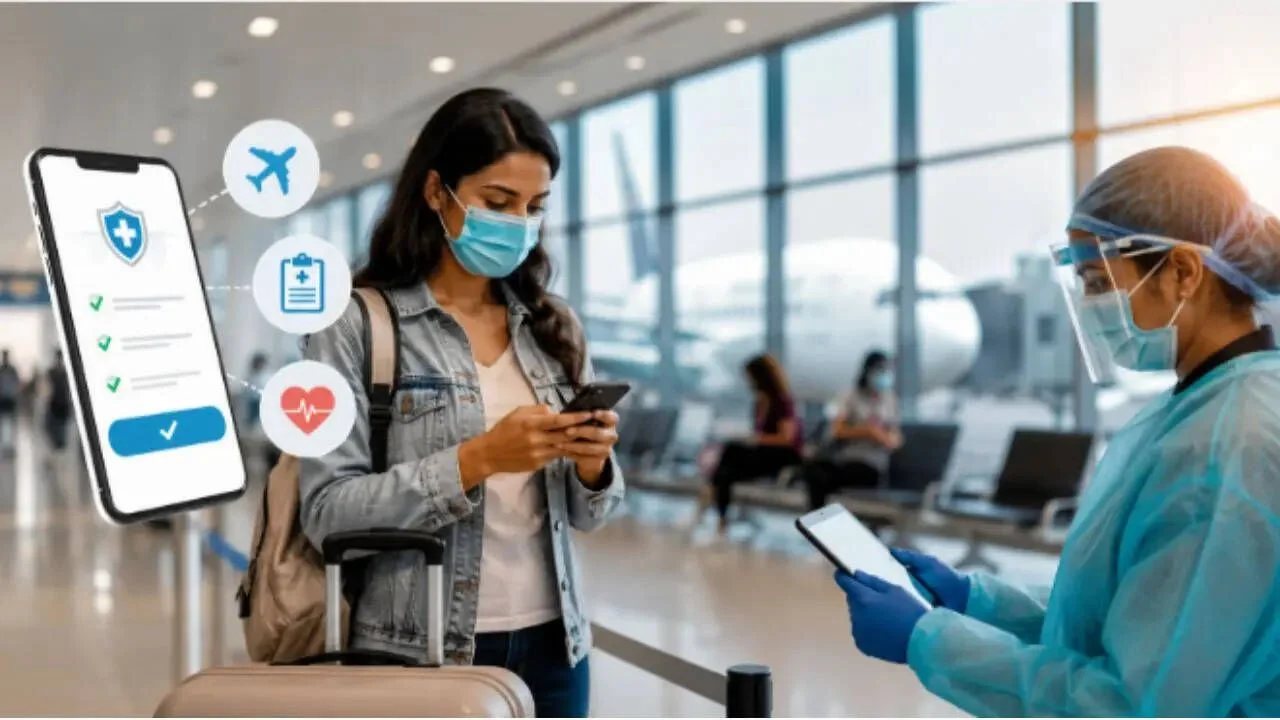
India Launches Mandatory Contactless Air Suvidha 2.0 Portal
India has launched Air Suvidha 2.0, an advanced, completely digital health self-declaration platform for international passengers. Developed by the Ministry of Civil Aviation and Delhi International Airport Limited, the portal upgrades public health surveillance across national airports and accelerates the screening protocol for transmissible infections.
Key Highlights
- The Ministry of Civil Aviation introduced the upgraded digital platform to digitize international arrival health compliance.
- Submission of the digital health form is now a compulsory requirement for all incoming international passengers.
- Enhanced screening rules target travelers arriving from or transiting through global Ebola outbreak zones.
- Passengers must retain and present their official digital or printed acknowledgement receipt upon landing.
Air Suvidha 2 Health Declaration
The modernized screening infrastructure is now compulsory for every international passenger entering Indian territory. This regulatory enforcement follows recent global health warnings issued by the World Health Organization regarding active Ebola outbreaks, specifically concerning Bundibugyo virus disease transmissions in Uganda and the Democratic Republic of the Congo.
Foreign travelers and returning nationals must navigate specific administrative requirements to successfully execute the Air Suvidha 2.0 Health Declaration before their scheduled departure.
Functioning as a centralized digital node, Air Suvidha 2.0 mandates that passengers log their detailed itineraries and current medical status prior to arrival. This automated system grants border health enforcement personnel immediate data access to isolate high-risk travelers requiring targeted diagnostic intervention.
The automated architecture eliminates physical processing backlogs, ensuring rapid transit fluidities across all entry hubs.
To initiate the protocol, passengers must compile their valid passport, confirmed flight itineraries, intended residential address within India or permanent overseas residence, verified email credentials, an active mobile connection, and an accurate log of all international travel spanning the preceding 21 days.
The initial sequence requires inputting verified passport identifiers, legal nationality, and commercial flight parameters.
Travelers are required to document their specific flight designation numbers, their initial port of entry within India, all sovereign nations visited during the prior 21 days, intermediate transit locations, and specific routing history intersecting with active Ebola transmission zones. Every data field must correspond perfectly with official flight documents to prevent border processing disruptions.
Step 2: Add contact details
The subsequent phase requires logging the precise local residence or hotel destination for the duration of the stay in India. The security architecture requires validating these communications by broadcasting a One-Time Password to verify user coordinates before unlocking the final stages.
If a passenger confirms travel through or contact within recognized Ebola endemic areas, the algorithmic framework generates specific secondary epidemiological inquiries. Users must provide verified disclosures regarding:
Fever or other symptoms
Possible exposure to infected individuals
Recent medical history
Step 4: Review and submit
Prior to final dispatch, users must meticulously audit their inputted parameters. Traveling individuals are legally required to swear to data fidelity, authorize institutional processing of medical metrics, endorse the formal statutory mandate, and execute the final submission.
Following successful transmission, the portal assigns a unique tracking identifier, routes an official electronic mail notification, and provides a downloadable verification voucher.
Arriving individuals must maintain this document—either stored on an electronic device or preserved as a physical printout—for immediate inspection at the airport medical station. Utilizing this predictive data, the regional Airport Port Health Officer preserves the statutory right to mandate immediate secondary laboratory isolation.
Complete the Air Suvidha 2.0 form before arriving in India
Ensure all details match your passport and flight documents
Keep your acknowledgement readily available
Additional screening may be conducted based on your travel history or health declaration
The deployment of Air Suvidha 2.0 marks a systemic transition toward digitized epidemic defense, balancing national biosecurity with efficient commercial aviation processing. Providing a flawless, verified declaration beforehand mitigates transit delays, optimizes early clinical detection, and preserves the structural integrity of national health security within India.
Future Outlook
The launch of Air Suvidha 2.0 establishes a permanent baseline for digital border biosecurity in India. Moving forward into 2026 and beyond, the Ministry of Civil Aviation plans to integrate predictive data modeling to dynamically adjust entry requirements based on live global epidemiological feeds. By replacing paper-heavy tracking with cloud-based passenger screening, airport authorities can rapidly scale defensive protocols during sudden international health emergencies without interrupting global tourism and commerce channels.
FAQs
What is Air Suvidha 2.0?
Air Suvidha 2.0 is an upgraded, completely contactless online health declaration portal designed by the Ministry of Civil Aviation and Delhi International Airport Limited. It requires international passengers arriving in India to submit their travel history and health details before departure to optimize disease surveillance.
Is the Air Suvidha 2.0 form mandatory for all passengers?
Yes, filling out the health declaration form is a mandatory requirement for all international passengers arriving in India. The policy has been strictly enforced to prevent the importation of infectious diseases following World Health Organization alerts regarding Ebola outbreaks.
What documents are required to complete the Air Suvidha 2.0 declaration?
Passengers need to provide their passport information, flight details, flight number, first airport of entry in India, a valid email address, a mobile number, and a comprehensive record of all countries visited or transited through during the previous 21 days.
What happens after I submit the online Air Suvidha form?
Upon successful submission, travelers receive a unique registration number, a confirmation email, and a downloadable acknowledgement receipt. This receipt must be carried either digitally on a smartphone or as a printed copy to be presented at the airport health desk when landing in India.