Global Backlash Grows Over Ill-Behaved Indian Tourists
A surge in disruptive conduct by Indian outbound travelers is fueling international criticism and reinforcing negative stereotypes globally. Recent incidents in public spaces and transit hubs have sparked intense debate regarding civic etiquette, forcing popular destinations to reconsider their open-door tourism policies for Indian nationals.
Key Highlights
- Widespread disruptive behavior by certain Indian travelers abroad is generating severe international backlash and domestic criticism.
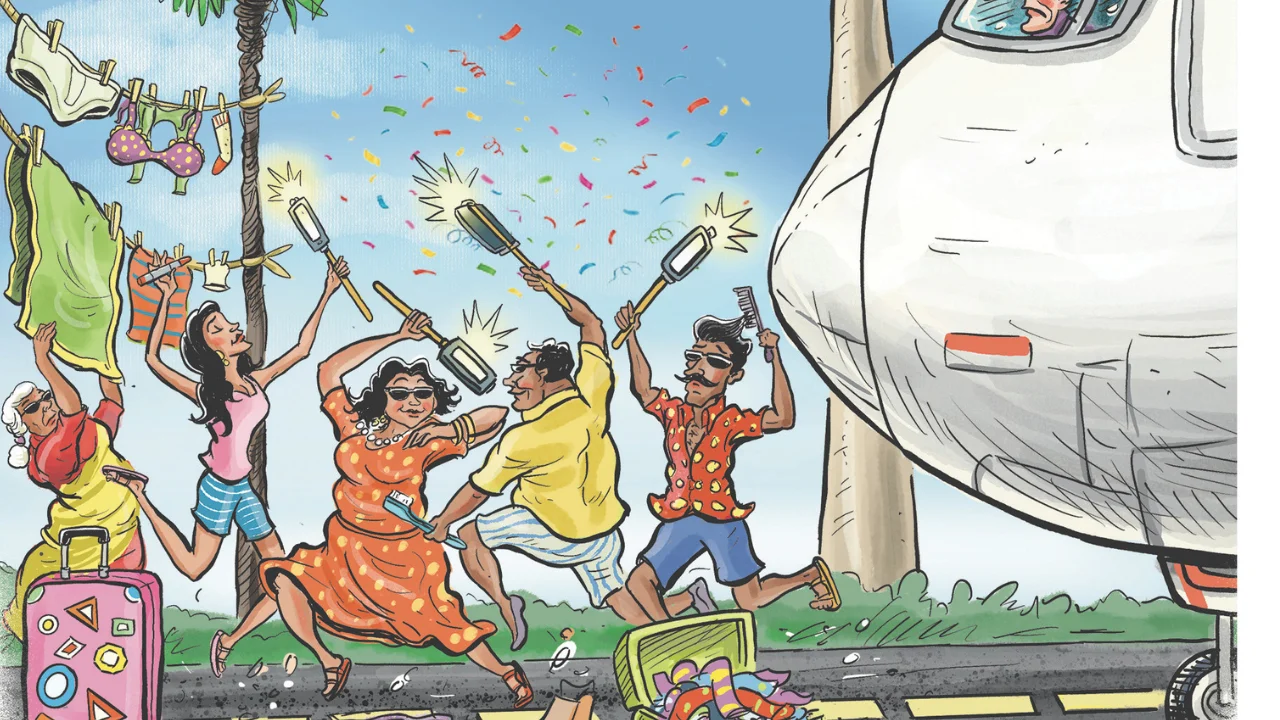
- A viral video showing tourists performing a traditional dance on a Vietnamese airport tarmac exemplifies a growing trend of public entitlement.
- Destinations are responding, with nations like Thailand adjusting their visa-free frameworks amid the cementing of negative traveler stereotypes.
- A cultural shift toward civic mindfulness, public courtesy, and basic etiquette training is being urged to salvage India’s international reputation.
A personal encounter at a hospitality venue in Singapore highlights the core of this growing international issue. While executing checkout procedures, travelers observed an incoming tour cohort from India completely monopolizing the central reception lobby.
The arriving group converted the public seating infrastructure into a temporary baggage unpacking zone to access personal food items. Furthermore, several individuals utilized the communal sofas to sleep while waiting for room assignments, placing their bare feet directly onto the furniture.
The most problematic aspect of these public displays is the complete lack of self-awareness or situational shame exhibited by the perpetrators. Consequently, onlookers from the same nation feel compelled to experience vicarious embarrassment on behalf of their misbehaving compatriots.
A recent viral video capturing a group of adult citizens performing a traditional garba dance directly on an airport tarmac in Vietnam has reignited this precise sense of collective humiliation. This incident highlights a pervasive “Main Character Syndrome” where public spaces are treated as personal performance stages.
Such actions cannot be defended as innocent or joyful expressions of cultural pride. It is time to end this nonsensical discourse, given that these traditional dances are already celebrated extensively within domestic borders.
For instance, seasonal dances routinely take over beach shacks in Baga, Goa. While that specific coastal locality is not an expected venue for such activities, domestic spaces accommodate them; however, travelers must recognize that global environments are not designated arenas for perpetual holiday celebrations.
This critique does not stem from a lingering colonial mindset or Western bias. It is a fundamental matter of basic civic responsibility, and an active airport runway tarmac is completely inappropriate for staging traditional dances.
The behavioral deficiencies extend far beyond inappropriate public dancing. They encompass a systemic failure to respect orderly queues, loud shouting across quiet public areas, and treating shared spaces as private living rooms. Additional infractions include widespread littering and hanging undergarments to dry on visible hotel balconies.
This behavior represents an extreme manifestation of social entitlement. The problematic contemporary traveler appears intent on imposing themselves upon global destinations, entirely indifferent to whether local populations find such behavior acceptable.
Large cohorts of citizens travel internationally acting as though they have never been corrected for improper conduct. This stems from a domestic environment where such actions are routinely tolerated without consequence.
These individuals transport an entitled attitude into foreign nations characterized by polite, respectful, and highly disciplined civic structures. These are places where citizens routinely respect traffic signals and wait patiently before crossing roadways.
In response to changing dynamics, Thailand adjusted its previous 60-day visa-free entry privilege for Indian passport holders. A highly damaging stereotype regarding travelers from the subcontinent has now become deeply entrenched across global tourism hubs.
The first category is the breakfast buffet violator, who descends to dining areas wearing nightwear and hotel slippers. These individuals frequently bypass hygiene protocols by using bare hands instead of serving tongs and treat hospitality workers with loud arrogance.
Another problematic group consists of photography enthusiasts who deliberately block pedestrian walkways and trample fragile heritage infrastructure for social media content. Similarly, some individuals climb sacred monuments, including statues of the Buddha, to pick local fruits and flowers.
However, the most severe behavioral breakdowns routinely occur during commercial airline flights.
The chaos begins the moment an aircraft touches down, with passengers rushing to stand well before the plane completes its taxiing procedures. A frantic stampede toward overhead bins ensues, as if immediate retrieval of retail items is a matter of life and death.
Furthermore, passengers engage in high-volume cross-aisle conversations and open meal tables across transit paths to play card games. Many view loud action cinema without utilizing headphones, while the odor of opened personal food packages circulates through the cabin like chemical warfare.
Societal perceptions often mischaracterize basic etiquette as an elitist trait while glorifying reckless, unbothered behavior as culturally authentic. This issue is exacerbated by digital platforms, where every international journey is viewed purely as content fodder for digital video accumulation.
This reality remains deeply tragic. A vast number of outbound citizens travel as curious, highly considerate, socially conscious, and deeply gracious guests. Unfortunately, the disruptive actions of a vocal minority have come to define the collective global image.
For the segment of the population that monitors these viral incidents with deep mortification, the path forward requires a active intervention strategy.
Initiating a coordinated national public education campaign focused on civil decorum is an essential first step. Citizens must actively call out unacceptable public behavior when witnessing it in real time, rather than remaining silent bystanders.
Ultimately, the correction must begin within the household by teaching children fundamental public etiquette. Parents must emphasize the distinction between indoor and outdoor vocal volumes, instilling civility, respect for service personnel, patience in queues, and proper waste disposal. Only by respecting global civic boundaries will travelers find themselves genuinely welcomed rather than merely tolerated.
FAQs
Why are Indian tourists facing global criticism?
A rising number of international incidents involving disruptive behavior—such as performing dances in restricted airport zones, ignoring hygiene rules at buffets, and causing flight disruptions—has led to widespread criticism and negative global stereotypes.
What happened with Thailand’s visa policy for Indian travelers?
Amid shifting tourism dynamics and growing concerns over traveler behavior and demographic patterns, Thailand adjusted its 60-day visa-free stay policy that had previously been granted to Indian tourists.
How does social media affect the behavior of travelers abroad?
Digital platforms have driven a rise in “Main Character Syndrome,” where tourists treat historic landmarks, public transport, and restricted aviation zones as personal stages to capture viral video content, often ignoring local laws and cultural norms.
What steps can be taken to improve tourism etiquette?
Experts suggest launching national civic awareness campaigns, practicing active peer correction when witnessing bad behavior, and teaching children basic public decorum, such as utilizing appropriate vocal volumes and respecting service staff.