US India AI Partnership Deepens at Pax Silica Summit
Washington and New Delhi are solidifying their strategic alliance to secure the global technological architecture. Through high-level bilateral frameworks, both democracies are transitioning diplomatic dialogue into operational deep-tech supply chains, prioritizing economic stability, military security, and resilient access to frontier artificial intelligence models.
Key Highlights
- Washington labels the US-India alliance as a highly consequential bilateral relationship of the 21st century.
- Both nations are engineering a gradual, measured strategy to safely deploy advanced artificial intelligence across critical infrastructure.
- New Delhi is seeking formal assurances against abrupt cutoffs to premier American AI models like Anthropic’s Claude.
- The alliance utilizes the Pax Silica framework to decouple critical semiconductor and mineral supply chains from Beijing.
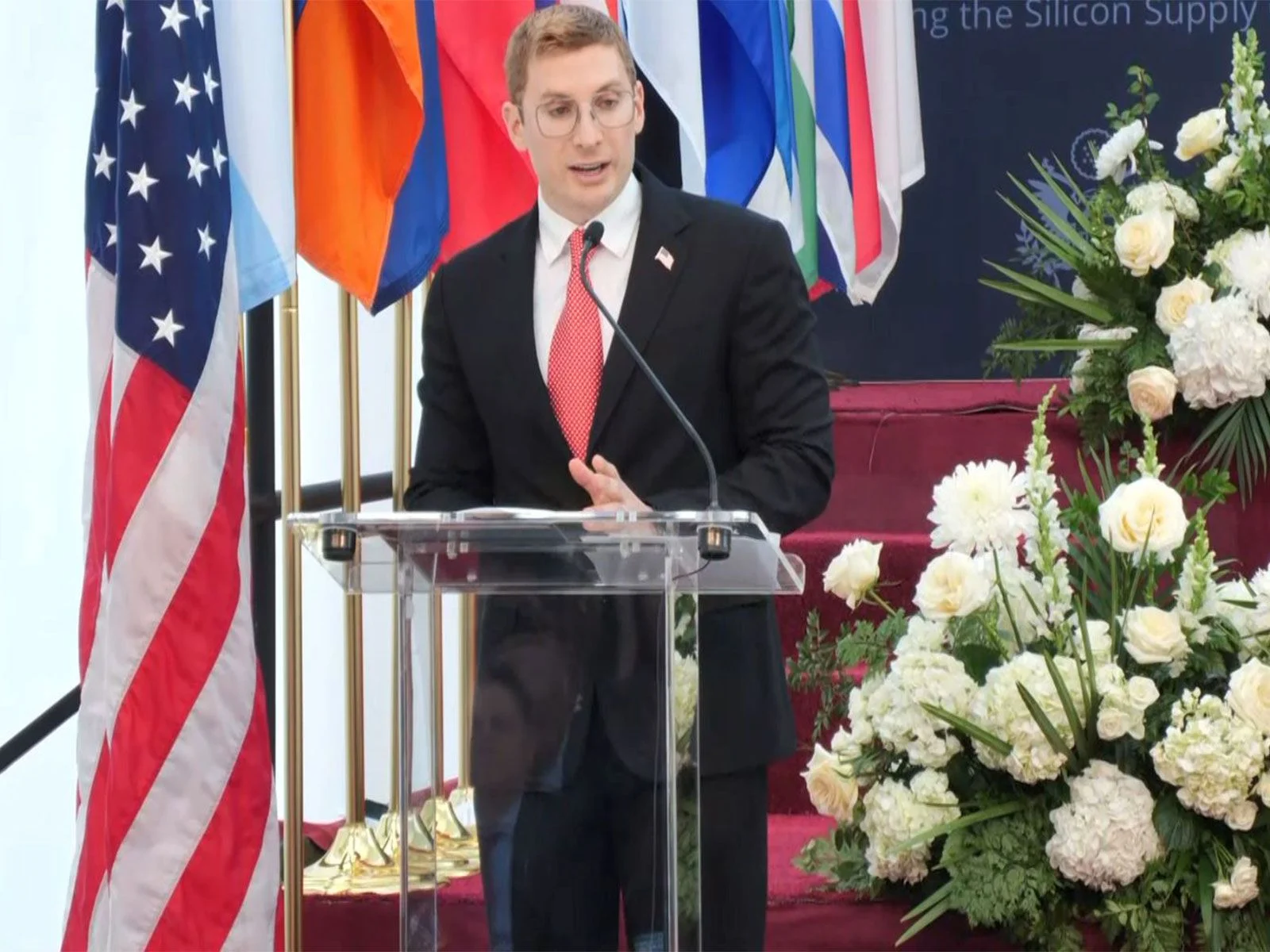
Washington, DC — Highlighting the deep strategic alignment between Washington and New Delhi, US Under Secretary of Economic Affairs Jacob Helberg has lauded India as a pivotal partner in securing the global technological future, describing the ties between the two democracies as one of the most vital partnerships of this century.
Speaking to ANI, Helberg expressed immense optimism about the ongoing joint efforts under the Pax Silica framework, reflecting on India’s early leadership role in the initiative.
“We are incredibly excited to partner with India. India was one of the first top 10 countries to join Pax Silica. Our Ambassador in India has really been a remarkable steward of the US-India relationship which, as he says, we believe is one of the single-most consequential bilateral relationships in the world in the 21st century,” Helberg stated.
He further revealed that high-level bilateral discussions held on Wednesday had yielded significant progress on critical regional and technological security frameworks, including the Quad and emerging digital trust standards.
These sensitive national security discussions also focused on balancing security imperatives with establishing a predictable framework for sharing frontier artificial intelligence technologies, ensuring reliable, long-term access to models like Anthropic’s Claude.
“We were able to cover a lot of very timely issues in our bilateral exchanges with India yesterday, including on the Quad, on the trust initiative, and we are really excited to have India along with so many representatives of the Indian business sector at the Summit to really translate a lot of those translations into practical collaborations,” Helberg added.
The US is pursuing a gradual, measured approach to releasing Anthropic’s AI models to guarantee these tools are deployed safely across critical infrastructure, including power grids, while preventing disruptions to India’s public services and digital architecture.
The remarks underscore a concerted effort by both nations to move beyond diplomatic dialogue and actively channel corporate and governmental synergies into tangible deep-tech supply chains. This collaborative effort comes at a pivotal time as India integrates advanced AI into its digital architecture and public services. A key priority for the Indian government is ensuring that these integrations are not undermined by sudden volatility caused by export controls, geopolitical developments, or commercial decisions.
These practical pushpoints take centre stage as Washington, DC is currently playing host to the second Pax Silica Summit, a two-day high-level gathering running from June 25 to 26, 2026. Speaking on the sidelines of the event, S Krishnan, Secretary of India’s Ministry of Electronics and Information Technology (MeitY), noted that India explicitly sought assurances that future access to advanced technologies would remain stable without abrupt cutoffs.
This builds on a rapidly developing diplomatic timeline, as the inaugural Pax Silica Summit took place last December, with New Delhi formally joining the initiative in February on the sidelines of the AI Impact Summit held in New Delhi. During the current exchange, Krishnan stated that the US provided an understanding of its regulatory concerns and clarified how Washington intends to ensure that access to technology does not become a challenge for trusted partners in the future.
Rather than functioning as a standard trade agreement, the initiative operates as a pact for economic and military security. This framework is anchored on the understanding that future security will rely heavily on which nations manage and control the artificial intelligence value chain. This long-term planning follows a June export control directive from the US Commerce Department, which required Anthropic to restrict foreign nationals from using its newly launched Claude Fable 5 and Mythos 5 models.
Semiconductors and critical minerals lie at the very heart of this initiative, with both resources becoming increasingly vital for national security and global economic competitiveness. Despite these strict domestic controls, India remains focused on strengthening international cooperation while supporting resilient and diversified technology supply chains that can contribute to the long-term growth of the global AI ecosystem. The framework underscores an intensifying strategy by Washington and its allies to decouple and lower reliance on Beijing in industries crucial to the future global economy.
Future Outlook
The strategic roadmap forged during the second Pax Silica Summit points toward a deeply integrated techno-defense alliance between the US and India. By addressing regulatory friction and mitigating the threat of abrupt technology cutoffs, both nations are laying the groundwork for a bifurcated global tech ecosystem. Moving forward, the bilateral focus will shift toward executing these digital trust initiatives, embedding secure American frontier models into India’s expanding public infrastructure, and formalizing a hardware supply chain completely independent of Beijing.
FAQs
What is the Pax Silica framework?
The Pax Silica framework is an economic and military security pact led by the United States and its allies. It focuses on controlling the artificial intelligence value chain, semiconductors, and critical minerals while reducing global reliance on Beijing.
Why is India concerned about accessing Anthropic’s Claude models?
India is integrating advanced AI models into its public infrastructure and power grids. The Indian government requires assurances of continuous, reliable access to avoid abrupt technical cutoffs that could be caused by shifting US export control regulations or geopolitical volatility.
What restrictions did the US Commerce Department place on Anthropic AI models?
In June, the US Commerce Department issued an export control directive that mandated Anthropic to restrict foreign nationals from accessing and utilizing its newly deployed Claude Fable 5 and Mythos 5 artificial intelligence models.
How does the US intend to manage AI technology sharing with India?
The United States is implementing a gradual, measured approach to releasing advanced frontier AI models to India. This strategy ensures national security safeguards are maintained while confirming that India remains a trusted partner with guaranteed future access.