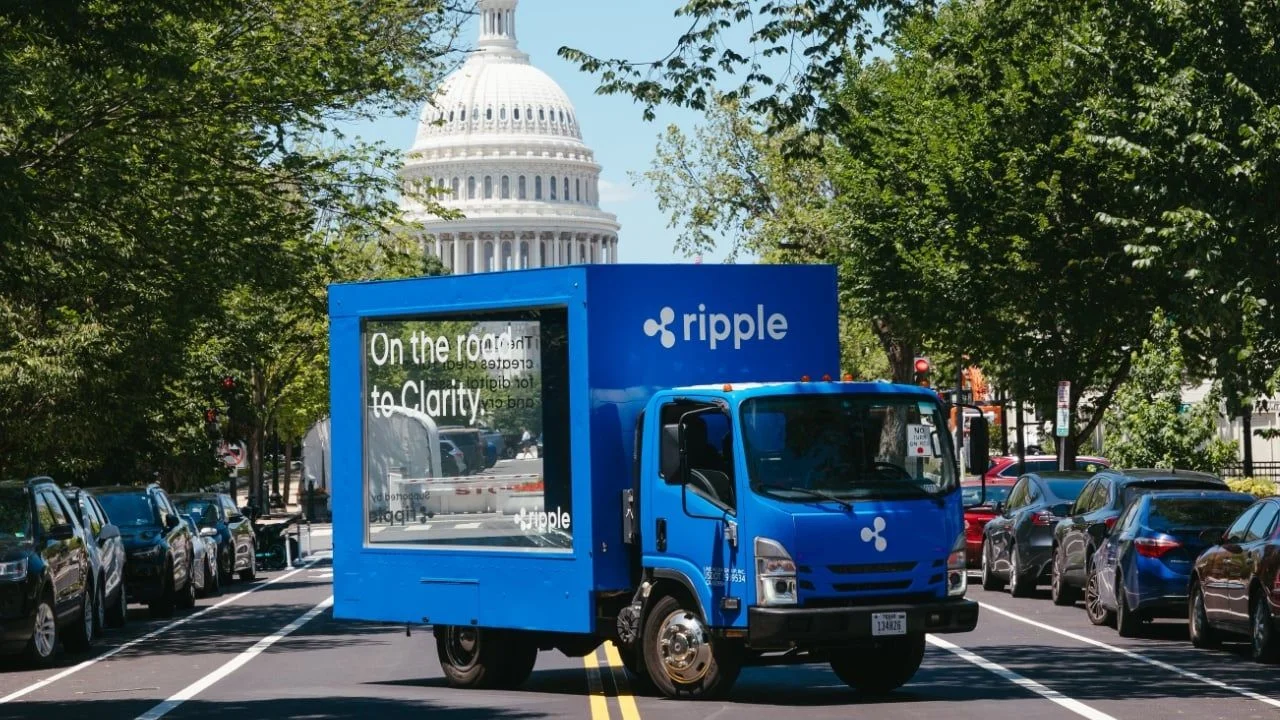
Ripple Launches D.C. Truck Campaign for CLARITY Act
Digital asset firm Ripple has initiated a mobile marketing campaign in Washington, D.C., to push for definitive cryptocurrency market regulations. The mobile push arrives as congressional pressure builds regarding oversight boundaries, consumer safety, and asset registration procedures within the domestic financial sector.
Key Highlights
- Ripple deployed a branded campaign truck in Washington, D.C., on June 25, 2026, targeting lawmakers and regulatory staff.
- Over 200 digital asset organizations have signed a joint appeal urging Senate leaders to schedule an immediate floor vote.
- Research analysts recently lowered the legislative passage probability for the regulatory framework to a 50-50 chance.
- Market analysts warn that a legislative failure could spark adverse financial pressure across digital asset treasury operations.
Ripple deployed its mobile promotional units throughout the capital on June 25 to advocate for structured digital asset market legislation. This mobile initiative placed policy proposals directly before legislators, congressional aides, and sector proponents monitoring upper chamber movements.
Lauren Belive, the policy chief at the firm, publicized the advocacy deployment on social media. She noted the vehicle was actively navigating Washington while lawmakers evaluated the statutory framework, which aims to establish transparent boundaries, defend retail participants, and preserve domestic technological competitiveness.
The firm issued an independent public statement confirming the capital deployment, emphasizing that the vehicle’s presence coincides with ongoing congressional debates regarding formalized operational frameworks for digital asset ecosystems.
Corporate leaders across the digital asset marketplace have voiced formal support for the statutory framework. The chief executive of Ripple, Brad Garlinghouse, affirmed his firm’s backing and categorized the legislative push as a critical juncture for establishing functional compliance parameters.
More than 200 market entities, including Coinbase, Kraken, Circle, and Binance.US, joined advocacy groups to pressure Senate leadership. The coalition formally requested that floor votes be scheduled, describing the policy package as an essential architecture for registration pathways and software engineer protections.
Senate Calendar, Galaxy Odds, and Grayscale Warning Frame Market Stakes
The legislative timeline for the policy package remains highly ambiguous. Galaxy Research adjusted its 2026 enactment probability down to 50% from an earlier 60% projection published on June 5, citing a lack of firm scheduling or unified committee text.
The primary messaging emphasizes that structured rules will protect market participants, encourage legitimate development, and maintain domestic financial leadership.
The Senate Banking Committee previously advanced the underlying bill, H.R. 3633, via a bipartisan 15-9 vote to secure a calendar listing. However, the measure still requires 60 floor votes, alignment with separate agricultural committee drafts, and an executive signature from President Donald Trump.
Grayscale Research issued a market advisory warning that a legislative collapse could trigger severe headwinds for digital asset treasury firms. Analysts highlighted that regulatory stagnation, combined with restrictive central bank interest rates, represents a clear downside risk for digital markets.
Data collected by the advocacy group Stand With Crypto indicates that nearly 75% of digital asset owners in crucial electoral states favor pro-crypto legislators. The metrics also revealed that 21% of those surveyed utilize digital tokens to settle standard monthly obligations.
Future Outlook
The trajectory of digital asset governance in the United States hinges entirely on the political maneuvering scheduled for the remainder of the 2026 legislative session. If Senate leadership declines to call a floor vote before the upcoming congressional recess, industry analysts predict a prolonged period of regulatory enforcement actions rather than statutory clarity. Conversely, successful reconciliation between the banking and agriculture committees could establish the first comprehensive federal framework for digital currencies, potentially stabilizing domestic markets and reversing the capital flight threatening American technological infrastructure.
FAQs
What is the primary purpose of the CLARITY Act?
The legislation seeks to establish transparent regulatory boundaries for digital assets in the United States. It outlines specific registration pathways for businesses, expands consumer protection measures, and secures legal safeguards for open-source software developers.
Why did analysts lower the passage probability of the bill?
Market researchers reduced the success odds to a 50-50 estimate due to distinct procedural hurdles. These include the absence of a confirmed Senate floor vote date, unresolved text adjustments between key committees, and the requirement to secure a 60-vote supermajority.
Which major cryptocurrency firms are backing this legislative push?
More than 200 institutional entities are actively lobbying for the bill. High-profile supporters include major digital asset exchanges and issuers such as Ripple, Coinbase, Kraken, Circle, Uniswap Labs, and Binance.US.