Indian Army Accelerates AI and Drone Integration for Future Warfare
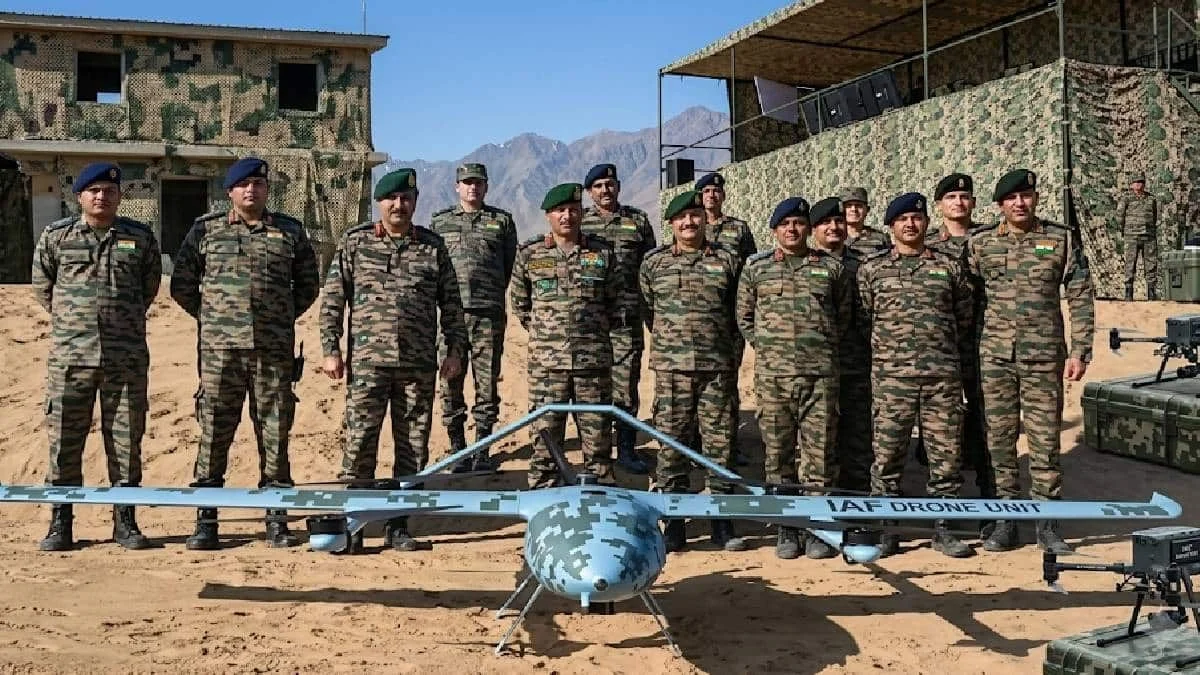
The Indian Army is rapidly accelerating its evolution into a technology-driven military force to counter modern battlefield threats. Driven by recent global conflicts, the institution is prioritizing autonomous systems, artificial intelligence, and electronic warfare capabilities to transform its traditional manpower-heavy structure into a highly agile, future-ready combat force.
Key Highlights
- General Upendra Dwivedi is spearheading the transition of the second-largest standing army into a tech-enabled force.
- Global conflicts in Ukraine and Gaza highlight the critical need for drones, precision fires, and cyber operations.
- Advanced autonomous drone swarms are emerging globally as essential assets to overwhelm modern air defenses.
- The global military drone sector is projected to surpass $25 billion by 2026 amid rising security challenges.
When General Upendra Dwivedi retires as chief of army staff on 30 June, he is unlikely to be remembered merely as another army chief who led the world’s second-largest standing army. His tenure may instead be viewed as one of the most transformative periods in the Indian Army’s modern history — a period in which the institution accelerated its transition from a manpower-intensive force into a technology-enabled, future-ready military designed for the battlefield of tomorrow.
Few Army Chiefs have had the opportunity to influence both the character of warfare and the character of the institution simultaneously. Gen Dwivedi did both. His tenure coincided with a dramatic shift in global warfare. Lessons from Ukraine, Gaza and other contemporary conflicts demonstrated that future wars would be shorter, faster, more transparent and increasingly dominated by drones, artificial intelligence, electronic warfare, cyber operations and precision fires. Gen Dwivedi recognised this shift early and moved decisively to prepare the Indian Army for it.
Future Outlook
The global landscape of defense technology is shifting toward unprecedented autonomy. The broader defense drone industry is expected to exceed $55 billion by 2032, driven by heavy state investments across North America, Europe, Asia-Pacific, and the Middle East.
Concurrently, military powers are encountering highly sophisticated autonomous platforms in real-world operations. Defense analysts recently tracked advanced AI-powered drone swarms operating in the Middle East, where interconnected machines function as a single, coordinated organism. These decentralized networks utilize a larger command hub drone surrounded by smaller units that distribute intelligence, jam communications, and coordinate tactical strikes.
As defense budgets increasingly prioritize unmanned assets, the integration of edge computing, computer vision, and autonomous cooperation will redefine tactical operations. Companies such as VisionWave Holdings Inc. are already fielding combat-ready autonomous aerial systems and intercept platforms at global defense exhibitions like Eurosatory 2026, cementing the role of automated systems in future conflict zones.
FAQs
How is the Indian Army changing its combat approach?
The Indian Army is pivoting from a manpower-heavy doctrine to a technology-enabled framework. This transition prioritizes the deployment of artificial intelligence, surveillance drones, electronic warfare, and precision targeting systems to counter modern threats.
What are the main lessons learned from recent global conflicts?
Recent clashes in Ukraine and Gaza reveal that modern warfare is faster, shorter, and highly transparent. Success relies heavily on neutralizing enemy air defenses using autonomous drone networks and securing cyber and electronic communication channels.
What is a military drone swarm?
A drone swarm is a network of multiple unmanned aerial vehicles that communicate continuously to operate as a single coordinated system. Guided by artificial intelligence, the swarm can distribute tasks like intelligence gathering and tactical strikes, adjusting its formation automatically if individual units are destroyed.
What is the projected market value for military drones?
The global military drone sector is forecast to clear $25 billion by 2026. Furthermore, the expanded defense drone market, which includes logistics, border security, and force protection, is estimated to surpass $55 billion by 2032.