Harry Kane Wins 2026 Ballon d’Or, Ending England’s 25-Year Wait
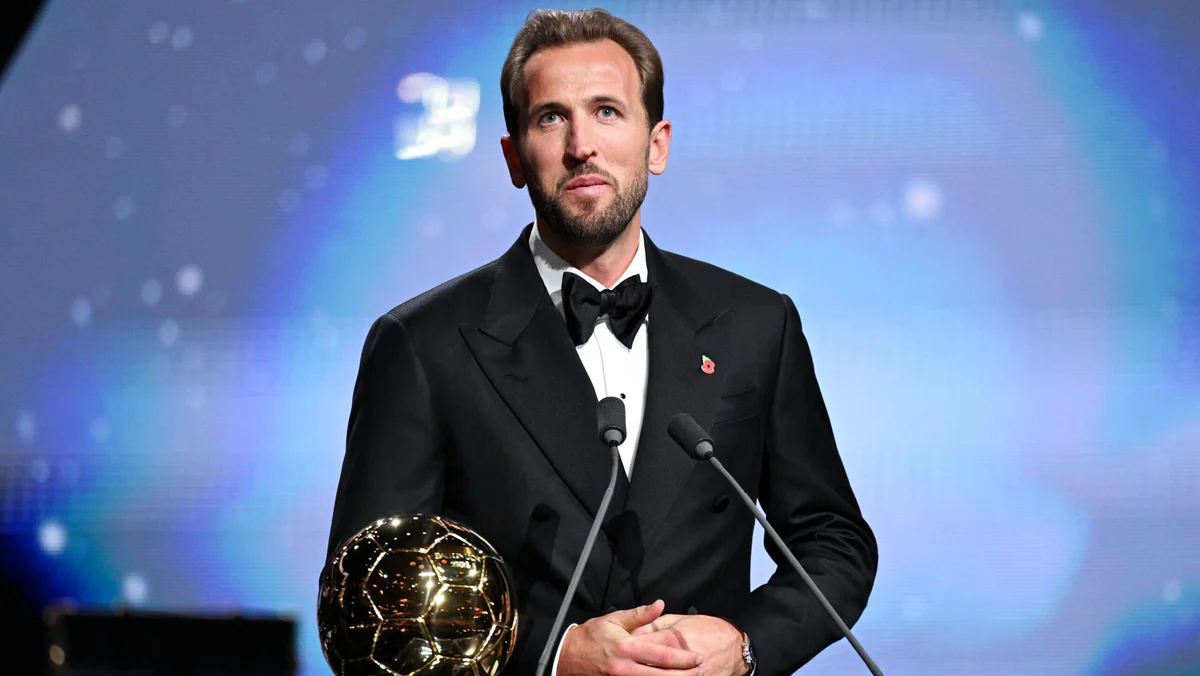
LONDON, Bayern Munich striker Harry Kane won the 2026 men’s Ballon d’Or at the London Palladium on October 26, becoming the first Englishman to receive the award since Michael Owen in 2001 after scoring 73 goals for club and country.
The 33-year-old England captain finished ahead of Real Madrid forward Kylian Mbappé and Barcelona winger Lamine Yamal in the voting. His victory followed a season of prolific goalscoring, domestic success with Bayern Munich and a run to the World Cup semi-finals with England.
The ceremony marked the 70th edition of the Ballon d’Or and brought the awards to London for the first time. Kane received football’s leading individual prize in the city where he spent most of his playing career before moving to Germany.
According to Spanish sports newspaper AS, Kane’s 73-goal campaign included 61 goals for Bayern Munich and 12 for England. Bayern also won the Bundesliga, German Cup and German Super Cup during the period considered for the award.
The result ended a 25-year gap between English winners. Owen was the last English player to collect the men’s prize, in 2001, following a successful season with Liverpool.
Kane’s 73-Goal Season Puts Him Ahead Of Rivals
Kane’s case for the Ballon d’Or was built primarily on his goalscoring record. Across 65 appearances for Bayern Munich and England, the striker scored 73 times, combining consistent club performances with an important contribution to England’s World Cup campaign.
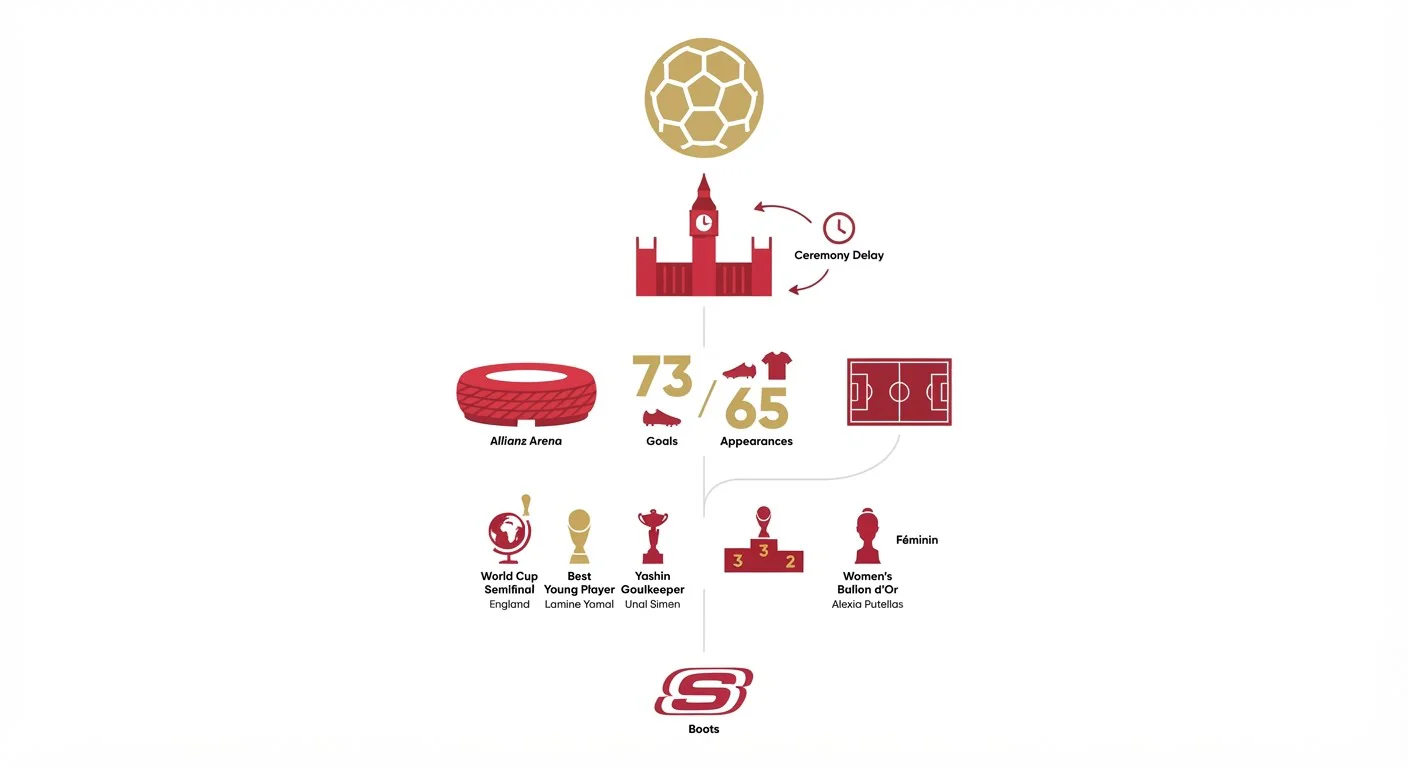
Of those goals, 61 came for Bayern Munich in 51 competitive appearances. His performances helped the German club collect three domestic trophies and established him as one of the leading individual candidates heading into the awards ceremony.
His scoring record was not limited to domestic football. Kane contributed across Bayern’s competitions, while his ability to finish chances and lead the attack remained central to the club’s successful season.
For England, Kane scored 12 international goals during the relevant period, including six at the 2026 World Cup. England reached the semi-finals of the tournament in North America before finishing third.
The World Cup performances added another dimension to his candidacy. Kane entered the tournament with an extensive international record, but his goals in the competition gave voters further evidence of his effectiveness against national teams competing at the highest level.
The 2026 Ballon d’Or voting covered performances from August 3, 2025, to July 19, 2026. That period included the European club season and the World Cup, allowing voters to consider achievements in both competitions.
Under the award’s voting framework, journalists assess individual performances, contributions to team success and sporting conduct. Those criteria placed Kane’s goals alongside Bayern’s trophy wins and England’s international performances.
His individual output also made the result significant beyond the trophy count. Kane had already established a reputation as a reliable goalscorer during his years in England, but his latest campaign combined an exceptional scoring total with major club honours.
The difference between his club and international totals also illustrates the breadth of his campaign. The 61 Bayern goals accounted for most of his scoring, while the remaining 12 came in England colours.
Mbappé And Yamal Miss Out On The Top Prize
Kane defeated two prominent challengers in Kylian Mbappé and Lamine Yamal, both of whom had strong claims for recognition during the season.
Real Madrid forward Kylian Mbappé finished second, while Barcelona’s Lamine Yamal took third place. Spain midfielder Rodri placed fourth, with Lionel Messi fifth.
The voting brought together players whose achievements differed across club and international football. Kane’s goal total and Bayern’s domestic success offered one case, while the achievements of Spain’s World Cup-winning players placed greater emphasis on international results.
The outcome also prompted discussion about how much weight the World Cup should carry in a year when the tournament forms part of the Ballon d’Or assessment period.
Writing for AS, Luis Nieto argued that the 2026 World Cup should have carried greater weight when separating candidates whose club achievements were otherwise comparable.
That assessment reflected the strong Spanish presence among the leading contenders. Spain’s success at the World Cup did not translate into a men’s Ballon d’Or victory, despite several of its players featuring prominently in discussions around the award.
Yamal was among those competing for the top honour, while Rodri’s performances contributed to Spain’s international success. Both ultimately finished behind Kane in the final voting.
The distinction matters because the Ballon d’Or recognises individual players rather than automatically rewarding the most successful national team. Voters consider performances across the eligibility period, including matches outside the World Cup.
For Kane, the combination of 73 goals and three domestic trophies proved sufficient to put him ahead of his closest rivals.
England Gets Its First Winner Since Michael Owen
Kane’s victory also holds a place in English football history. Before this ceremony, no English player had won the men’s Ballon d’Or since Michael Owen collected the award in 2001.
The earlier English winners included Stanley Matthews, Bobby Charlton and Kevin Keegan. Kane now joins that group after a career that has included years of individual scoring success and a move abroad in pursuit of further honours.
His arrival among those winners marks another stage in a career that began attracting wider attention during his time at Tottenham Hotspur.
At Tottenham, Kane became known for his finishing, movement and ability to contribute to attacking play beyond scoring. He also developed into an important figure for England, eventually taking the national team captaincy.
His subsequent move to Bayern Munich provided a different competitive setting. Playing in Germany allowed Kane to continue his scoring career while pursuing domestic titles with one of Europe’s established clubs.
The 2025-26 campaign brought together the two elements that had defined much of his career: consistent goalscoring and the pursuit of major trophies.
Winning the Ballon d’Or adds an individual distinction to those achievements. It also places Kane alongside the English players whose performances were recognised by the award across different generations.
The 25-year interval is particularly notable given the number of English footballers who have competed at the highest level since Owen’s victory. Kane’s award ends that period without an English winner.
His achievement also carries a personal geographical connection. The presentation took place in London, where Kane spent much of his club career, rather than in France, which had previously hosted the ceremony.
Kane Reacts To Ballon D’Or Victory In London
Kane received the trophy at the London Palladium in front of fellow footballers, officials and invited guests.
“Wow, wow, wow!” Kane said during his acceptance speech. “I am almost speechless.”
The reaction captured the significance of the moment for a player who had spent years among football’s leading goalscorers without previously collecting the Ballon d’Or.
Kane also thanked the organisers and acknowledged the significance of receiving the prize in London.
“First Of All, Thanks Again To France Football And The Ballon D’Or For This Amazing Event. Being In London, It Is Extra Special; It Felt Like A Good Omen.”
His remarks connected the award to both his career and the location of the ceremony. Despite playing his club football in Germany, Kane retains a close association with London through his years at Tottenham.
The occasion also provided recognition for his England performances, particularly during a World Cup year when international achievements formed part of the voting assessment.
The ceremony was not limited to the main men’s award. Kane was also recognised as Striker of the Year, adding another individual honour to his successful campaign.
Kane’s Ballon D’Or Win Brings Attention To His Football Boots
Kane’s victory also attracted attention beyond the awards themselves because of his relationship with football boot manufacturer Skechers.
According to House of Heat, Kane played during the campaign wearing Skechers football boots and received recognition as both the Ballon d’Or winner and the year’s leading striker.
The sports footwear publication reported that Kane wears the Skechers SKX_2 model. The company subsequently unveiled a special white-and-gold Ballon d’Or-inspired version to mark his achievement.
The commemorative design reflected Kane’s individual success and his association with the brand. House of Heat reported that no release plans for the special edition had been confirmed at the time of publication.
The footwear connection is one of the commercial aspects of the victory, although the sporting reasons for Kane’s award remain his performances for Bayern Munich and England.
For Skechers, the association places its football boots alongside one of the game’s most recognisable individual honours. For Kane, it adds a distinctive detail to a season already defined by goals and trophies.
Other Major Awards Go To Spanish Football
Although Kane took the main men’s prize, Spanish football received several other major awards during the ceremony.
Barcelona midfielder Alexia Putellas won her third Ballon d’Or Féminin, reclaiming the women’s award from international teammate Aitana Bonmatí.
Putellas’s victory added another individual distinction to a career that has already brought her recognition among the leading players in women’s football.
Barcelona winger Lamine Yamal won the Kopa Trophy, which recognises outstanding young players. The award provided a separate honour for the teenager after he finished behind Kane and Mbappé in the main men’s voting.
The Yashin Trophy went to Unai Simón, the Athletic Bilbao goalkeeper recognised for his performances during a period that included Spain’s World Cup success.
Spain manager Luis de la Fuente received the Men’s Coach of the Year award following the national team’s triumph at the 2026 World Cup.
Barcelona’s women were also recognised during the ceremony, reflecting the club’s presence across several categories of the awards.
Those results highlighted the breadth of Spanish football’s success despite its players missing out on the leading men’s individual prize.
For Kane, however, the defining result was already settled. After 73 goals in 65 appearances, three domestic trophies with Bayern Munich and a World Cup semi-final with England, the striker ended his country’s long wait for another men’s Ballon d’Or winner.