White House Seeks $87.6B for Iran War Costs and Other Priorities The White House requested
White House Seeks $87.6B for Iran War Costs and Other Priorities The White House requested $87.6 billion from Congress, primarily to replenish military stocks following the conflict with Iran, amid significant legislative resistance. Iran war supplemental funding, Operation Epic Fury, Pentagon emergency spending white-house-iran-war-funding-request White House, Pentagon, Congress, Iran war, supplemental spending, Russ Vought, military readiness, agricultural aid politics
The White House has sent a $87.6 billion emergency funding request to Capitol Hill, primarily aimed at replenishing military stocks following the conflict with Iran, setting up a fierce legislative battle.
Key Highlights
- The $87.6 billion package allocates $67.1 billion directly to defense and military replenishment.
- The funding faces steep opposition from both sides of the aisle due to widespread congressional resistance to further military action.
- Non-defense provisions include $11.1 billion for American farmers and $1.4 billion for Central Africa's Ebola response.
- The package also includes $1 billion for New York's Penn Station and $500 million for Washington, D.C. restoration.
The executive branch formally submitted a $87.6 billion supplemental spending measure to lawmakers on Wednesday, designed mostly to restock Pentagon inventories after the military campaign against Iran. This request arrives during a tense political juncture, given that a bipartisan majority of legislators oppose subsequent armed engagements.
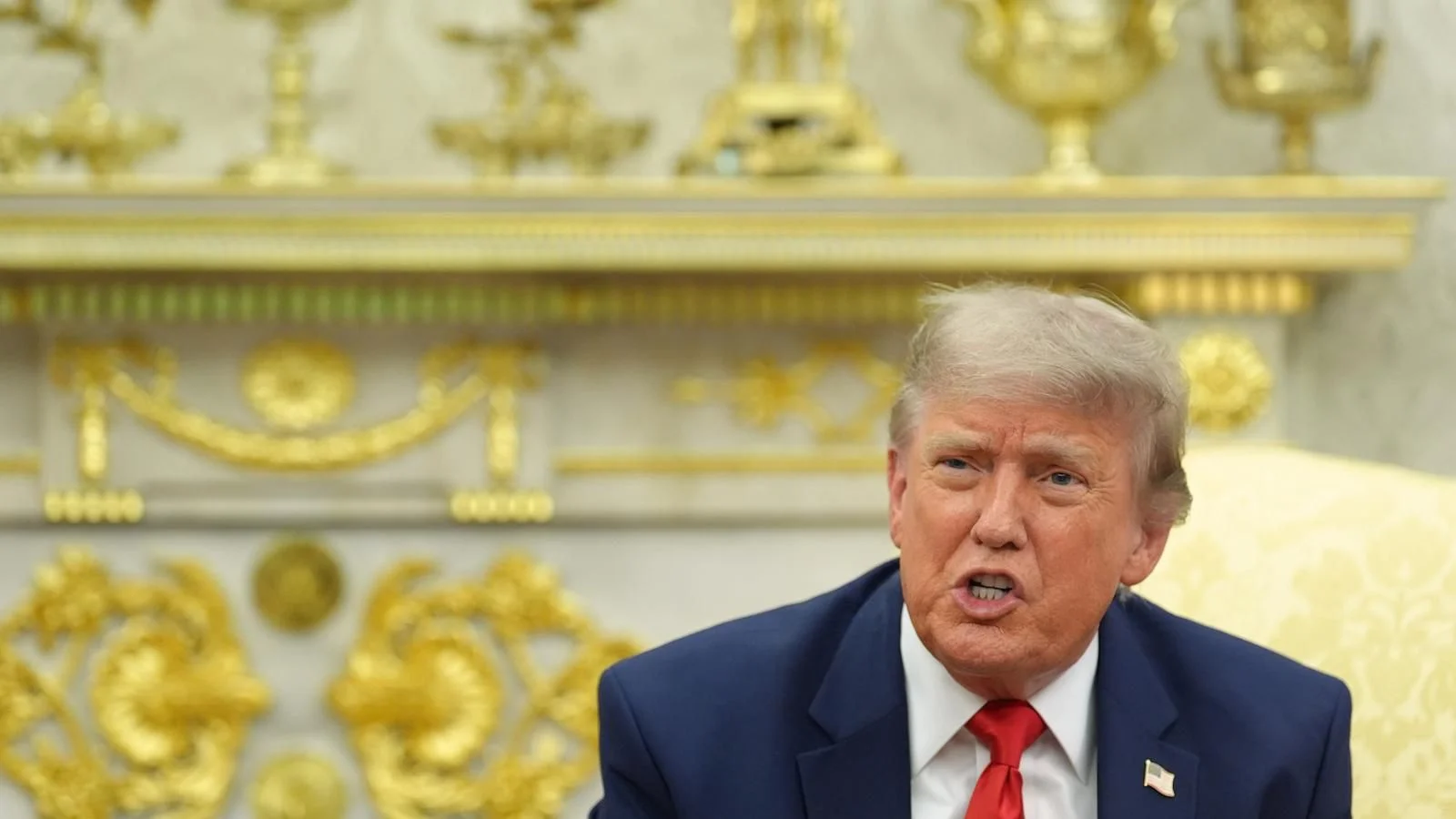
The Office of Management and Budget dispatched the emergency funding proposal just hours after President Donald Trump confronted Republican senators during a closed-door luncheon. The President engaged in a vocal dispute with one lawmaker over their support for a war powers resolution restricting further combat operations.
While the primary objective of the funds is Operation Epic Fury, the legislative package incorporates diverse domestic and international allocations. These include financial relief for American agricultural producers, resources to combat the African Ebola crisis, and regional infrastructure upgrades, such as revitalization initiatives within the nation's capital.
In an official communication addressed to House Speaker Mike Johnson, OMB Director Russ Vought implored legislative leaders to process these critical and time-sensitive funding demands without delay.
Administration officials confirmed that $67 billion of the total request is designated for the Department of Defense to address critical deficits linked to the Iranian conflict. The funds will cover troop deployments, combat readiness, and operational expenses required to rebuild depleted military stockpiles.
The timeline for congressional consideration remains uncertain, and it is unclear if the House or Senate will advance the measure. The spending bill faces an arduous legislative path, as lawmakers recognize that their votes will be interpreted as a direct indicator of their position on the war.
To secure broader legislative backing, the White House embedded targeted regional incentives within the bill. Notably, it contains $1 billion for the final engineering and construction phases of a revamped Penn Station in New York City, a project crucial to Senate Democratic Leader Chuck Schumer and House Democratic Leader Hakeem Jeffries.
The administration’s defense breakdown requests $67.1 billion for the military. Additional lines itemize $11.1 billion in economic relief for U.S. growers, $1.4 billion to manage Ebola outbreaks in Central Africa, and $500 million to complete structural and restoration projects across Washington, D.C.
Furthermore, the supplemental package integrates several policy revisions championed by the administration that are poised to ignite intense debate on Capitol Hill.
These statutory adjustments involve restructuring federal hemp market guidelines, expanding year-round retail permissions for renewable biofuels, and dismantling specific prohibitions tied to federal investment initiatives in Venezuela.
Senator Patty Murray, the senior Democrat on the Senate Appropriations Committee, condemned the administration's strategy, asserting the bill extends far beyond funding the president's problematic conflict by attempting to funnel tens of billions into unrelated Pentagon accounts that belong in standard annual appropriations.
Murray pledged a rigorous assessment of the entire request to protect American service personnel, though she explicitly stated she would refuse to unconditionally approve billions more for what she termed an unauthorized and disastrous war of choice.
Conversely, House Appropriations Committee Chairman Tom Cole and Defense Subcommittee Chairman Ken Calvert issued a supportive joint declaration, noting that the president's proposal acknowledges that American military deterrence must be actively sustained rather than merely displayed.
The defense component designates $21 billion for munitions and weaponry, $17.3 billion for operational expenses, and $12.1 billion for classified defense programs. The remaining funds target military fuel needs, drone production, and enhanced cybersecurity infrastructure.
Finally, the agricultural relief package distributes $10 billion to row and specialty crop producers nationwide, alongside a dedicated $1.1 billion allocation for Florida farmers impacted by destructive winter storms during the past year.
Future Outlook
The introduction of the $87.6 billion supplemental request sets the stage for an intense funding showdown through the remainder of 2026. With the Pentagon preparing its historic $1.5 trillion fiscal 2027 budget request, fiscal hawks and anti-war lawmakers are expected to heavily scrutinize the administration's military spending. The inclusion of localized infrastructure projects and agricultural subsidies indicates a White House strategy to splinter opposition, but passing the defense portions will require navigating a highly divided Congress determined to assert its war powers authority.
FAQs
What is Operation Epic Fury?
Operation Epic Fury is the official codename for the United States-led military campaign directed against the Iranian regime, aimed at degrading its regional power projection and neutralizing its nuclear capabilities.
How is the requested defense funding broken down?
The $67.1 billion defense portion includes $21 billion for munitions and weapons replenishment, $17.3 billion for operational costs, $12.1 billion for classified initiatives, $5.1 billion for cyber and autonomous systems, and $2.4 billion for drone manufacturing.
What domestic policy changes are included in this spending request?
The supplemental bill introduces policy adjustments regarding the federal regulation of hemp products, guidelines for the year-round sale of renewable biofuels, and the removal of specific constraints on federal investment support involving Venezuela.