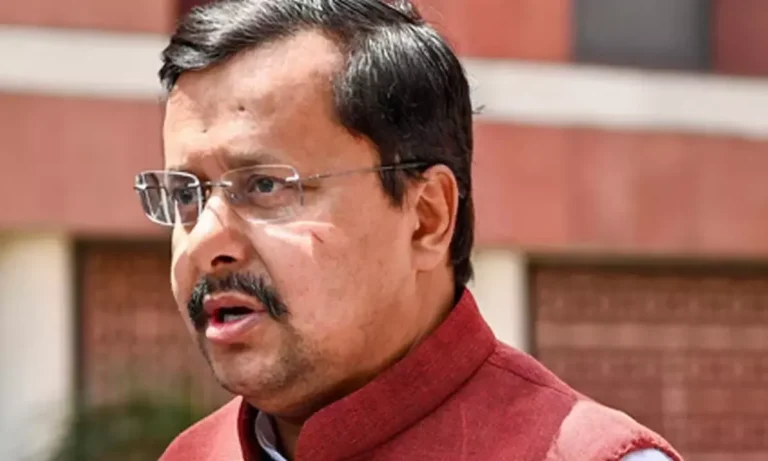
Sri Lanka MP Urges Tamil Nadu Investments Amid Debt Crisis
Sri Lanka Muslim Congress leader Rauff Hakeem expressed optimism regarding development under Tamil Nadu’s newly elected TVK-led government. Speaking in Tiruchirappalli, the lawmaker emphasized that increasing South Indian investments and resolving bilateral maritime disputes through diplomatic compromises remain vital to stabilizing Sri Lanka’s fragile economic architecture.
Key Highlights
- Sri Lankan MP Rauff Hakeem welcomed the unexpected victory of the TVK alliance in Tamil Nadu.
- He called for increased investments from South Indian states to combat Sri Lanka’s foreign exchange depletion.
- The lawmaker urged a humanitarian, multi-party approach to resolve the long-standing bilateral fishermen issue.
- Sri Lanka faces severe economic pressure as its two-year IMF debt restructuring window narrows.
During an address to journalists at Tiruchirappalli Airport on June 18, 2026, Sri Lanka Muslim Congress chief and Member of Parliament Rauff Hakeem highlighted new avenues for economic progress. He focused on potential growth under the recently formed Tamilaga Vettri Kazhagam (TVK) administration in Tamil Nadu.
Analyzing the changing political environment across the Palk Strait, Hakeem noted the assumption of power by a fresh political front. He observed that an alliance previously excluded from governance had clinched an unexpected and historic electoral triumph, reshaping the regional political sphere.
The lawmaker asserted that regular democratic transitions foster political health and institutional vitality. He voiced optimism that the incoming leadership would successfully propel Tamil Nadu into its subsequent developmental phase, building effectively upon the foundational work established by the preceding administration.
Addressing the persistent friction surrounding cross-border fishing rights, Hakeem advocated for an empathetic, humanitarian framework from both nations. While acknowledging that statutory protocols and legal mandates remain indispensable, he insisted that the core livelihood struggles of local fishermen must command immediate priority.
He explained that achieving a viable, mutually agreeable resolution requires concessions from all participating stakeholders. Hakeem called for sustained, collaborative deliberations involving the provincial Tamil Nadu administration, New Delhi, Colombo, and the vulnerable fishing communities residing throughout the Jaffna Peninsula.
The Member of Parliament disclosed that Sri Lanka’s Fisheries Minister had previously traveled to Tamil Nadu for high-level consultations. Those engagements involved extensive discussions with prominent regional politicians and central Indian government officials to build common ground.
Because the maritime dispute fundamentally hinges on sensitive international diplomacy, Hakeem consciously refrained from providing specific commentary on active legal proceedings. He noted that multiple related cases are currently awaiting judicial determination within the court system.
Shifting focus to Sri Lanka’s internal financial distress, the political leader painted a grim picture of escalating inflation. He admitted that the domestic economy has failed to register meaningful recovery, as the cost of living climbs higher for ordinary citizens daily.
Hakeem provided updates on active diplomatic negotiations aimed at finalizing an essential conflict-avoidance treaty. He revealed that approximately 60 days remain before the designated timeline for these bilateral financial and strategic discussions officially draws to a close.
Even if both nations finalize this treaty seamlessly, economic experts project a delayed implementation timeline. Financial analysts calculate that it could take an additional two to three months before tangible economic relief manifests within the domestic marketplace.
The lawmaker pointed out that Colombo confronts an intricate dual challenge in managing its fiscal affairs. The current administration must simultaneously navigate intense macroeconomic headwinds generated by global geopolitical conflicts and a deep-seated domestic economic recession.
Hakeem clarified that bilateral resolution mechanisms must operate uniformly regardless of shifting political dynamics in Chennai. Whether the Dravida Munnetra Kazhagam (DMK) or the TVK directs the Tamil Nadu government, all sovereign engagements require total synchronization with New Delhi.
The parliamentary representative highlighted how the sharp devaluation of the Sri Lankan rupee against major global currencies has crippled local businesses. This currency depreciation severely restricts merchants trying to secure critical imports, including vital agricultural fertilizers and crude oil.
Under the structural adjustment program negotiated with the International Monetary Fund, Sri Lanka secured a two-year window for debt reconfiguration. However, continuous expenditures on essential commodity imports are draining the country’s limited foreign currency repositories at an unsustainable pace.
He issued a stark warning regarding potential compliance failures with international lenders. If the country’s sovereign liquid reserves plummet beneath the baseline thresholds mandated by the IMF, Sri Lanka risks triggering severe penalties and compounding its existing debt obligations.
When questioned about Colombo’s strategic roadmap to escape this sovereign debt trap, Hakeem outlined two primary economic pathways. He emphasized that the island nation must aggressively expand its export volumes or successfully attract substantial inflows of foreign direct investment.
The Sri Lankan administration is systematically prioritizing both economic pillars to restore fiscal stability. Specifically, Colombo is looking toward industrial groups and capital allocators based in southern Indian states like Tamil Nadu to explore lucrative emerging market opportunities.
To facilitate this economic partnership, the Sri Lankan government stands prepared to deliver highly competitive fiscal incentives and a stable regulatory environment. Hakeem concluded by reiterating Colombo’s eagerness to welcome these critical cross-border corporate investments.
Future Outlook
The fiscal trajectory of Sri Lanka hinges heavily on the next 90 days of trade adjustments and diplomatic maneuvers. As the 60-day timeline for conflict-avoidance talks concludes, the response from South Indian investors will determine if Colombo can stabilize its foreign reserves. Failure to secure these capital inflows could complicate upcoming evaluations under the IMF program, altering the economic environment of the Palk Strait region.
FAQs
Who is Rauff Hakeem?
Rauff Hakeem is a Member of Parliament in Sri Lanka and the leader of the Sri Lanka Muslim Congress.
Which political party recently won the elections in Tamil Nadu?
The Tamilaga Vettri Kazhagam (TVK) alliance secured a significant victory and assumed office in Tamil Nadu.
What IMF timeline was provided to Sri Lanka for debt restructuring?
Sri Lanka was granted a two-year period under its agreement with the International Monetary Fund to restructure its sovereign debt.
How do currency fluctuations affect Sri Lanka’s economy?
The depreciation of the Sri Lankan currency has increased costs for importers, disrupting the supply of essential commodities like crude oil and agricultural fertilizers.