NSW Treasurer Mookhey to Deliver Deficit-Curbing 2026 Budget
New South Wales Treasurer Daniel Mookhey prepares to hand down a disciplined, back-to-basics 2026/27 state budget this Tuesday. The fiscal plan prioritizes essential services while managing a severe economic slowdown and sharp revenue declines across the state.
Key Highlights
- Economic growth projections for the nation’s largest state economy have been drastically downgraded from 2.5% to just 1%.
- Total state debt is projected to stabilize at approximately $178 billion, successfully averting a projected rivalry with Victoria.
- Key state revenue streams face severe losses, with stamp duty receipts expected to plunge by $5 billion over four years.
- Major allocations include $10.3 billion for health, $2.1 billion for rail maintenance, and $557 million for energy relief.
Despite the World Cup match playing in his office, Daniel Mookhey is more comfortable trying to balance his state’s budget than a soccer ball.
The NSW treasurer will be delivering his fourth budget for the nation’s largest state economy on Tuesday – and potentially his last, pending the outcome of the election scheduled for March.
It comes at a time of multiple economic headwinds, including rising interest rates and a stalled property market, and the fallout from the war in the Middle East putting a further brake on the already sluggish Australian economy.
Stamp duty receipts for the NSW government are tipped to fall $5 billion over the next four years.
While the NSW economy was expected to grow by 2.5% in the coming financial year, that forecast has been downgraded to a meagre 1%, Mr Mookhey revealed in a recent speech.
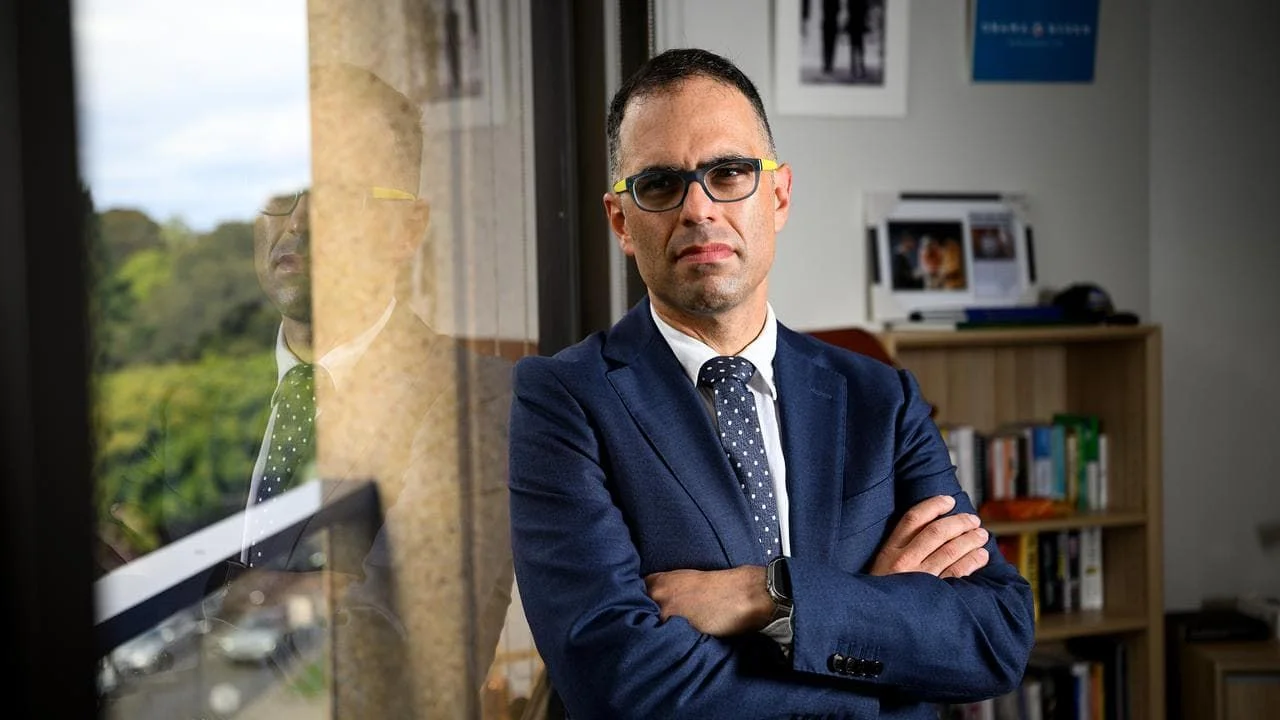
The treasurer, known for his colourful eyewear, is careful not to deliver a rose-tinted budget outlook, despite touting record investments in housing and health.
“For so long many communities, both in regional and urban NSW, have felt like they’ve missed out and whilst no budget solves any problem definitively, in each budget we look to make progress,” he told AAP from his parliamentary quarters.
He promised regional towns can look forward to a surge in funding for essential services, especially roads.
A year on, NSW Treasurer Daniel Mookhey is set to deliver the state’s 2026/27 budget.
“They’re going to see us putting a serious amount of money into catching up on the basics that they’ve missed out on, when it comes to their schools, when it comes to their hospitals, when it comes to their roads and when it comes to what makes for good neighbourhoods.”
But the treasurer has also looked to keep a tight grip on the purse strings.
NSW was due to rival Victoria as the most heavily indebted state, but the latest budget forecast has it stabilising at around $178 billion.
Planned spending in Tuesday’s budget includes $10.3 billion in recurrent funding for a range of health services, $2.1 billion for maintenance of Sydney’s massive train network and a $557 million energy efficiency program for low to middle income families.
“I’m unapologetic about paying our bond owners less in order to pay more in our essential services,” Mr Mookhey said.
There will be $2.1 billion in the NSW budget for maintenance on the Sydney train network.
When asked about the budget’s other side of the coin, he said revenues would also take a hit.
Two of the main sources of income are expected to plunge over the coming four years as the property market takes a dive.
Stamp duty receipts are projected to fall $5 billion in that period, while land taxes are expected to decline by about $3 billion.
Another major source of revenue is one of the most controversial: poker machines.
NSW has the highest number of poker machines per capita of any jurisdiction worldwide, at about 87,000, bringing in a predicted $3 billion in taxes by 2029.
“People accept that you can’t prohibit gambling, so you should tax it,” Mr Mookhey said.
NSW Treasurer Daniel Mookhey’s latest budget will be part of Labor’s re-election pitch.
The treasurer said households can depend on a government that is the “most fiscally disciplined of any Australian state or territory” to tackle the root causes of their financial challenges.
“This budget is the beginning of us arguing for why we would like to be entrusted with the responsibilities of office for a further four years (in government),” he said.
“People will see that we have a laser-like focus on helping people right now, at the same time as we confront the fundamentals of this cost of living crisis.”
Future Outlook
The financial roadmap outlined by Treasurer Mookhey serves as the opening salvo for the Labor Party’s re-election platform ahead of the March state election. Confronting a downgraded economic expansion of just 1%, the government plans to pivot toward community infrastructure and cost-of-living relief to signal economic responsibility. Stabilizing the state’s debt at $178 billion prevents NSW from becoming the nation’s fiscal outlier, but the long-term outlook remains highly dependent on the recovery of the local property sector and the stabilization of global macroeconomic pressures.
FAQs
When will the NSW state budget be formally delivered?
NSW Treasurer Daniel Mookhey will officially hand down the 2026/27 state budget on Tuesday.
Why is the NSW government experiencing major revenue declines?
The state’s primary revenue engines are slowing down due to a cooling property market, causing stamp duty collections to drop by $5 billion and land tax intakes to fall by $3 billion over the next four years.
How much debt does New South Wales currently hold?
The latest budget figures indicate that New South Wales’ total state debt is stabilizing at approximately $178 billion, keeping it below previous projections that threatened to rival Victoria.
What are the main spending initiatives in this budget?
The budget includes $10.3 billion for ongoing health services, $2.1 billion dedicated to Sydney train network maintenance, and a $557 million energy efficiency relief package for eligible families.
How much tax revenue do poker machines generate in NSW?
With an estimated 87,000 electronic gaming machines active across the state, poker machine tax revenues are projected to reach $3 billion by the year 2029.