Modi-Trump Summit Revives Landmark India-US Trade Talks
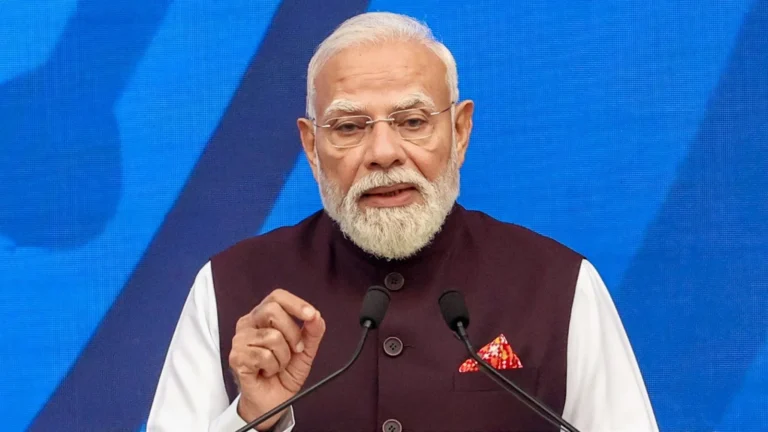
Prime Minister Narendra Modi and US President Donald Trump have ordered rapid accelerations for a balanced, mutually advantageous, and commercially significant commerce pact. This critical directive aims to breathe new life into an essential global partnership.
Key Highlights
- Leaders ordered an accelerated timeline for a comprehensive interim bilateral trade framework.
- US Trade Representative Jamieson Greer will arrive in India next week to bridge remaining disagreements.
- Prime Minister Modi concluded an extensive European itinerary covering Nice, Evian, and Paris in France, alongside a historic stop in Slovakia.
- Discussions highlighted maritime protection, including the critical safety of seafarers along global energy supply routes.
The high-level resolution materialized during extensive consultations on the sidelines of the G7 Summit in France. The dialogue represented the first direct, in-person engagement between both leaders in 16 months. This encounter holds immense weight as New Delhi and Washington navigate geopolitical issues. Both democracies remain determined to repair vulnerabilities across trade, technology, defence and strategic cooperation.
According to statements released by the Ministry of External Affairs (MEA), the two heads of state noted positive advancements regarding an interim bilateral trade agreement. They subsequently tasked their respective negotiating delegations to conclude a meaningful pact at the earliest opportunity. Foreign Secretary Vikram Misri later confirmed during a special media briefing on June 18, 2026, that negotiations have entered their final stages after successfully navigating recent friction.
The diplomatic engagement underscored the foundational resilience defining the India-US Comprehensive Global Strategic Partnership. Both nations formally revalidated commitments to widen structural collaboration. Officials confirmed that the closed-door dialogue comprehensively mapped out defence collaboration, emerging technologies, energy security and commercial engagement, validating the multivalent nature of modern bilateral relations.
A pivotal operational outcome of the summit is the scheduled diplomatic travel of US Trade Representative Jamieson Greer to India next week. This ministerial visit is designated to catalyze the negotiating process. It will directly address and reconcile the remaining structural differences embedded within the proposed text.
Prime Minister Modi recalled his prior official visit with Trump in Washington. He noted that the previous interaction successfully infused significant momentum into cross-border ties. The leaders also analyzed institutional performance under the India-US COMPACT (Catalysing Opportunities for Military Partnership, Accelerated Commerce and Technology) framework. This program serves to deepen ties across vital economic spheres and anchor long-range strategic alignment.
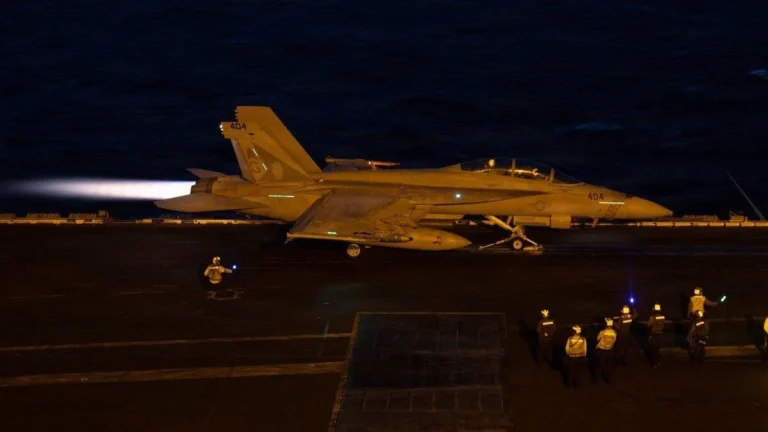
Beyond commercial parameters, regional maritime stability occupied a central role during the bilateral exchange. Modi expressed clear appreciation for Trump’s efforts directed at mitigating geopolitical volatility across West Asia. He emphasized the critical necessity of preserving freedom of navigation through the Strait of Hormuz. This maritime choke point remains indispensable for international energy distribution and standard global commerce.
Furthermore, Prime Minister Modi explicitly raised the issue of seafarers’ safety. He urgently requested that the protection of maritime workers receive paramount focus during the operational rollout of Washington’s ongoing peace framework with Iran.
This high-level intervention succeeds a demanding geopolitical cycle in India-US relations. Recent months were complicated by persistent tariff disputes and diplomatic frictions stemming from bilateral comments regarding the 2025 India-Pakistan military confrontation. Additional domestic policy friction had emerged via standard immigration adjustments and elevated H1B visa fees.
Nevertheless, targeted diplomatic maneuvers signal a unified intent to transcend bilateral bottlenecks. This renewed focus on an interim treaty indicates that New Delhi and Washington intend to completely transform their relationship. They are driving toward a cooperative alliance vital for economic growth, regional stability and global geopolitical dynamics.
European Tour and French Diplomacy
The French president also thanked PM Modi for his visit and described it as ‘very fruitful’, while expressing hope of meeting him again in February
Before arriving at the summit, Modi landed in Nice on June 13, 2026. He launched the historic Bharat Innovates initiative alongside French President Emmanuel Macron before engaging in dedicated bilateral talks.
French President Emmanuel Macron extended a unique farewell message to Prime Minister Modi via a custom video delivered partly in Hindi, describing the Indian leader as a dear friend and stating that “France loves you.”
Macron stated in the broadcast, “Priya mitra Narendra, mujhe bahut khushi hai aap ka Nice, Evian aur Paris, daure ke liye swagat karte, France Bharat ki dosti amar rahe.” The French head of state lighter noted his hope that his pronunciation was accurate.
“Thank you for your visit. Thank you for our friendship. It was a very fruitful visit. France loves you. We are looking forward to seeing you again soon, in February. Jai Hind,” Macron concluded.
Modi’s European itinerary also featured an official visit to Slovakia from June 14 to June 16, 2026, marking the first time a sitting Indian Prime Minister has visited the nation.
Modi then traveled to Evian-Les-Bains for the G7 Summit on Tuesday and Wednesday, where India participated actively as an invited guest nation. On the margins of the summit, Modi held meetings with UK Prime Minister Keir Starmer, Ukraine President Volodymyr Zelenskyy, EU leader Ursula von der Leyen, German Chancellor Friedrich Merz, UAE President Sheikh Mohamed bin Zayed Al Nahyan, and Canada Prime Minister Mark Carney.
The Prime Minister concluded his tour in Paris on Thursday, where he addressed the global technology convention VivaTech 2026 and engaged with a large gathering of the Indian diaspora.
“This visit to France has been extensive when it comes to engagement and outcomes. It began in Nice, where the Bharat Innovates programme was held, followed by Evian for G7 and then in Paris, where I addressed VivaTech 2026 and a large community programme, as well as met CEOs,” Modi observed via an official social media communication.
“I am especially grateful to my friend President Macron, the Government and the people of France for the warmth. The India-France friendship will become even stronger in the times to come,” the Prime Minister stated.
‘Ups and downs’
During the post-summit diplomatic briefings, Foreign Secretary Vikram Misri noted that despite international negotiations experiencing natural volatility, top-tier leadership has successfully stabilized the trade trajectory.
“There are ups and downs in relations between nations; the leaders of both nations deal with them,” Misri remarked to the press gallery. “With the United States, we have made significant progress already on the conclusion of an interim bilateral trade agreement. We are in the final stages of concluding that agreement.”
Prime Minister Modi departs for New Delhi after concluding visit to France, Slovakia
Following the conclusion of these multinational engagements, Prime Minister Modi departed from France to return to New Delhi.
Before his departure, Modi emphasized to the Indian diaspora that the nation is steadily establishing itself as a reliable international ally. He stated that this era represents a transformative phase in the country’s development, with global ambitions expanding rapidly.
“It’s always special to interact with the Indian diaspora and highlight the collective strides of 140 crore Indians,” Modi shared on the social platform X.
During his address at VivaTech 2026 in Paris, Modi advocated strongly for the democratization of emerging software frameworks, clarifying that artificial intelligence signifies an “all-inclusive” approach for India. He highlighted that 50% of all global digital transactions occur within the Indian domestic ecosystem.
Reflecting on his historic visit to Slovakia, Modi stated, “The outcomes of this visit will go a long way in strengthening bilateral ties between our nations. Stronger trade relations will greatly benefit our youth. Gratitude to the Slovakian government and people for the warmth.”
Future Outlook
The fast-tracked trade talks and the upcoming visit of US Trade Representative Jamieson Greer to New Delhi point to an imminent breakthrough for an interim trade pact. Observers anticipate that finalizing this deal will unlock deeper technological integration under the COMPACT framework and establish a more stable economic corridor between the two nations heading into 2027.
FAQs
What is the current status of the India-US trade agreement?
Negotiations for an interim bilateral trade agreement have entered their final stages. Following a face-to-face meeting between Prime Minister Narendra Modi and US President Donald Trump at the G7 Summit, both nations have directed officials to resolve outstanding differences swiftly.
Why is US Trade Representative Jamieson Greer visiting India?
Jamieson Greer is scheduled to visit India next week to inject fresh momentum into the trade talks. His visit will focus on resolving remaining structural disagreements and finalizing the terms of the proposed interim pact.
What is the India-US COMPACT initiative?
The COMPACT initiative stands for Catalysing Opportunities for Military Partnership, Accelerated Commerce and Technology. It is a bilateral framework designed to deepen strategic cooperation, enhance military partnerships, and drive long-term commercial and technological collaboration.
What security concerns were raised by India during the G7 Summit?
Prime Minister Modi emphasized the importance of maintaining freedom of navigation through the Strait of Hormuz due to its role in global energy commerce. He also urged that the safety of international seafarers be prioritized during the implementation of Washington’s peace deal in West Asia.