Opposition Targets Center Over Surging Inflation and Political Shifts
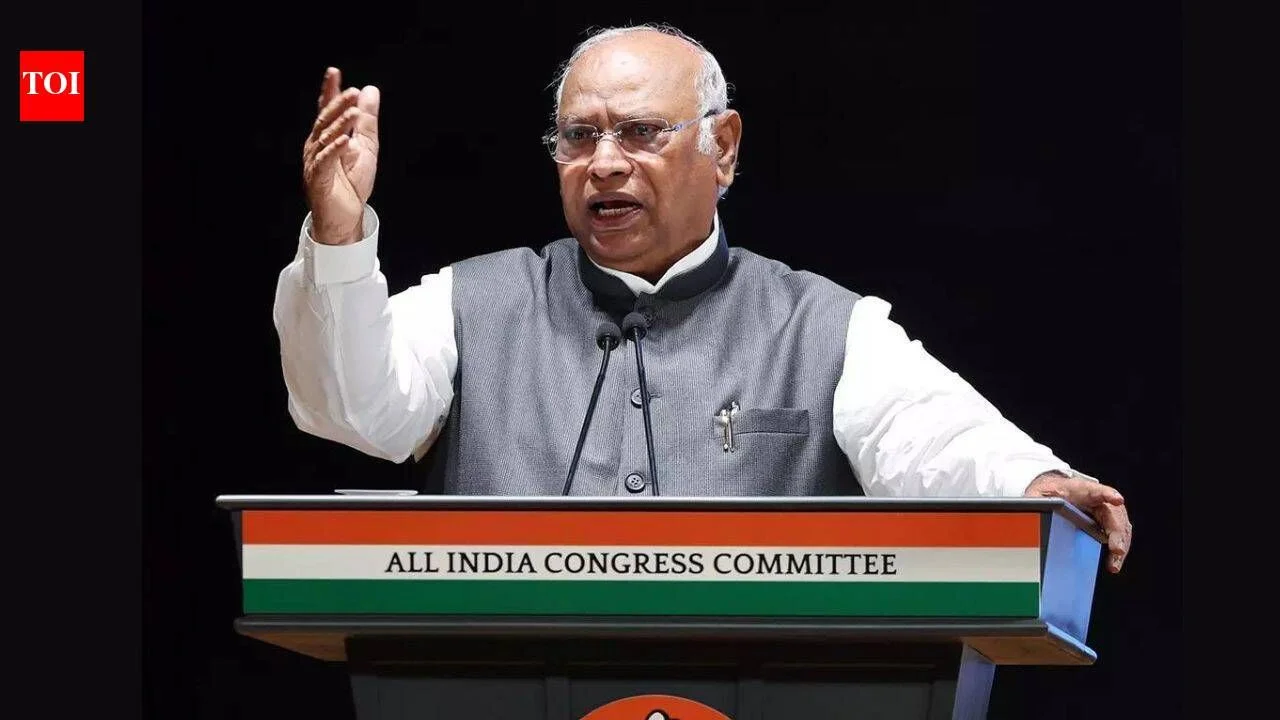
Rajya Sabha Opposition Leader Mallikarjun Kharge sharply criticized the central government, asserting that the ruling party prioritizes political acquisitions over the financial distress of citizens. Kharge highlighted that soaring living expenses have left everyday individuals unable to manage essential daily costs.
Key Highlights
- Opposition leader Mallikarjun Kharge condemned the ruling party for focusing on political expansions during an economic crunch.
- India‘s retail inflation reached a 16-month peak, driven by a 4.78% spike in food costs and a 15% rise in medical expenses.
- Major political shifts occurred as lawmakers from the Shiv Sena (UBT), AAP, and TMC shifted alliances toward the ruling coalition.
- The Reserve Bank of India urged vigilance regarding the domestic inflation trajectory following consecutive fuel price hikes.
NEW DELHI: Rajya Sabha Opposition Leader Mallikarjun Kharge sharply criticized the central government, asserting that the ruling party prioritizes political acquisitions over the financial distress of citizens. Kharge highlighted that soaring living expenses have left everyday individuals unable to manage essential daily costs.
These observations coincide with major political shifts, as multiple legislators from prominent opposition factions either aligned with or integrated into the governing coalition. Reports indicate that 6 out of 9 Shiv Sena (UBT) members in the Lok Sabha shifted allegiance to the Eknath Shinde wing. Concurrently, 20 TMC Lok Sabha representatives joined the National Citizens Party of India (NCPI) to back the NDA, while 7 AAP Rajya Sabha members defected to the BJP earlier in 2026.
Expressing his concerns on X, Kharge stated that domestic savings are shrinking rapidly under the pressure of intense price increases. He noted that widespread public frustration, rising inequality, damaged global economic standing, and deep youth discontent are eroding household stability due to structural fiscal mismanagement.
He further commented that the ruling party remains deeply invested in purchasing political support while the aam aadmi faces immense challenges in securing basic survival needs.
The Congress chief detailed a series of troubling economic indicators, noting that retail price indices hit a 16-month high. He emphasized that food inflation reached 4.78%, making basic items like tomatoes unaffordable, while medical costs surged past 15% alongside a weakening rupee, declining foreign investment, and an intensifying youth employment crisis.
Amid these fiscal pressures, Reserve Bank of India Governor Sanjay Malhotra advised the monetary policy committee to maintain strict surveillance over price trends. He specifically pointed to the potential cascading impact of recent energy price adjustments.
Malhotra clarified that policymakers must closely observe shifting price developments. He explained that the upward revisions implemented on retail petrol and diesel rates during May are projected to elevate energy-driven inflation in the upcoming months.
The central administration raised fuel costs three times within a single month. These hikes followed prolonged global supply strains caused by the Hormuz shipping blockade linked to the US-Iran conflict.
Economic Stress and Policy Projections
The intensifying debate between the opposition and the ruling coalition underscores a deeper friction regarding India’s macroeconomic path. While the opposition points to depleting middle-class savings and surging cost-of-living indices as evidence of policy failure, government representatives defend their record by citing robust GDP growth rates and extensive welfare networks.
However, external geopolitical supply shocks, particularly energy disruptions in Western Asia, continue to complicate domestic price stabilization. Financial analysts project that if the weakness in the rupee persists alongside elevated medical and fuel costs, the central bank may delay anticipated interest rate cuts to prevent further inflationary overheating.
FAQs
What triggered Mallikarjun Kharge’s latest criticism of the central government?
Mallikarjun Kharge targeted the administration over a sharp rise in retail inflation and living costs. He alleged that the ruling party is distracted by absorbing opposition lawmakers instead of addressing the economic difficulties plaguing ordinary citizens.
What are the latest inflation figures reported for the Indian economy?
India’s retail inflation has hit a 16-month high. Specifically, food inflation has climbed to 4.78%, impacting daily grocery items like tomatoes, while medical inflation has climbed above the 15% threshold, straining household budgets.
Why did the RBI Governor issue a cautionary warning about fuel prices?
RBI Governor Sanjay Malhotra emphasized that the central bank must stay highly vigilant because the triple upward revisions in retail petrol and diesel prices executed in May 2026 are highly likely to drive up energy inflation metrics in the near future.
What major political defections were highlighted by the opposition?
The political shift involves 6 out of 9 Shiv Sena (UBT) Lok Sabha MPs backing the Shinde faction, 20 TMC Lok Sabha MPs merging with the NCPI to support the NDA, and 7 AAP Rajya Sabha MPs joining the BJP earlier this year.