India Brands Pakistan a ‘Frankenstein State’ at UN
New Delhi has fiercely criticized Islamabad at the United Nations, labeling it a “Frankenstein State” that faces blowback from its own terror networks. The diplomatic clash intensified following a dispute over the suspension of the historic 1960 Indus Waters Treaty.
Key Highlights
- India labeled Pakistan a “Frankenstein State” at the UN for sponsoring cross-border terrorism.
- New Delhi declared the 1960 Indus Waters Treaty completely outdated following its suspension in 2025.
- Pakistan petitioned the UN Security Council, alleging Indian violations concerning the Chenab River.
- India reaffirmed that Jammu and Kashmir remains an inalienable, integral territory of the nation.
India delivered a sharp rebuke to Pakistan at the United Nations, characterizing its neighbor as a “Frankenstein State” that reacts with surprise when its homegrown terror apparatus turns against it. The scathing statement directly accused Islamabad of orchestrating the assembly, training, and operational deployment of militant groups.
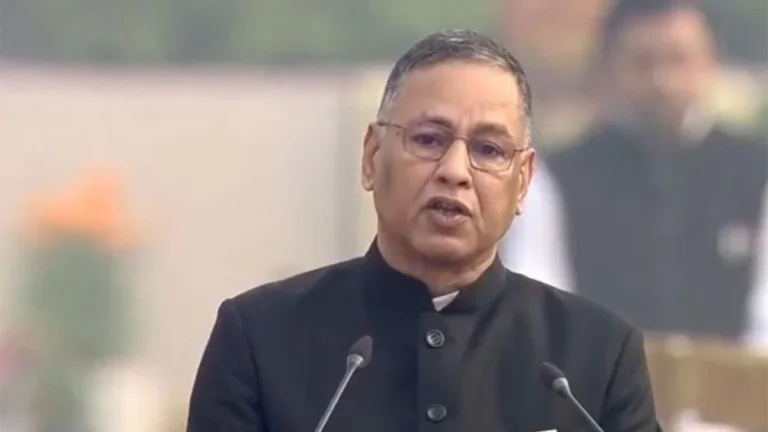
The critical remarks were delivered by Anupama Singh, who serves as the First Secretary at India’s Permanent Mission to the United Nations. Her response was triggered after Pakistani delegates and representatives from the Organisation of Islamic Cooperation raised disputes regarding Jammu and Kashmir during an interactive UN dialogue session.
Singh stated that India felt compelled to utilize its right of reply to counter the narratives introduced by Pakistan and the OIC. She confirmed that New Delhi completely dismisses the unverified and antagonistic claims made by the Pakistani delegation.
The Indian diplomat firmly dismissed all statements regarding Jammu and Kashmir uttered by the OIC. She asserted for the official record that the territory belongs entirely to India, noting the sole lingering conflict is Pakistan’s unlawful control of Indian lands.
Singh pointed out that Pakistan’s current defense minister openly praises the infrastructure of terror as an official instrument of state policy. She emphasized that such activities strip the country of any right to claim international sympathy.
The diplomat noted that an unconstitutional and forced territorial occupation requires continuous violence to survive. She highlighted the contradiction of a defense minister boasting about state-sponsored militancy while the administration simultaneously portrays itself as an unprovoked victim of terror networks.
Singh described this dynamic as a unique paradox that only Islamabad could maintain. She stated the nation functions as a real-world example of a self-destructive system shocked by internal blowback.
The diplomat added that the systematic suppression of baseline citizen freedoms in Pakistan has led to severe civil unrest. She noted that public demonstrations demanding food, power, and civil rights are routinely answered with state-sponsored violence and ammunition.
Singh turned her focus to the bilateral river framework, characterizing the long-standing water agreement between the neighboring nations as fundamentally archaic.
The diplomat explained that India’s strategic outlook regarding the river pact remains transparent. She argued it lacks logical sense for a state exporting violence to simultaneously demand water sharing privileges historically built on bilateral trust.
The historic water sharing framework was officially halted by India following the devastating Pahalgam terror strike in April 2025, an attack that resulted in the deaths of 26 civilians. Singh noted that the technical guidelines can no longer remain static while regional realities shift.
The Indian representative maintained that a pact signed in 1960 cannot be viewed as an unyielding right that evades modern state accountability. She argued the accord must reflect the massive geopolitical transformations of the last six decades.
The water treaty, initially set up under World Bank mediation, has dictated the management of the Indus River basin since 1960. Singh concluded that Islamabad must fix its internal domestic crises rather than chasing territorial ambitions.
Pak writes to UNSC on Indus Waters Treaty
Islamabad: Ishaq Dar, serving as Pakistan’s Deputy Prime Minister, has formally requested the UN Security Council to intervene against India’s ongoing suspension of the bilateral water accord.
The river distribution pact, managed under World Bank oversight since 1960, was frozen by India after the April 2025 Pahalgam militant strike claimed 26 civilian lives. The treaty historically dictated how both nations utilized the shared Indus river system. Pakistan’s UN Ambassador, Asim Iftikhar Ahmad, confirmed he hand-delivered Dar’s official grievance to UNSC President Leonor Zalabata Torres. The ambassador noted on social media that the letter alerts the council to Indian infrastructure developments on the Chenab River.
The Pakistani envoy stated that he provided a comprehensive brief to the Security Council head regarding the broader geopolitical friction in South Asia. Dar previously dispatched an identical complaint to the council presidency in April.
History of the Indus Waters Treaty
The Indus Waters Treaty (IWT) is a comprehensive water-distribution treaty brokered by the World Bank and signed on September 19, 1960, between Indian Prime Minister Jawaharlal Nehru and Pakistani President Ayub Khan. The treaty gave India control over the three eastern rivers (Ravi, Beas, and Sutlej) while allocating the three western rivers (Indus, Jhelum, and Chenab) to Pakistan. Despite undergoing decades of geopolitical strain and multiple armed conflicts, the treaty survived intact for over sixty years as one of the world’s most successful water-sharing agreements. However, the deadly Pahalgam terror attack in April 2025, which claimed 26 lives, drove India to suspend the treaty, marking a historic breakdown in bilateral resource cooperation.
FAQs
Why did India call Pakistan a Frankenstein State at the UN?
India used the term to highlight how Pakistan’s state-sponsored terror groups have ultimately caused internal destruction and violence within its own borders.
What is the status of the Indus Waters Treaty in 2026?
The treaty remains suspended by India following a major cross-border terror attack in April 2025 that resulted in the deaths of 26 civilians.
Which river infrastructure projects are causing disputes?
Pakistan has raised formal complaints to the UN Security Council regarding two specific Indian infrastructure developments located along the Chenab River.
What is India’s official stance on Jammu and Kashmir?
India maintains that Jammu and Kashmir is an integral and inalienable part of its sovereign territory, and demands the return of illegally occupied areas.