India Japan Forge Expansive Strategic Alliance on Energy AI and Defence
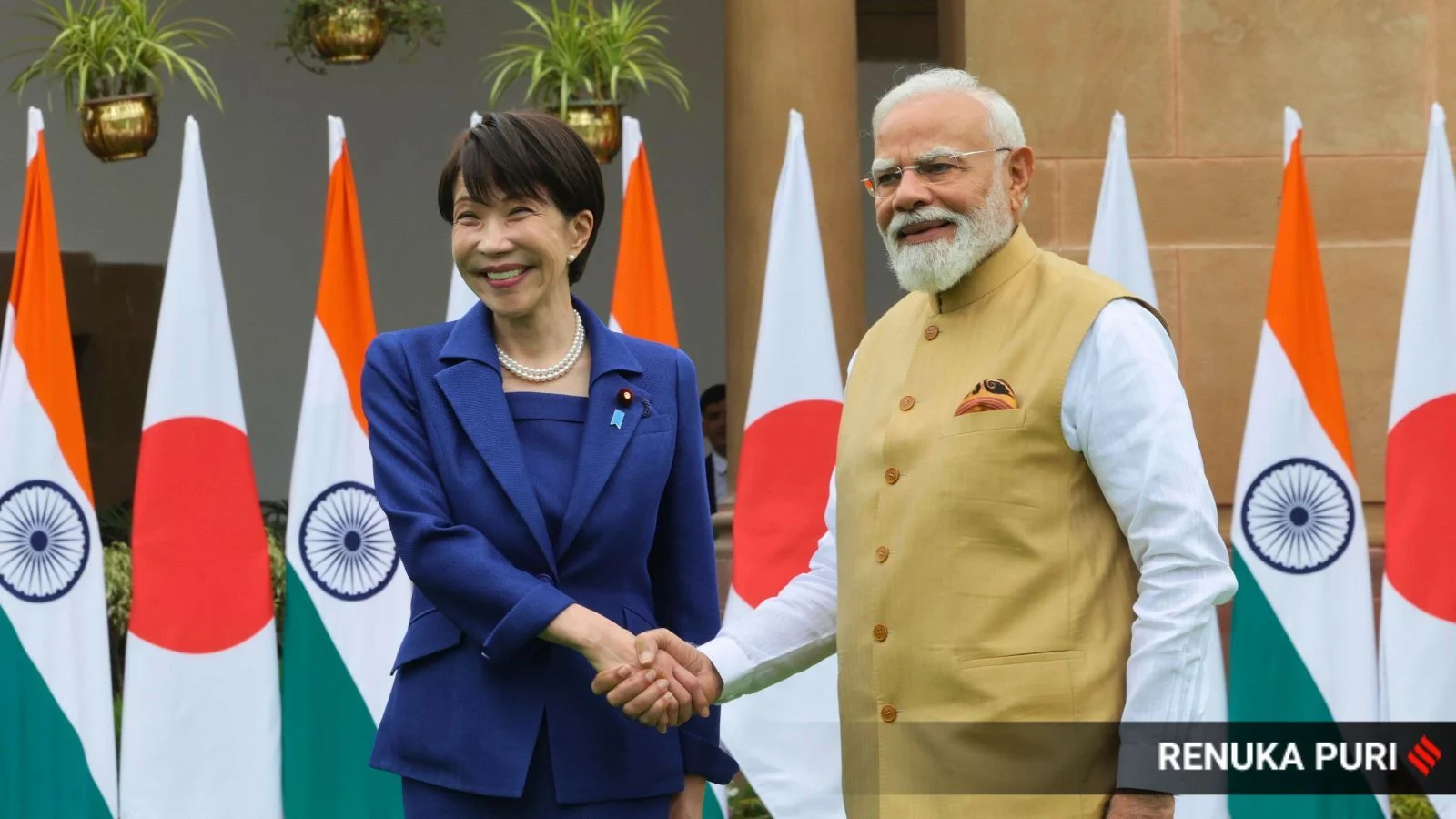
New Delhi and Tokyo have elevated their bilateral relationship by signing landmark agreements spanning energy resilience, artificial intelligence, and military hardware co-development. Prime Minister Narendra Modi and Japanese Prime Minister Sanae Takaichi positioned economic and energy security as the defining pillars of their strategic alliance during summit talks.
Key Highlights
- India and Japan finalized their first-ever military co-development project featuring the Naval Radio Antenna UNICORN.
- Both nations established a 10 trillion yen investment target over the next decade alongside an AI partnership framework.
- A joint roadmap was unveiled to guarantee supply chain resilience in semiconductors, quantum tech, and critical minerals.
- Japan launched a bilateral dialogue to enhance India’s petroleum stockpiling and supported India’s International Energy Agency bid.
Amid global trade disruptions, concerns of economic coercion, and volatile energy markets, India and Japan on Thursday unveiled an expansive strategic partnership centred on energy security, resilient supply chains, and emerging technologies, while also stepping up defence cooperation to reinforce a rules-based order in the Indo-Pacific.
The two sides also moved to deepen maritime and defence cooperation amid growing strategic competition in the Indo-Pacific, with plans for more naval exercises, defence technology collaboration, and an early convening of the India-Japan 2+2 ministerial dialogue.
“In the environment of global turbulence today, mutual trust is our biggest strategic asset,” Modi said, describing the visit as the beginning of “a new chapter” in the India-Japan strategic partnership.
Stressing that “economic security is shared security and energy transition is shared opportunity”, Modi said India and Japan had prepared a joint roadmap to strengthen supply chain resilience in semiconductors, quantum technologies, and advanced materials. He said the two countries had also launched an initiative to build 1,000 biogas and organic fertiliser plants in India, complementing the Centre’s GOBARdhan programme, besides expanding cooperation in batteries, green hydrogen and nuclear energy.
Takaichi linked the new initiatives to the changing geopolitical environment, saying both countries faced challenges arising from “economic weaponisation and non-market practices” and needed to urgently build resilient critical mineral supply chains.
She also referred to disruptions in global energy markets arising from the situation in West Asia and announced the launch of a bilateral dialogue to strengthen India’s petroleum stockpiling system. Japan, she added, would continue to support India’s bid for membership of the International Energy Agency.
Rules-based Indo-Pacific a priority
The two leaders also underscored concerns over preserving a rules-based order in the Indo-Pacific. Modi said a “free, prosperous and rules-based Indo-Pacific” remained a shared priority for both democracies, while announcing an agreement on the India-Japan Core Development Project under the Naval Radio Antenna Unicorn programme, which he said would “open a new chapter” in bilateral defence cooperation and contribute to regional peace, maritime security, and the rules-based order.
Takaichi said Japan’s updated vision for a Free and Open Indo-Pacific and India’s MAHASAGAR initiative reflected common strategic objectives, adding that maritime security was “especially important” for regional peace and stability.
She announced that a destroyer of the Japan Maritime Self-Defence Force and Indian naval vessels would undertake a joint exercise, with the two sides also expanding cooperation on naval maintenance and repair, defence equipment under the Make in India framework, and other security initiatives.
Technology, the ‘strongest pillar’
Calling technology cooperation the “strongest pillar” of future ties, Modi said the two countries had issued a joint statement on AI, while several institutions associated with the IndiaAI Mission signed agreements with Japanese partners. “The coming together of Japan’s precision technology and India’s software capability will give new speed and strength to global AI development,” he said.
Ahead of the leaders’ joint statement, the two governments exchanged agreements covering economic and energy security, including cooperation in geological and mineral exploration, pharmaceuticals and medical devices, batteries, biogas and organic fertilisers, as well as collaboration between the IndiaAI Mission and Japan in artificial intelligence.
10 trillion yen investment target
The leaders also reaffirmed their economic ambitions. Modi said nearly 120 new business agreements had been concluded over the past year, expected to bring investments of more than $10 billion into India. He reiterated the target of attracting 10 trillion yen in Japanese investment over the next decade while doubling the number of Japanese companies operating in India.
The two sides also unveiled an India-Japan Mobility Partnership Framework aimed at expanding cooperation beyond the automobile sector into shipbuilding, aviation and logistics, alongside greater collaboration in research, education, startups, skilling and talent mobility.
| Bilateral Cooperation Domain | Core Initiative / Framework Agreements | Key Objectives & Targets |
|---|---|---|
| Defence & Security | Naval Radio Antenna ‘UNICORN’ Project | Joint military co-development; advanced stealth masts for Indian Navy ships. |
| Strategic Investment | 10 Trillion Yen Capital Target | Doubling Japanese corporate presence in India; 120 new business pacts signed. |
| Technology & AI | IndiaAI Mission Partnership | Combining Japanese precision engineering with Indian software expertise. |
| Energy & Resources | GOBARdhan Linked Bio-plants | Construction of 1,000 biogas and organic fertilizer plants across India. |
| Critical Minerals | Geological Survey Cooperation | Mineral exploration pact; strengthening petroleum reserves stockpiling. |
History of the Special Strategic Partnership
Diplomatic ties between New Delhi and Tokyo were formally established in 1952. The modern architecture of the alliance was set in motion in 2000 with the launch of a Global Partnership, which was subsequently upgraded to a Strategic and Global Partnership in 2006.
The bond underwent a major transformation in 2014, when Prime Minister Narendra Modi and former Japanese Prime Minister Shinzo Abe elevated the relationship to a Special Strategic and Global Partnership. Rooted in spiritual affinity, centuries of cultural exchange, and shared democratic values, the alliance has transitioned from economic development assistance into an assertive security and technological coalition.
Japanese Prime Minister Sanae Takaichi’s three-day official visit from July 1 to 3, 2026, marks the newest manifestation of this strategic convergence, introducing military co-development into their maritime security framework.
FAQs
What is the UNICORN mast project signed between India and Japan?
The Unified Complex Radio Antenna (UNICORN) is a sophisticated naval mast equipped with integrated communication systems designed to enhance the stealth capabilities of naval vessels. This represents the first-ever joint defence technology co-development project between India and Japan, following an initial framework agreement signed in November 2024.
What is the total investment target set by India and Japan?
Prime Minister Narendra Modi reaffirmed a target to draw 10 trillion yen in Japanese investments into India over the coming decade. Additionally, nearly 120 new corporate agreements signed over the past year are projected to inject over $10 billion into the Indian market.
How are India and Japan collaborating on energy security?
The two countries have launched a major sustainability initiative to build 1,000 biogas and organic fertilizer plants across India, supporting the domestic GOBARdhan project. Japan is also engaging in a bilateral dialogue to help optimize India’s petroleum stockpiling system and continues to back India’s entry into the International Energy Agency.
Which ministries signed agreements during the bilateral summit?
Key agreements included cooperation between the Geological Survey of India and the Japan Organisation for Metals and Energy Security, a battery production framework between India’s Ministry of Heavy Industries and Japan’s Ministry of Economy, Trade, and Industry, and a green energy pact through the Ministry of Cooperation and Department of Animal Husbandry.