India Germany Submarine Deal Reshapes Indo Pacific Security
A proposed defense pact between India and Germany to construct advanced submarines signals a major geopolitical realignment across Asia, transitioning from standard military procurement into a deep strategic alliance.
Key Highlights
- The deal involves manufacturing Type 214 submarines at Mumbai’s Mazagon Dock Shipyard.
- German experts will train Indian engineers, ensuring a critical transfer of maritime technology.
- The partnership aims to counter rising naval challenges from nuclear-armed neighbors China and Pakistan.
- Berlin secures a stronger strategic foothold in the economically vital Indo-Pacific region.
A looming maritime defense agreement between New Delhi and Berlin represents far more than a basic commercial transaction for hardware, marking a significant convergence of long-term security goals and industrial collaboration amid shifting power dynamics in Asia.
For New Delhi, the defense initiative establishes a robust foundation for domestic naval self-reliance while bolstering maritime deterrence against regional adversaries. Simultaneously, the agreement offers Berlin a pathway to extend its geopolitical influence outside Europe and emerge as a primary security contributor in the Indo-Pacific region, according to an analysis by Athens-based media outlet Directus.
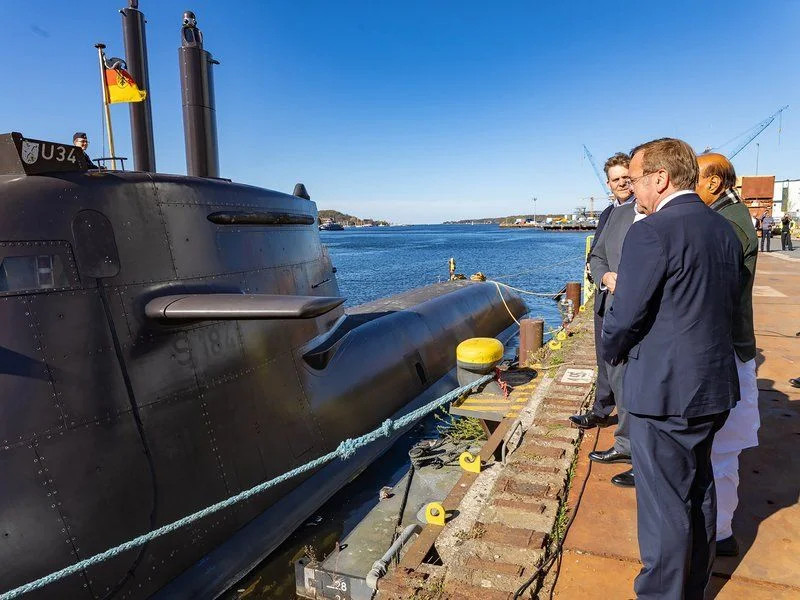
The prospective underwater warfare partnership goes significantly deeper than a standard transactional acquisition of naval assets. Current blueprints dictate that the advanced Type 214 vessels will be constructed directly at Mumbai’s Mazagon Dock Shipyard by domestic technicians under the direct guidance of German specialists, making this tech-sharing framework a highly consequential element of the bilateral accord.
India aims to cultivate specialized engineering knowledge, enhance sovereign manufacturing infrastructure, and systematically minimize its historical reliance on international defense exporters. Conversely, the German government faces complex domestic deliberations regarding the sharing of sensitive maritime intellectual property, proprietary engineering blueprints, and overarching national security protocols.
The ultimate framework of the intergovernmental treaty will depend heavily on the specific technological packages approved for export, the precise division of industrial production tasks, and the level of engineering access granted to local technicians working on highly classified underwater propulsion and combat systems.
Strategic experts emphasize that comprehensive technology-transfer protocols serve as the bedrock for enduring international alliances rather than temporary defense procurement links. Joint industrial manufacturing operations naturally foster deeper diplomatic synergy, sustained economic integration, and elevated political trust between the participating sovereign capitals.
Supporting the modernization of the Indian Navy allows Berlin to anchor a more permanent strategic presence within one of the most critical maritime corridors on earth. For the Indian government, the multi-decade industrial project guarantees enhanced maritime deterrence, localized employment expansion, and accelerated modernization of its domestic defense manufacturing ecosystem.
New Delhi’s aggressive push to upgrade its underwater capabilities is primarily catalyzed by intensifying security friction involving its two nuclear-armed regional competitors, China and Pakistan.
Submarines have rapidly evolved into the primary arbiters of naval dominance as geopolitical friction accelerates across the broader Indo-Pacific maritime theater.
Operating with extreme stealth and remaining exceptionally difficult for surface radar to trace, modern subsurface fleets offer states an extraordinarily potent deterrent capability within heavily contested maritime zones.
Naval strategists project that subsurface warfare will dictate the outcomes of future geopolitical standoffs. As critical commercial shipping lanes experience unprecedented transit volume and escalating security vulnerabilities, global powers are heavily funding stealth fleets capable of sustained, undetected operations.
Whether this defense alliance ultimately preserves regional equilibrium or accelerates a localized arms race remains a critical question. However, the overarching geopolitical reality indicates that the multi-decade competition for dominance across the Indo-Pacific will center heavily on capabilities deployed beneath the ocean surface.
Future Outlook
The long-term trajectory of the Indo-German maritime alliance points toward a fundamental restructuring of defense ties between European manufacturing powers and democratic Asian nations. As Western nations seek reliable security partners to balance maritime assertiveness in Asian waters, agreements focused on technology co-production rather than outright sales will likely become the standard template for future international defense agreements through 2026 and beyond.
FAQs
What type of submarines are featured in the India-Germany defense proposal?
The prospective maritime agreement centers on the Type 214 submarine model, a highly capable diesel-electric vessel known for its advanced fuel-cell propulsion systems and extended underwater endurance.
Where will the proposed Indo-German submarines be manufactured?
Under the current bilateral framework, the vessels are slated for localized construction at Mumbai’s Mazagon Dock Shipyard, utilizing domestic engineers trained directly by incoming German technical experts.
Why is India prioritizing this specific defense technology transfer?
India seeks to foster self-sufficiency in its domestic defense-industrial base, upgrade local maritime shipbuilding capabilities, and reduce its long-standing dependence on third-party international military suppliers.
Which regional security challenges are driving India’s naval expansion?
The rapid upgrade of India’s underwater warfare capabilities is primarily driven by escalating maritime friction and strategic competition with its two nuclear-armed neighbors, China and Pakistan.