Congress Launches Chhatron Ki Goonj Campaign Over NEET Row
The All India Congress Committee has initiated a massive nationwide demonstration following widespread integrity failures in national competitive tests. The strategic mobilization seeks comprehensive systemic accountability and immediate administrative overhauls.
Key Highlights
- A 40-day public grievance initiative titled ‘Chhatron Ki Goonj’ will span 28 major cities.
- The opposition demands the immediate resignation of Union Education Minister Dharmendra Pradhan.
- Activists plan localized administrative blockades escalating to a major legislative march in New Delhi.
- Outreaches target a structural breakdown of suspected coaching networks and institutional collusion.
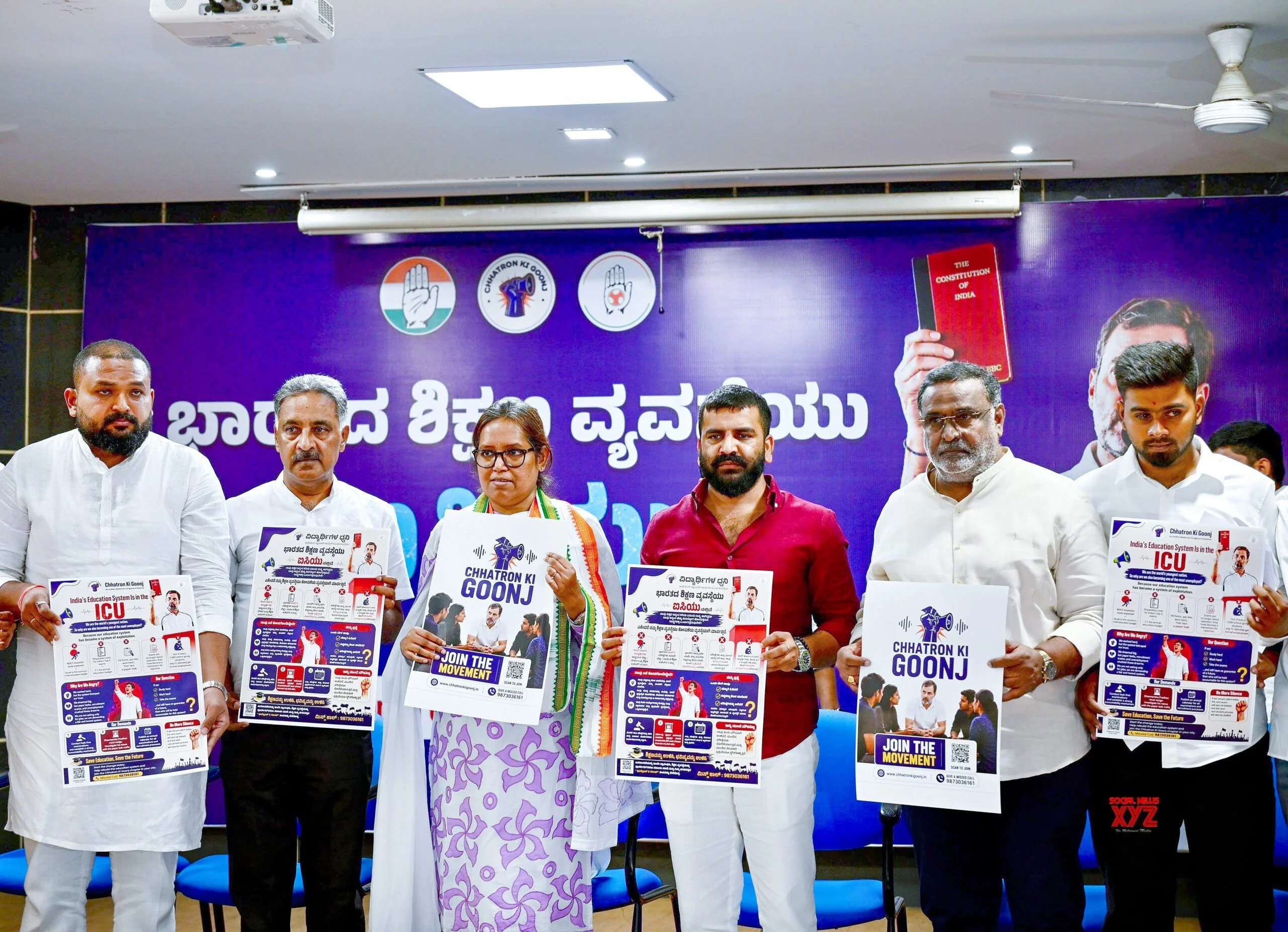
Opposition leaders finalized logistical deployments in Bengaluru to officially inaugurate the ‘Chhatron Ki Goonj’ visual and public information drive. The campaign highlights growing nationwide anger regarding compromised testing protocols.
National coordinators announced the institutional decision to launch the multi-city mobilization framework on June 25, 2026. The campaign addresses widespread structural anomalies, paper leaks, unexpected cancellations, and prolonged recruitment cycles that compromise public workforce registration.
Spokespersons confirmed the 40-day deployment will cover 28 major cities to establish institutional support structures for affected youth. The program counters a deep systemic drop in applicant confidence regarding state employment evaluations.
The political framework demands the absolute resignation of Union Education Minister Dharmendra Pradhan. Organizers seek comprehensive federal tracking of suspected linkages between illicit printing operations, logistics vendors, and political networks.
Demands include complete infrastructure audits covering physical paper transit, high-security storage, center assignment metrics, digital processing security, and outsourced third-party employment verification contracts.
Leadership emphasizes the need for unalterable yearly schedules specifying exact registration, examination, grading, and appointment deadlines to stop administrative extensions.
Grassroots local operations commence June 30, 2026, utilizing direct student assemblies, leafleting campaigns, and standardized civic town halls. Dedicated campus engagements and educational seminars will continue throughout July.
The political strategy escalates to coordinated district administrative blockades on August 1, 2026. The national first phase concludes with a massive legislative march toward Parliament in New Delhi on August 9, 2026.
The abrupt cancellation of the NEET-UG 2026 evaluation remains a primary driver for national protests. The compromised testing process directly destabilized the career trajectories of over 2 million medical aspirants.
Regional lawmakers highlighted that out of nearly 2.3 million registered NEET applicants, only about 200,000 individuals successfully secure medical, dental, or allied health placements annually.
Opposition executives criticized federal oversight bodies for failing to manage secure logistics for 2.3 million citizens, noting that current administrative oversights have severely damaged institutional trust nationwide.
The party intends to target coaching hubs, university grounds, libraries, and preparatory hostels to isolate administrative corruption. Leaders allege that elite private training institutions frequently coordinate with illicit distribution cartels.
Organizers noted that private entities often exploit test cancellations by immediately running commercial advertisements for remedial classes, highlighting a structural conflict of interest.
The high-level planning committee is also evaluating long-term frameworks to establish regional student counseling units to mitigate deep mental health pressures linked to sudden exam cancellations.
Future Outlook
The escalating tension over national testing frameworks points to a critical structural juncture for India’s public examination policy. As the ‘Chhatron Ki Goonj’ campaign gains momentum across key urban education hubs, the government faces intensifying pressure to decentralize or heavily reform the National Testing Agency. Observers note that the upcoming parliamentary session in August 2026 will likely be dominated by statutory debates regarding central testing oversight, electronic encryption for question delivery, and stricter criminal liabilities for educational malpractice.
FAQs
What is the primary objective of the Chhatron Ki Goonj campaign?
The campaign seeks to address systemic issues in public examinations, halt question paper leaks, eliminate administrative delays, and demand the resignation of the Union Education Minister following major test cancellations.
How long will the Congress educational campaign last?
The strategic public mobilization framework is designed as a continuous 40-day national initiative spanning multiple states and educational zones.
Which specific cities and locations are being targeted by the organizers?
The national deployment focuses on 28 major cities, prioritizing prominent higher education campuses, competitive coaching hubs, libraries, and student residential zones.
What are the final protest dates scheduled for the campaign?
Local administrative demonstrations at district offices are set for August 1, 2026, followed by a centralized national march toward Parliament in New Delhi on August 9, 2026.