Congress Demands Inquiry Into IPS Officer Speech At RSS Event
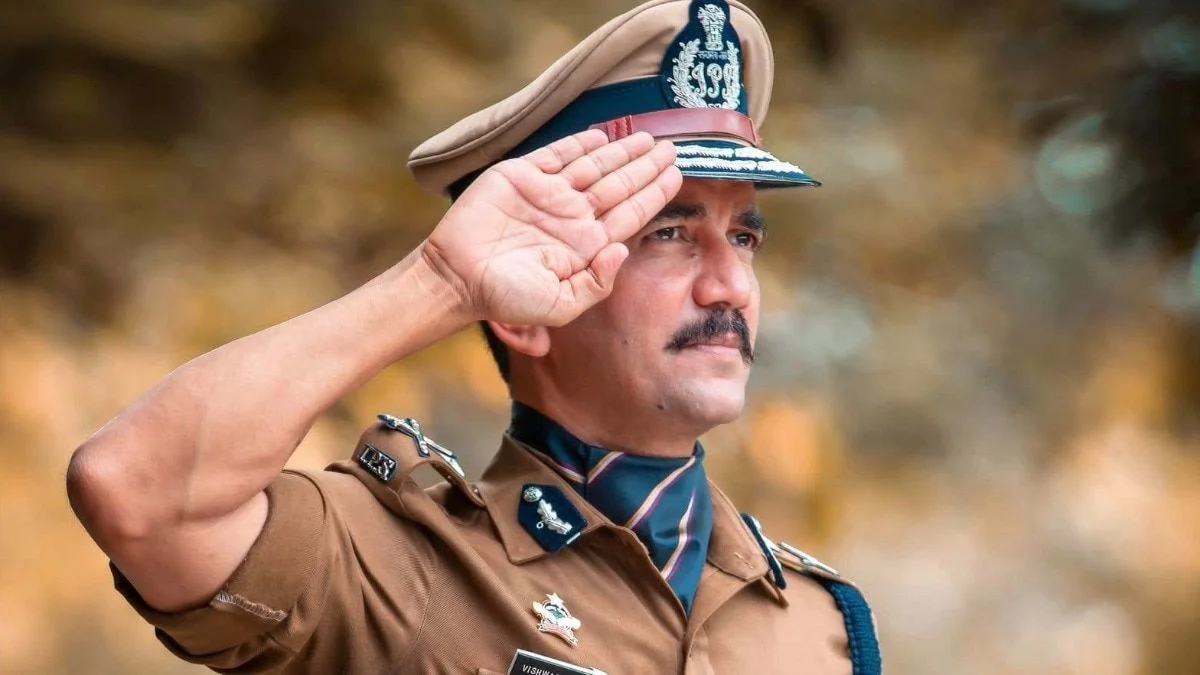
The Maharashtra Congress has formally requested a high-level investigation into an address delivered by senior IPS officer Vishwas Nangare Patil at a right-wing gathering. The political opposition asserts that his public statements regarding ideological organizations breach mandatory civil service neutrality guidelines and statutory conduct protocols.
Key Highlights
- Opposition Demand: The Congress party has formally petitioned the Maharashtra government to probe IPS officer Vishwas Nangare Patil.
- Neutrality Violations: The complaint alleges the officer violated All India Services (Conduct) Rules by praising the RSS.
- Permission Questioned: Chief Minister Devendra Fadnavis has been asked to clarify if official clearance was granted for the appearance.
- Strategic Timing: The controversy erupted immediately after Nangare Patil assumed charge as the Nagpur Police Commissioner in 2026.
The political row erupted after an undated video recording of Nangare Patil speaking at the Hindu Sammelan, a convention managed by the Sakal Hindu Samaj, circulated widely across social media networks on June 25, 2026. This public controversy emerged just days after the senior administrator was officially designated as the Police Commissioner of Nagpur.
In a series of digital communications published on X, the primary opposition party directed sharp queries at Chief Minister Devendra Fadnavis, who oversees the state home ministry portfolio. The political outfit demanded immediate clarification on whether the top police official secured formal department clearance prior to attending the community assembly.
Invoking the statutory frameworks governing the All India Services (Conduct) Rules, leadership from the Congress emphasized that an active IPS officer must secure explicit state authorization before participating in events of this nature. The opposition formally questioned whether such administrative clearance exists, demanding punitive measures if the officer acted without authorization.
Furthermore, the political organization stated that the police chief’s public address, which reportedly included extensive appreciation for the Rashtriya Swayamsevak Sangh, the Hindutva philosophy, and RSS founding architect KB Hedgewar, directly undermined the foundational tenets of bureaucratic impartiality required by civil service regulations.
The opposition party highlighted specific statutory clauses that strictly prohibit empanelled service members from maintaining associations with organizations involved in political operations. The party questioned whether addressing a specific ideological platform and offering public adulation constitutes an unlawful institutional association under current law.
According to the official communication, the unfolding administrative crisis extends beyond the actions of a single bureaucrat. The Congress argued that the incident threatens the fundamental integrity of the civil services, the constitutional mandate for non-partisan governance, and general public trust in law enforcement agencies.
In subsequent public statements, the political group reiterated that the core mandate of the state police apparatus is strictly confined to preserving public order and enforcing laws. The party noted that police leadership must not utilize their office to celebrate or validate formations frequently accused of generating societal fragmentation.
Compounding the political friction, the opposition connected the speech to the bureaucrat’s recent professional relocation to Nagpur. The Congress remarked that the institutional transfer effectively provides the police chief an immediate venue to directly accommodate the specific ideological headquarters situated within that metropolitan jurisdiction.
Historical Context
The relationship between the Indian bureaucracy and ideologically driven organizations has remained a highly litigated legal boundary within Indian administrative law. Under the All India Services (Conduct) Rules of 1968, civil servants are legally bound to absolute secularism and political neutrality to guarantee that state power is exercised without ideological prejudice.
Historically, participation in events linked to the Rashtriya Swayamsevak Sangh (RSS) or its affiliates has drawn intense scrutiny, often resulting in judicial interventions to determine whether such organizations operate purely as cultural entities or as political influencers. This latest confrontation in Maharashtra intensifies the ongoing national debate regarding the separation of law enforcement leadership from political frameworks.
FAQs
Why is the Congress party demanding an inquiry into IPS officer Vishwas Nangare Patil?
The opposition party alleges that the police officer breached the All India Services (Conduct) Rules by participating in a Sakal Hindu Samaj event and publicly praising the RSS and its founder. The Congress argues these actions violate the constitutional mandate for civil service neutrality.
What specific rules govern the political participation of IPS officers in India?
IPS officers are strictly governed by the All India Services (Conduct) Rules. These regulations require complete political neutrality, prohibit association with organizations participating in political activities, and mandate prior government approval before attending events organized by ideologically aligned groups.
When did the controversial video of the speech emerge?
The undated video footage of the speech went viral on social media platforms on June 25, 2026, shortly after Vishwas Nangare Patil was appointed to the post of Police Commissioner of Nagpur.
What clarification has the opposition sought from Chief Minister Devendra Fadnavis?
The Congress party has demanded that Chief Minister Devendra Fadnavis, who holds the state home portfolio, disclose whether the state administration gave formal permission to Nangare Patil to address the event, and what disciplinary actions will be taken if no permission was granted.