Anti-India Protests Flare in Dhaka Led by Jamaat-e-Islami Allies
A resurgence of anti-India demonstrations in Dhaka has triggered fresh geopolitical anxieties, as Islamist factions intensify their campaign against New Delhi. The unrest marks a severe escalation in regional friction following recent domestic political upheavals.
Key Highlights
- Hardline Islamist groups marched toward the Indian High Commission in Dhaka.
- Security forces intercepted the demonstrators in the Gulshan-1 neighborhood.
- Protesters burned an effigy of Indian Home Minister Amit Shah during the rally.
- Demonstrations have surged significantly following the collapse of Sheikh Hasina’s administration.
Tensions have escalated across Bangladesh as demonstrations targeting New Delhi intensify inside the capital city of Dhaka. Affiliates of the hardline Jamaat-e-Islami organization, alongside associated political groups, organized public demonstrations opposing India, raising immediate international concern over escalating domestic instability and fractured bilateral ties.
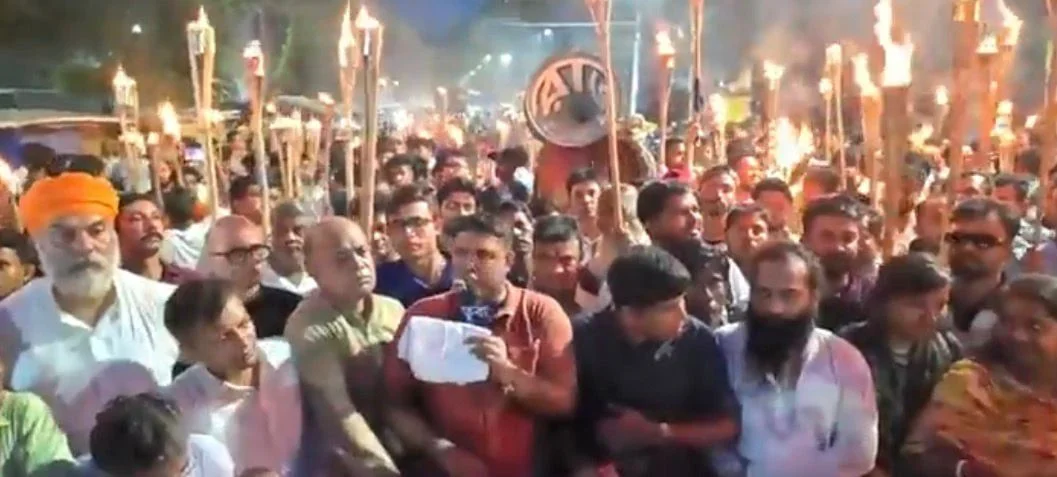
Activists initiated public marches under the specific banner of the “Bangladesh Azad Party,” carrying lit torches through city streets while attempting to converge on the Indian High Commission. Law enforcement officials successfully intercepted the political marchers within the Gulshan-1 district to prevent them from advancing toward the diplomatic compound.
While staging the demonstration, participants publicly set fire to a likeness of India’s Home Minister Amit Shah while chanting hostile slogans against the neighboring nation. The political coalition subsequently initiated an impromptu sit-in directly on the roadway after encountering barricades erected by state security personnel.
The political alliance, spearheaded by Jamaat-e-Islami and encompassing 11 distinct political factions, has mobilized a coordinated public offensive against New Delhi. The collective publicly alleges aggressive actions from the neighboring state, specifically citing cross-border population movements and unauthorized lethal security forces firing directly along the shared sovereign border.
Geopolitical analysts observe that following systemic governance transitions triggered by the sudden collapse of Prime Minister Sheikh Hasina’s government, anti-India movements have experienced a substantial upward surge within Bangladesh. This shift injects volatile dynamics into the sovereign state’s domestic governance and its delicate foreign relations with India.
Future Outlook
The sudden political vacuum in Dhaka threatens to reshape South Asian geopolitics as provisional leaders navigate growing pressure from right-wing nationalist factions. Diplomatic experts anticipate that managing cross-border security and maintaining trade pacts will require delicate bilateral talks to prevent further degradation of strategic partnerships between New Delhi and Dhaka in 2026.
FAQs
Why are protests occurring in Dhaka against India?
Protest groups led by hardline factions are demonstrating against India due to alleged border security incidents, including cross-border push-ins and security forces firing along the shared India-Bangladesh border.
Which political groups are organizing these anti-India rallies?
The demonstrations are being led by the hardline Jamaat-e-Islami group along with an alliance of 11 political factions operating under the banner of the Bangladesh Azad Party.
Where were the protesters stopped by security forces?
Police forces managed to intercept and block the torch-bearing demonstrators within the Gulshan-1 area of Dhaka before they could reach the Indian High Commission.
How has the fall of Sheikh Hasina’s government impacted bilateral ties?
Since the collapse of the Sheikh Hasina administration, Bangladesh has seen a noticeable rise in anti-India demonstrations, creating complex challenges for the country’s domestic politics and its diplomatic relationship with India.